
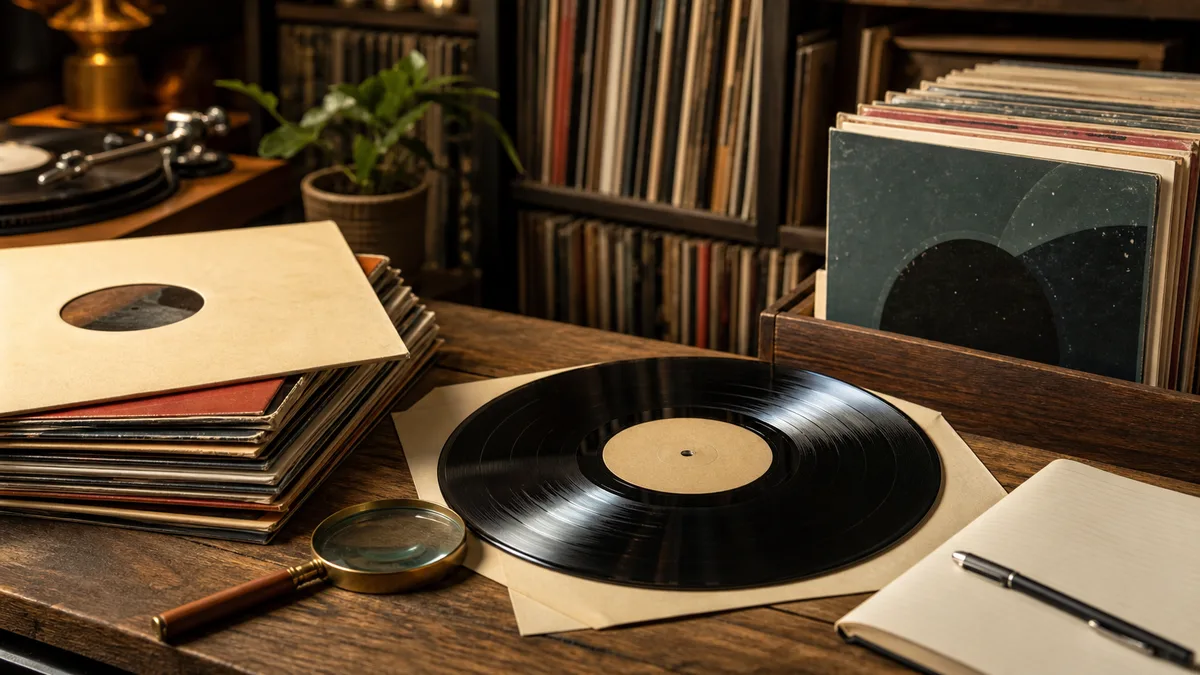
We’ve all been there. You’re at a flea market, flipping through a crate of records, and you pull out something that looks… interesting. Maybe it’s a name you don’t recognize, or an album with a pressing you’ve never seen before. And that little voice in your head asks: is this worth something?
Or maybe you’re looking at the shelves at home, wondering if that collection you’ve built over the years has turned into something more than just a bunch of records you love. It happens—what started as a hobby sometimes becomes surprisingly valuable.
Either way, knowing how to figure out what a record is actually worth is a skill every collector develops eventually. Let’s talk about how to do it right.
The Tricky Thing About Vinyl Values
Here’s something that trips up a lot of people: the same album can be worth $5 or $500 depending on details that aren’t immediately obvious.
A collector once told a story about finding a copy of The Velvet Underground & Nico at a garage sale for a dollar. The seller thought all old records were basically worthless. Turns out it was a 1967 first pressing with the unpeeled banana sticker intact. Worth over a grand.
So what makes the difference?
The pressing matters enormously. A first pressing of Led Zeppelin I from 1969 is a different beast entirely from a 2020 reissue, even though the music is the same. First pressings, original label variations, different countries of origin—all of these affect value, sometimes dramatically.
Condition is everything. A pristine copy will always command more than a well-loved one. Collectors use a grading scale: Mint means basically unplayed, Near Mint is almost perfect, Very Good Plus has light wear, and it goes down from there. The gap in price between a VG+ and NM copy can be hundreds of dollars for desirable records.
Rarity drives demand. Limited editions, colored vinyl, promo copies that never hit stores, pressings that got recalled—these are the things collectors hunt for. If there aren’t many copies floating around, prices go up.
And then there’s timing. The market moves. When an artist passes away, their catalog often spikes. When a song goes viral on TikTok, suddenly everyone wants that album. Anniversary releases remind people that a classic exists. Records aren’t stocks, but they’re not completely disconnected from market dynamics either.
Actually Finding Out What Something’s Worth
Here’s where things get practical.
My Vinyl+ pulls pricing data directly from Discogs, which means you’ve got access to real market information—what records are listed for, what they’ve actually sold for, and how prices have moved over time.
The process is pretty simple. Open the app, scan the barcode, and the app matches it to the specific pressing. You’ll see the lowest current listing, the median price from recent sales (usually the most useful number), and what top-condition copies are going for.
If you want to see what your whole collection is worth, there’s a statistics view that adds it all up. It’s a little surreal the first time you see the number—most collectors are surprised, either pleasantly or otherwise.
One thing to keep in mind: prices update automatically based on market activity, so that number isn’t fixed. Your collection’s value fluctuates, just like anything else.
Getting It Right
The difference between accurate and wildly off-base pricing usually comes down to a few things.
Make sure you’ve got the right pressing. This is the big one. The same album might have forty different pressings, and they’re not all worth the same. Check the catalog number on the spine and label. Look at the country of origin. If you really want to be sure, compare the matrix codes etched in the runout area near the label—that’ll tell you exactly which stamper made your copy.
Be honest about condition. It’s human nature to see our stuff through rose-colored glasses. That record you think is Near Mint? Take another look in good light. Check for hairlines, scuffs, and ring wear on the sleeve. When in doubt, grade it a step lower than your gut says. You’ll be more accurate, and if you ever sell, you won’t disappoint anyone.
Look at actual sales, not just listings. People can list records for whatever they want. That doesn’t mean anyone’s buying at that price. Recent sale data tells you what someone actually paid, which is much more useful.
Spotting Hidden Value
Some records telegraph their worth pretty obviously—a sealed 1960s jazz LP on Blue Note isn’t going to be cheap. But others hide their value in easy-to-miss details.
Promo copies with “DJ Copy” or “Not for Sale” stamps were never meant for retail. They’re rarer by definition.
Colored vinyl and picture discs are usually limited runs. Not always valuable, but worth checking.
Original inserts matter more than people think. A first pressing with the original poster, inner sleeve with lyrics, and promo stickers still attached is worth significantly more than a bare disc.
Weird label variations can be goldmines. Test pressings, withdrawn versions that got quickly replaced, or copies with manufacturer errors—these are the things serious collectors pay up for.
The Real Talk About Collecting for Value
Here’s some honest advice: collect what you love first, and let value be a nice surprise rather than the goal.
The people who build the most valuable collections usually aren’t trying to invest—they’re just deeply passionate about music, and they’ve learned to recognize quality and rarity along the way. They buy records they want to listen to, and they take good care of them.
That said, if you want to be smart about it:
Buy fewer records in better condition rather than lots of worn copies. Store them properly—vertical, away from heat, in good sleeves. Keep track of what you paid and what condition things were in when you got them (My Vinyl+ has notes for exactly this purpose).
And don’t get too caught up in the numbers. The real value of a record collection isn’t on a spreadsheet. It’s in those nights when you put something on and remember exactly where you were when you first heard it.
The monetary stuff is just a bonus.
Curious about a record’s value or have questions about the app? We’re at [email protected].