The cheapest record in the bag can cause the most trouble.
Not because it is scratched, or because you overpaid by a tenner, but because it came from a damp box, a dusty stall, a loft, a charity shop back room, or someone’s garage. Used vinyl brings history with it. Sometimes that history is harmless. Sometimes it smells musty before you even get it through the door.
Most collectors already know they should clean secondhand records. The missing step is isolation.
Before a new used record joins your main shelves, give it a short quarantine: inspect it, separate the paper from the disc, replace what should not be reused, clean only what can be cleaned safely, and document the copy while the evidence is fresh.
This is not about panic. It is about keeping one questionable find from becoming a shelf problem.
Start Before the Record Comes Home
The quarantine decision starts at the table, stall, shop, or seller’s photos.
Watch for:
- a strong musty smell
- visible spots on the sleeve or inner sleeve
- damp-feeling cardboard
- water staining
- wavy or swollen sleeve edges
- paper inner sleeves stuck to the record
- powdery residue
- insect damage or debris
- records stored flat in a soft pile
- box sets that smell worse inside than outside
A little dust is normal. A record that smells like a damp cupboard is different.
If you are at a fair, bag suspect records separately if you can. Do not put a damp-smelling sleeve between clean purchases and then wedge the whole stack into one tote for the journey home. If you are buying online, save the listing photos and seller notes before they disappear. Those details help later if you decide the condition was not as described.
September is a good time to get serious about this. Autumn fairs and indoor buying days are back on the calendar, including events such as Ty Pawb’s September record fair in Wrexham. The more used records you bring home in one day, the more useful a simple intake routine becomes.
Make a Temporary Intake Zone
Do not inspect questionable records on the same surface where you sleeve clean favourites.
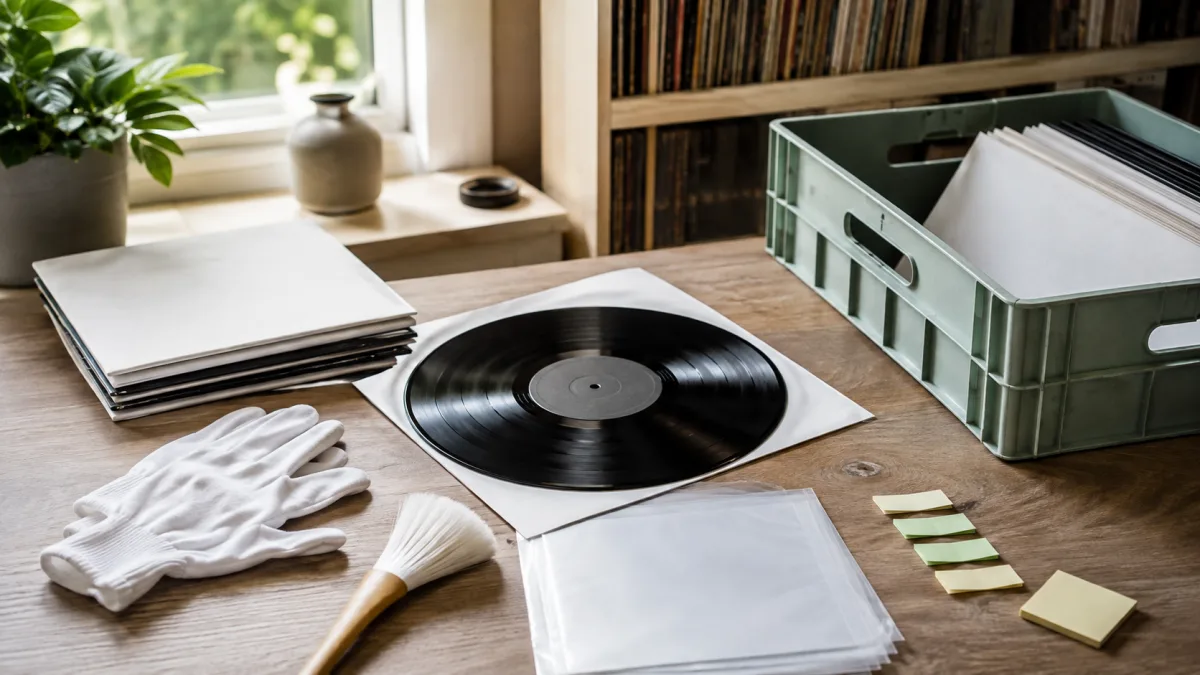
Set up a small intake area:
- a clean table or desk
- good light
- a spare crate or box for incoming records
- fresh inner sleeves
- outer sleeves
- a carbon-fibre brush or soft record brush
- microfiber cloths for jackets, not records
- nitrile gloves if anything looks mouldy or grim
- a bin bag for old paper inners
- a note app or collection app for decisions
Keep this boring. You are not building a conservation lab. You are making sure the new arrivals do not go straight from an unknown box into the middle of your collection.
For records with visible mould, treat the sleeve and inner sleeve as contaminated until you know otherwise. The National Archives advises isolating mouldy record materials in a cool, dry, well-ventilated location so they do not contaminate nearby items. That is written for archival material, but the principle fits record collections nicely: keep the suspect item away from the clean shelf while you assess it.
Separate the Disc From the Paper
The vinyl record and the paper parts age differently.
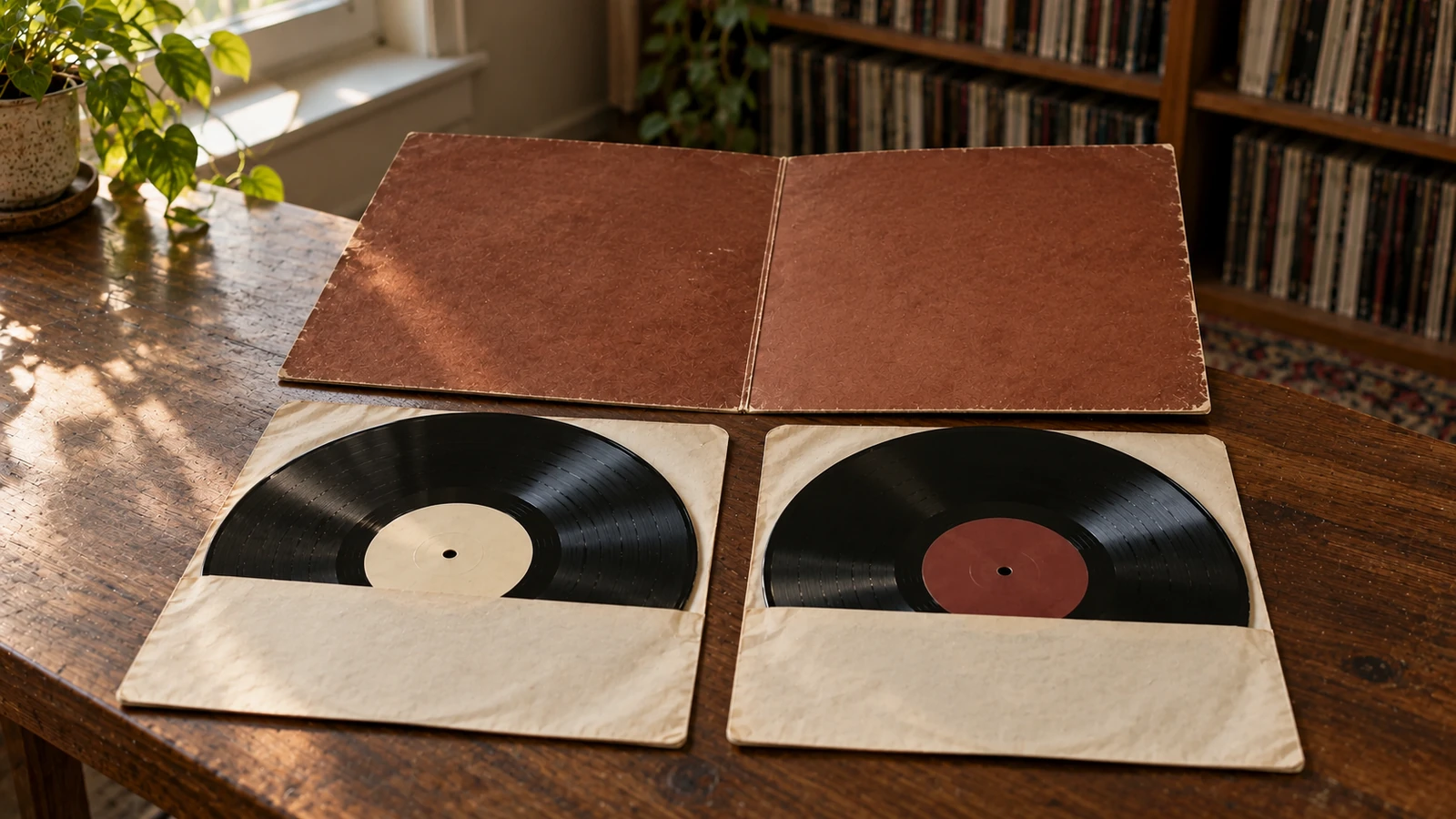
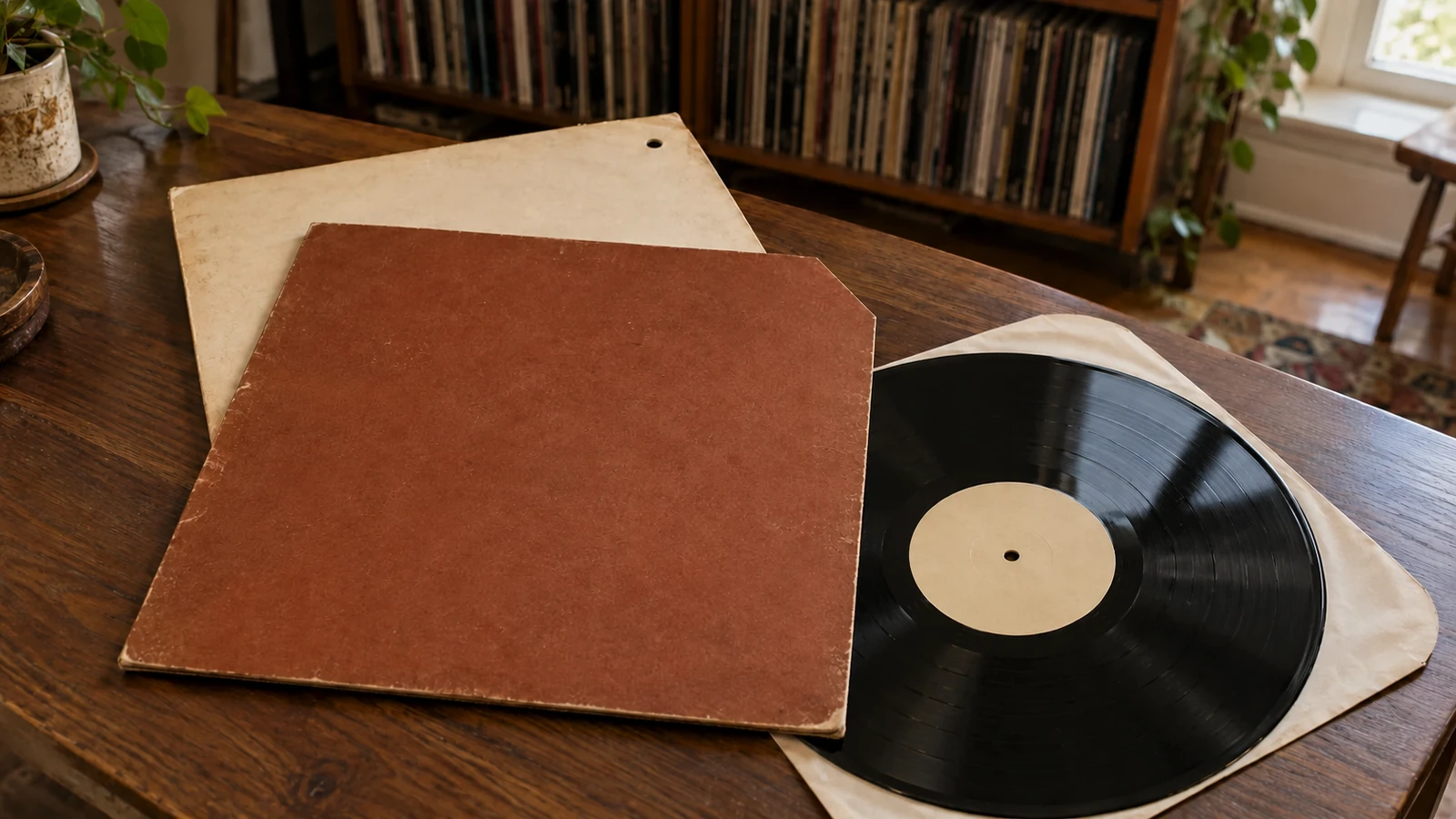
When you get home, remove the disc from the old inner sleeve and inspect each part separately:
- disc
- inner sleeve
- outer jacket
- inserts
- obi strip, poster, booklet, hype sticker, or download card
- any poly-lined sleeve or rice-paper sleeve already included
Old paper inners are often the dirtiest part of the whole package. If an inner sleeve is plain, dusty, yellowed, split, musty, or visibly spotted, replace it. Do not clean a record and then slide it back into the same paper that made you suspicious in the first place.
Printed inner sleeves need judgment. If the printed inner is part of the release, keep it with the jacket, but store the cleaned disc in a fresh anti-static inner. If the printed inner smells damp or looks mouldy, isolate it from the disc and the rest of the collection. A complete copy is nice. A spreading problem is not.
This is also where My Vinyl+ earns its keep. Add a condition note while the record is still on the desk: “original printed inner retained separately,” “musty jacket airing,” “disc cleaned, new inner,” or “mould concern, do not shelve yet.” Future-you will not remember which bargain copy needed watching.
Know What You Can Clean
A vinyl disc can usually handle a proper wet clean when the label is protected and the cleaning method is sensible. A paper jacket cannot.
For the disc:
- remove loose dust first
- use a record-safe cleaning method
- avoid household cleaners
- rinse if your cleaning process requires it
- let the record dry fully before sleeving
- use a fresh inner sleeve after cleaning
Neil Antin’s Precision Aqueous Cleaning of Vinyl Records, published through The Vinyl Press, is a detailed collector reference for wet cleaning. It is more involved than most people need every weekend, but its core message is useful: use record-safe chemistry, rinse properly, dry carefully, and avoid random dish detergents that leave hard-to-rinse ingredients behind.
For the jacket:
- brush away loose dry dust gently
- wipe only glossy surfaces if you know the ink and coating can tolerate it
- do not wet-clean raw cardboard
- do not spray fragrances or household disinfectants into sleeves
- do not seal a damp jacket in a plastic outer sleeve
If the sleeve is only dusty, clean the surface and give it air. If it is damp, mouldy, or softened, be more conservative. Paper damage does not reverse just because the disc plays well.
Smell Is Evidence
Collectors sometimes dismiss smell because it feels subjective. It still tells you something.
A normal old-record smell can be paper, ink, dust, and age. A strong musty smell often points to damp storage. The National Park Service mould prevention guidance hosted by the National Archives notes that musty odor is often the first sign of microorganism growth in collections, and that moisture control is central to prevention.
Do not try to hide the smell. Do not perfume the jacket. Do not trap it under a tight outer sleeve and hope it improves.
Instead:
- keep the jacket away from clean records
- remove the disc to a fresh inner sleeve
- let the jacket air in a dry place with good circulation
- check whether the smell fades over days, not hours
- avoid heat, direct sun, or aggressive drying
- give up on the jacket if it stays damp-smelling and suspect
For a cheap copy, the decision is easy. Keep the disc if it cleans up, replace the inner, and decide whether the jacket is worth keeping. For a valuable copy, slow down and consider specialist advice before trying anything irreversible.
Use a Simple Traffic-Light System
Every incoming used record can leave quarantine in one of four states.
Green. Clean enough to shelve.
The disc looks fine, the jacket is dry, there is no worrying smell, and any old inner sleeve has been replaced if needed. Clean it, sleeve it, catalog it, and move on.
Yellow. Playable, but watch it.
The disc cleaned up, but the jacket is musty, the inner sleeve was rough, or the copy has a history you want to remember. Keep notes. Store it with a fresh inner and outer. Recheck before filing it beside valuable records.
Red. Keep away from the main collection.
Visible mould, damp cardboard, active powdery residue, strong smell, or insect debris means it stays isolated. If the record has little value, do not overthink the romance of rescuing it. Some finds are not worth bringing inside properly.
Reference only. Worth documenting, not worth playing.
This is for rare but compromised copies, sentimental inherited records, damaged sleeves with useful provenance, or pressings you want to identify before deciding. Add it to the catalog with clear condition notes, but do not pretend it is ready for normal shelf life.
The traffic-light label can be a physical sticky tab, a crate divider, or a My Vinyl+ note. The tool matters less than the decision being visible.
Do Not Let Quarantine Become a Graveyard
The intake crate should not become a permanent second collection.
Set a rule:
- clean green records within a week
- reassess yellow records after a few days of dry air
- decide on red records quickly
- photograph valuable problem copies before doing anything else
- catalog every keeper before it reaches the shelf
If you keep delaying one record, ask why. Maybe it needs a proper clean. Maybe the sleeve smell bothers you. Maybe you bought it because the price was good, not because you wanted it. Quarantine is useful partly because it forces that decision before the record disappears into the shelves.
Keep Problem Details With the Exact Pressing
Condition problems only matter if you can attach them to the right copy.
Save:
- pressing or release ID
- seller or shop
- date bought
- price paid
- original condition notes
- cleaning date
- inner sleeve replaced
- jacket issue
- smell or mould concern
- playback result
- final shelf decision
This is where a generic note called “records to clean” falls apart. You need the note attached to the actual copy.
In My Vinyl+, use notes, condition, and collection details to keep the intake history with the record. If you later sell, trade, upgrade, insure, or compare duplicates, that history matters. “VG+ after clean, jacket still musty, original inner stored separately” is much more useful than “used copy.”
A 10-Minute Used-Record Quarantine Checklist
Use this after a shop visit, fair, or parcel delivery.
- Keep new used records away from the main shelf.
- Inspect the bag, mailer, and sleeves for damp, debris, or smell.
- Remove the disc from the old inner sleeve.
- Replace plain paper inners that are dirty, musty, split, or spotted.
- Keep printed inners separately if the disc needs a fresh sleeve.
- Brush or wet-clean the disc using your normal record-safe method.
- Let everything dry fully before sleeving.
- Air questionable jackets in a dry, ventilated place.
- Add a green, yellow, red, or reference-only decision.
- Catalog the condition notes before shelving.
If you do only three things, do these: isolate first, replace bad inners, and write down why the record worried you.
The Bottom Line
Used vinyl is half the fun of collecting. It is also the part of the hobby with the most unknowns.
A quarantine routine keeps that fun from turning into avoidable damage. Inspect before shelving. Separate the disc from the paper. Replace bad inners. Clean the record properly. Treat musty smells as evidence. Keep mouldy or damp materials away from clean shelves. Make a decision while the record is still in front of you.
The goal is not to make every bargain-bin LP feel suspicious. The goal is to protect the records you already love from the one questionable copy you just rescued.
Sources: National Archives: Mold Damage, National Archives: Mold and Mildew: Prevention of Microorganism Growth In Museum Collections, The Vinyl Press: Precision Aqueous Cleaning of Vinyl Records, 3rd Edition, Ty Pawb: Record Fair, September 26 2026, Library of Congress: Care, Handling, and Storage of Audio Visual Materials.