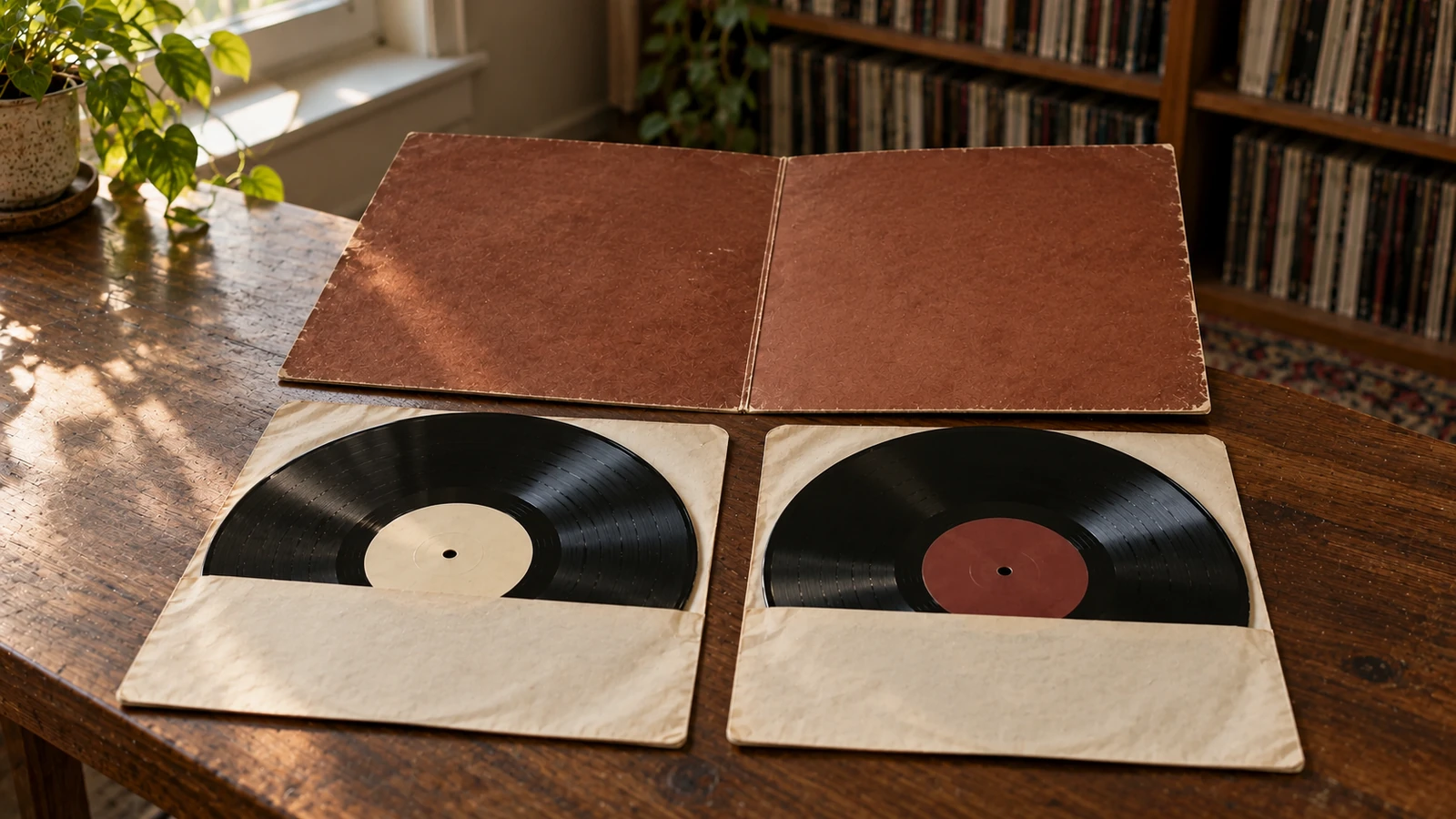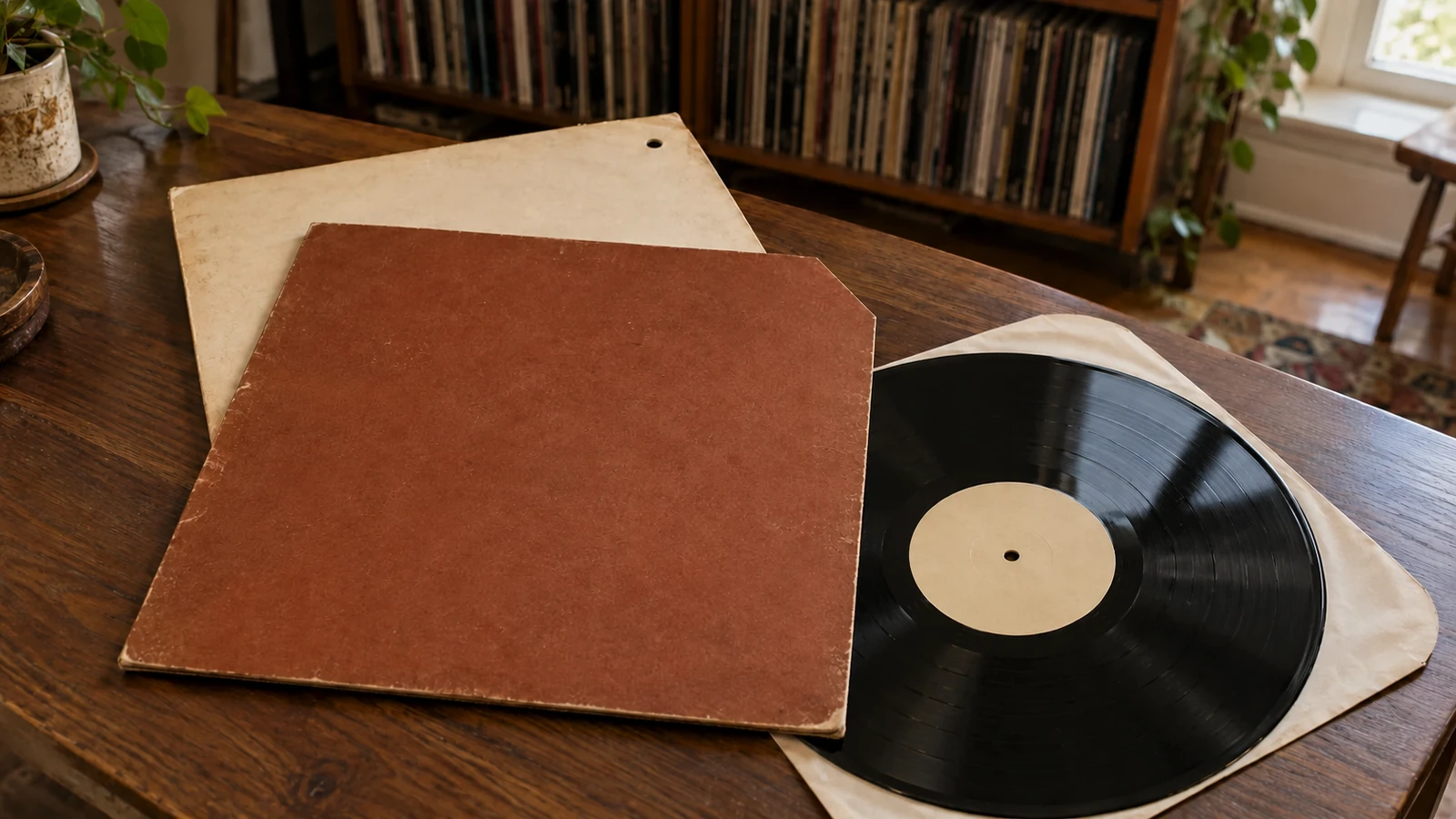
You pull an LP from a used bin. The sleeve looks tidy, except for a small hole near the corner. Another copy has a narrow notch in the spine. The seller calls one a promo and the other damaged stock.
Neither description gives you enough to decide.
The useful distinction is between a mark on this particular copy and a genuinely different release. Discogs explicitly treats ordinary retail records with cut spines, marked barcodes, or added promo stamps as the same release as their unaltered counterparts.[11]
That distinction can save you from paying a promo premium for an ordinary pressing. It also stops you rejecting a potential listening copy over a jacket mark you would happily live with.
What a cut-out record actually is
A cut-out is remaindered stock marked for discounted distribution. Record-store veteran Hugh Jones describes labels clipping jacket corners or punching holes, then selling the stock through wholesalers on terms that prevented returns to the label for credit.[3]
The missing cardboard was a distribution signal. It was not a review of the music.
Jones also notes that the physical marks resembled those used on some promotional copies.[3] That is the catch. A clipped corner tells you what happened to the sleeve, but does not, by itself, establish whether the record was remaindered or sent out for promotion.[3][11]
Do not turn those historical wholesale arrangements into a claim about your rights as today’s buyer. Read the current seller’s terms and applicable consumer guidance instead.
Read the mark without inventing its story
Start with a literal description, before trying to give the copy a special identity:
- Clipped corner. Note which corner and how much of it is missing.
- Punched or drilled hole. Note its position and whether it passes through both faces of the jacket.
- Spine notch or saw cut. Check whether the title remains readable and whether the cut reaches an insert or inner sleeve.
- Marked barcode. Describe the mark rather than assuming it proves promotional status.
- Added promo stamp or sticker. Photograph the wording and inspect the disc itself.
Corner cuts and holes appear in Jones’s account of remaindered LPs, while Discogs’ release rules explicitly address cut spines, marked barcodes, stamps, and stickers.[3][11] These are clues worth recording, not a universal code that identifies the sender or date.
For example, “small punch hole at top left, both jacket panels affected” is useful. “Rare radio promo” needs separate evidence.
A cut corner is not proof of a promo pressing
There are two questions to ask:
- Was this copy used for promotion?
- Is it a distinct promotional edition?
Those questions need not have the same answer. Under Discogs guideline 6.12.2, a stock release with an added promotional stamp or similar alteration stays under the retail release entry.[11] That cataloging rule does not deny that somebody might have sent the copy to a reviewer. It says the added mark alone does not create a separate release.
For a distinct promo edition, look for release-level evidence. Discogs requires a clear promotional designation on the release or confirmation from the label, artist, or another reliable source, and notes that some labels used a different center-label color or design.[11]
Compare the labels, catalog number, tracklist, and documented release details. If the seller’s entire argument is “the corner is cut,” ask what else distinguishes the record.
Also be precise about white labels. Discogs defines its “White Label” tag by the absence of mechanically applied print, not simply by the paper being white.[11] A white background with a normally printed label is not enough.
For pressing identification beyond the packaging mark, our matrix-number guide is the useful next step.
Grade the sleeve separately from the disc
A deliberate mark still changes the jacket’s condition. Discogs uses the Goldmine grading standard, whose Near Mint LP-cover description excludes cut-out holes and comparable noticeable defects.[15]
Its VG+ cover description allows a cut-out hole, indentation, or cut corner alongside otherwise minor wear.[15] That does not mean every cut-out jacket automatically deserves VG+. A large cut, missing artwork, splits, staining, or other damage still needs an honest overall assessment.
Keep the judgments separate:
- Is the disc the pressing you want?
- What is the disc’s actual condition?
- How much does the jacket mark bother you?
- Are the inner sleeve and inserts affected too?
A jacket hole cannot tell you how the grooves play. Equally, a clean-looking disc cannot make the missing jacket corner reappear. Inspect both rather than allowing either condition to stand in for the other.
For an online purchase, ask for a close photograph of the mark and full photographs of the front, back, and spine. A cropped cover image leaves too much to guess.
Do not turn a grade into an automatic discount
There is no useful blanket rule that says “a cut corner takes this much off the price.” I would compare the actual copies available, not multiply a pristine price by a made-up sleeve-damage percentage.
Compare the same pressing where possible. Then separate the things you are paying for: disc condition, jacket condition, completeness, and any documented edition difference.
A small punch hole might be an acceptable compromise if you want a clean listening copy. It might be a deal-breaker if your goal is an intact sleeve for a display or a carefully matched set. Neither choice needs defending. The mistake is paying for an unproven story attached to the hole.
Nor does a historical bargain-bin mark mean the record must be cheap today. Jones describes titles that passed through cut-out bins and later became sought-after collectibles.[3] Past remainder status and present demand are different things.
Keep the mark in your copy notes
When you catalog the record, match the disc and its genuine release details first. Do not select a separate promo entry solely because your jacket has a notch, stamp, or cut barcode. Discogs says those alterations do not, on their own, require a unique release.[11]
Put the individual mark in your own copy notes. A simple example:
Retail pressing. Small diagonal cut at upper right of jacket. No promo wording on labels. Original inner sleeve present. Mark photographed.
That is an illustrative note, not a description of a specific release. It keeps an observation separate from an inference.
If you later sell the copy, describe the mark in the listing even when your sleeve grade already allows it. “VG+ sleeve, small saw cut at top of spine” gives the buyer a clearer decision than a grade alone.
A quick cut-out buying checklist
Before you buy, check:
- Have I seen the whole jacket and a close-up of the mark?
- Does the mark affect artwork, spine text, or inserts?
- Have I inspected the disc separately?
- If the seller claims a promo edition, what evidence exists beyond the altered sleeve?
- Does the database entry match the disc rather than just the seller’s description?
- Would I want this copy at this price if nobody called it rare?
A cut-out mark is useful information. It is not a reason to panic, and it is not a reason to pay extra. Identify the release, describe the copy, then decide whether the missing bit of cardboard matters to you.
Sources
[3] Hugh Jones: The record store years, cut-outs