Most collectors track the records. Fewer track the thing dragging through them.
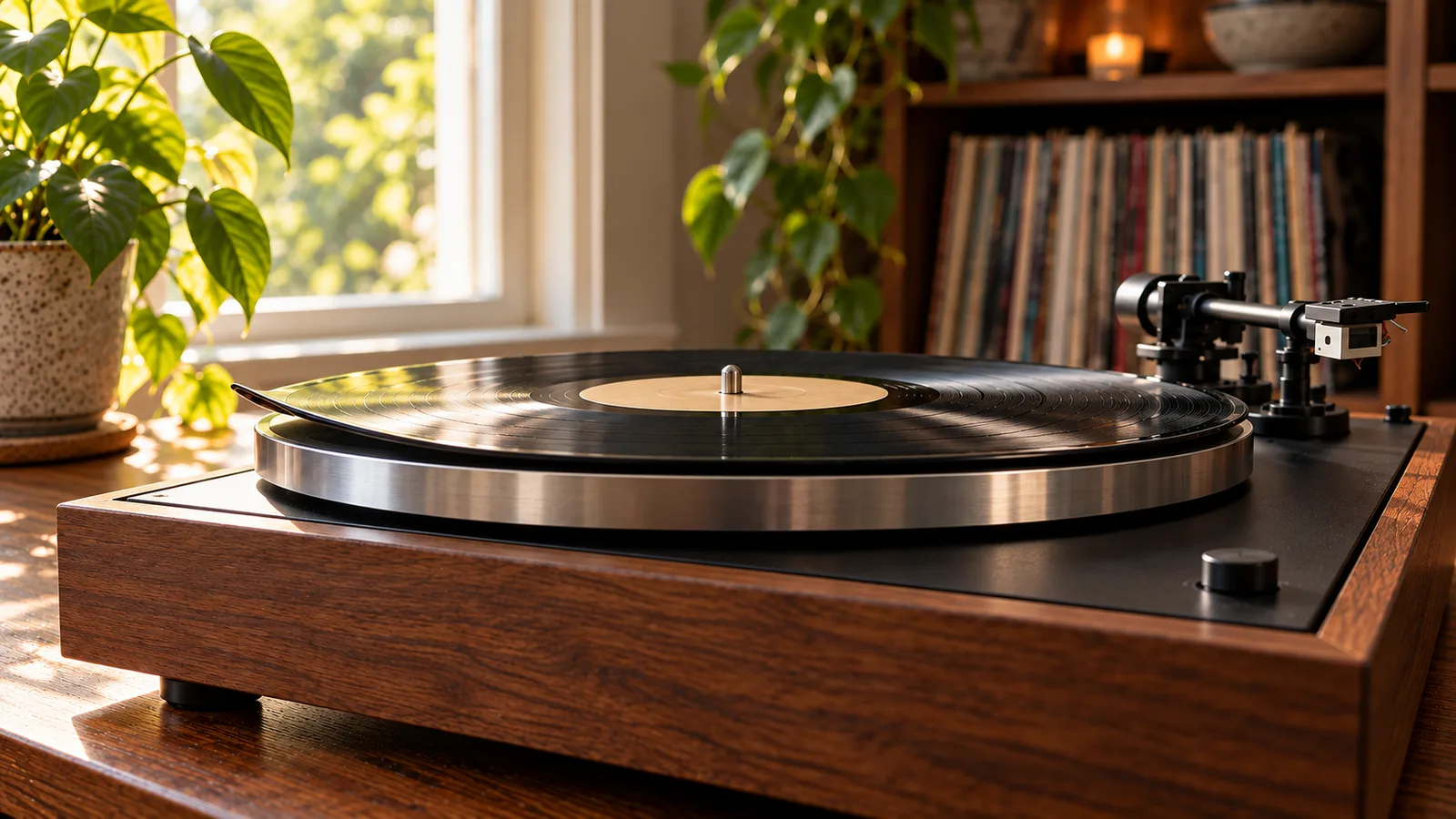
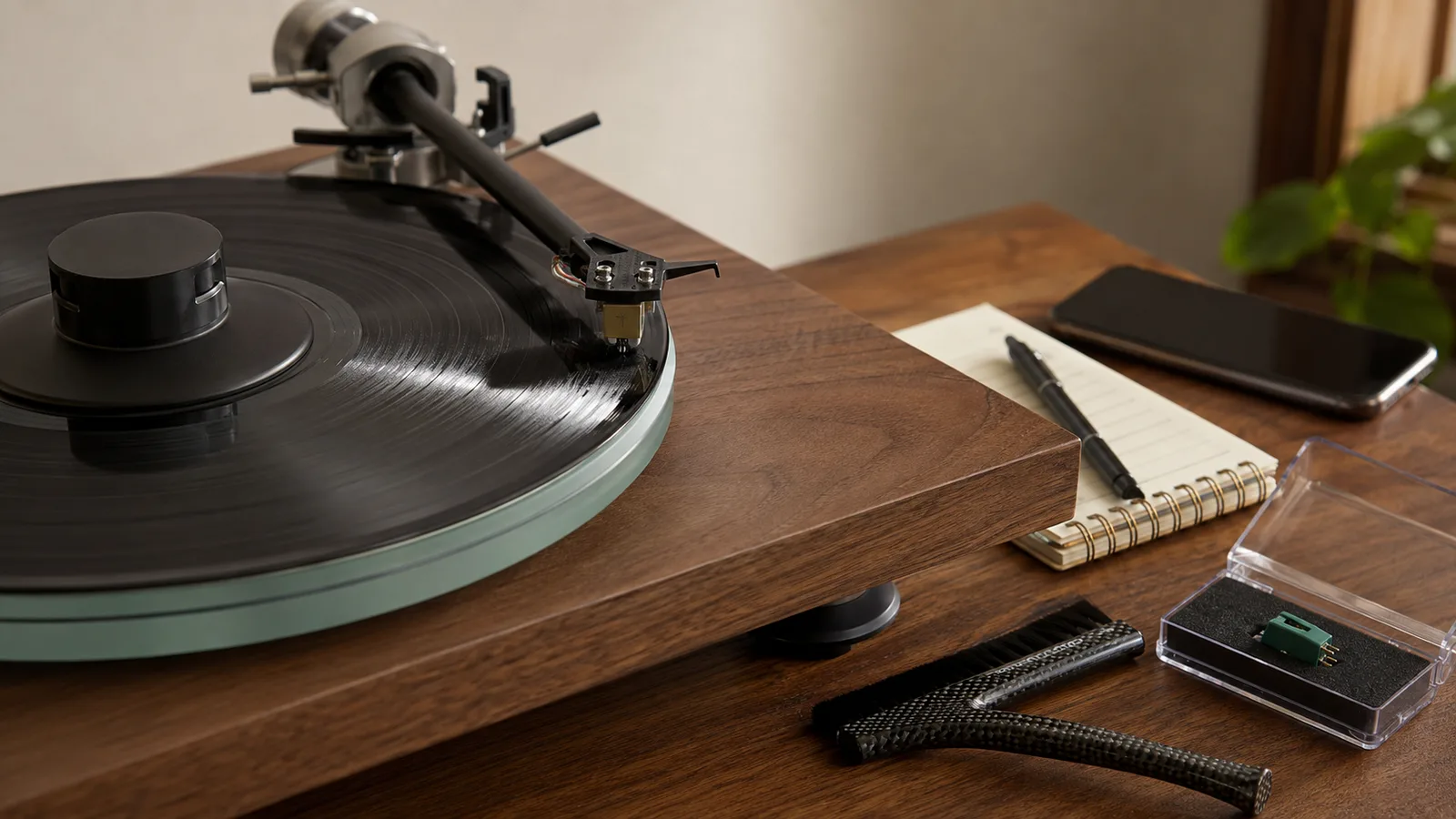
That tiny diamond at the end of the cantilever is easy to ignore because it does not look like a consumable part. It still plays. It still sits neatly in the groove. It may even sound fine until the change has crept in slowly enough that you stop noticing.
But a worn or dirty stylus can turn from a sound-quality problem into a record-care problem. The annoying part is that there is rarely a dramatic moment where the stylus announces it is done. You need a basic maintenance rhythm before the warning signs become obvious.
Here is a practical way to track stylus hours, playback habits, and replacement timing without turning listening into admin.
Start With the Stylus You Actually Use
Do not begin with a generic number from a forum. Begin with your own cartridge or stylus model.
Look up:
- cartridge model
- stylus model
- stylus shape, if listed
- manufacturer replacement guidance
- date installed
- whether you bought it new or used
- approximate hours already played
The manufacturer guidance matters because stylus life varies. Audio-Technica says its entry-level and mid-range styli have a lifespan of over 300 hours if well maintained, and some of its manuals use 300 hours as a rule of thumb. Ortofon publishes broader guidance and says stylus lifetime can reach up to 1,000 hours with proper care, while also stressing that record and stylus cleaning reduce wear.
Those numbers are not a guarantee. They are your starting boundary.
If you bought the stylus used, inherited a turntable, or cannot confirm the hours, treat it as unknown rather than “probably fine.” Unknown hours are not a moral failure. They just mean you should listen carefully, inspect what you can, and plan a replacement sooner than you would for a fresh stylus.
Use a Range, Not a Countdown Panic
Stylus tracking gets weird when collectors treat one hour number as a cliff edge.
A better approach is to set three zones:
- Fresh: newly installed, aligned, and sounding clean.
- Watch: getting near the lower end of the expected life range.
- Replace: at or beyond the range, or showing signs of wear.
For many common elliptical or conical styli, that might mean you start paying closer attention after a few hundred hours. For more advanced profiles, the useful life may be longer, but only if setup, record cleanliness, and tracking force are sensible.
The point is not to throw away a stylus that still has life. The point is to stop pretending you will remember two years of listening by feel.
Count Plays the Easy Way
You do not need a laboratory log.
Use a simple estimate:
- single LP side: about 20 minutes
- full single LP: about 40 minutes
- double LP: about 80 minutes
- 7-inch single: about 6 to 10 minutes
- long box-set session: write the rough total
If that still sounds too much, track sessions instead:
- short session: 30 minutes
- normal album session: 45 minutes
- long evening: 2 hours
A rough log kept consistently is more useful than a perfect log abandoned after three days.
You can keep this in a note, spreadsheet, gear app, or collection app. My Vinyl+ is useful when the maintenance note belongs with the records you actually played: add a short note for cleaned copies, noisy copies, setup changes, or records that made you question the stylus. The goal is not to make the app count every rotation. It is to keep the useful evidence close to your collection.
Track the Warning Signs Separately
Hours are only one signal. Your ears and records matter too.
Write down any repeated pattern:
- inner-groove distortion on records that used to play cleanly
- sibilance that appears across several records
- duller treble or fuzzy transients
- mistracking on loud passages
- channel imbalance that follows the cartridge setup
- more surface noise than usual after cleaning
- visible dirt that returns quickly to the stylus
- one record repeatedly sounding damaged in the same spot
Do not diagnose the whole system from one bad record. Used vinyl can be worn. New vinyl can be defective. A dirty record can make a good stylus sound terrible.
Look for patterns across records you know well. If several trusted albums start sounding strained, that is a better warning than a single noisy charity-shop copy.
Clean Records and Stylus as One System
Stylus life is not only about hours. It is also about what those hours are like.
Ortofon’s care guidance is blunt about this: remove dust from record surfaces before and after playback, remove dust from the stylus before and after playback, and do not play damaged records. That is not audiophile theatre. Dirt in the groove becomes friction at the stylus tip.
Build a tiny habit:
- Brush the record before play.
- Check the stylus for visible dust.
- Clean the stylus using the method recommended by the manufacturer.
- Do not wet-clean the stylus unless your stylus maker says it is safe.
- Note records that need a proper clean before the next play.
The important part is the link between record condition and stylus condition. If you keep playing dirty secondhand records “just once” before cleaning them, your stylus-hours estimate becomes less meaningful.
Add Setup Checks to the Same Log
Stylus wear is easier to judge when the turntable is set up properly.
At minimum, note:
- tracking force
- anti-skate setting
- cartridge alignment date
- whether the turntable is level
- whether the stylus guard has had any accidents
- when you last cleaned the stylus
- when you last checked the cartridge screws
This does not need to become a full setup diary. A few facts prevent guesswork later.
For example: “AT-VM95E installed 5 Sep 2026, tracking force 2.0g, aligned with Technics gauge, stylus cleaned weekly” is useful. “Needle seems old?” is not.
If you change tracking force, swap headshells, move the turntable, or replace the mat, make a note. If a sound problem appears afterwards, you will know what changed.
Make a Replacement Rule While It Still Sounds Good
Do not wait until you are annoyed to decide when a stylus is finished.
Choose a rule like:
- inspect after 250 hours
- start replacement planning at 300 hours for an entry-level stylus
- replace immediately if distortion appears across several clean records
- replace unknown-used styli before playing valuable records
- keep a spare stylus on hand if the cartridge accepts user-replaceable styli
Your exact numbers should follow the stylus maker’s advice and your own usage. A collector who plays clean records for a few hours every weekend has a different risk profile from someone playing dusty bargain-bin records every night.
The useful rule is the one you will actually follow.
Keep Valuable Records Out of the Test Zone
When you suspect stylus wear, do not test it on your rarest copy.
Use records you know well but can afford to replace. Pick a clean, familiar album with strong vocals, clear cymbals, and a few loud inner-groove passages. If that record suddenly sounds ragged, compare it with another trusted copy or a digital version you know.
Avoid the common trap: using your most valuable record because you know it best. That is exactly the record you do not want under a questionable stylus.
If you are not sure, replace the stylus before playing expensive, sentimental, or hard-to-find records. A stylus is cheaper than regret.
A Simple Stylus-Hours Template
Use this for each cartridge or stylus:
- Cartridge:
- Stylus:
- Stylus shape:
- Installed on:
- Bought new or used:
- Manufacturer guidance:
- Starting estimate:
- Current estimated hours:
- Tracking force:
- Alignment checked:
- Cleaning routine:
- Watch zone:
- Replacement rule:
- Spare stylus owned:
- Notes:
For listening sessions:
- Date:
- Records played:
- Estimated time:
- Any distortion or mistracking:
- Records needing cleaning:
- Stylus cleaned:
You can make this lighter if you want. The essential fields are install date, estimated hours, warning signs, and replacement rule.
The Bottom Line
Stylus tracking is not about making vinyl less romantic. It is about protecting the part of the hobby you actually care about: the records, the sound, and the quiet confidence that your setup is not slowly chewing through your collection.
Start with the stylus model. Use the manufacturer’s guidance as a range. Estimate hours simply. Track warning signs across records you trust. Keep record cleaning and stylus cleaning together. Replace unknown or suspect styli before they touch valuable records.
You do not need perfect data. You need enough memory outside your head to know when “still plays” is no longer good enough.
Sources: Ortofon: When to replace the stylus of your phono cartridge?, Ortofon FAQ: Stylus and record care, Audio-Technica: How To Change The Stylus On Your Turntable, Audio-Technica AT-LP2022 manual: Removing the stylus, Discogs: How Often Should You Replace Your Record Player Needle?, ecoustics: Secret Chord Analogue VRT Tracks Stylus Wear, Record Cleaning, and Vinyl Playback History Like Mileage on a Car.