There’s a moment that converts skeptics. You put on an audiophile pressing of an album you’ve heard hundreds of times, and suddenly there are details you’ve never noticed. A breath before a vocal. The room sound around a piano. Texture in the bass that was always there but never quite audible.
Premium vinyl isn’t about snobbery or spending money for its own sake. It’s about hearing music the way the artists and engineers intended—captured at its best, reproduced without compromise.
The question is whether the difference justifies the price. For many listeners, the answer depends on what you’re playing it on, what you’re playing, and how much that music means to you.
What Makes Premium Different
A $30 audiophile pressing costs more than a $20 standard release for reasons you can actually hear.
Source material matters most. Premium labels access original master tapes—not copies of copies, but the actual recordings from the studio. Those tapes captured everything; the question is how much gets transferred to vinyl. With masters, everything can.
Mastering for vinyl specifically. Specialized engineers optimize audio for the format’s characteristics, often using all-analog signal chains. What sounds best on digital doesn’t automatically sound best on vinyl. Premium pressings account for the difference.
Pressing quality. Better vinyl compounds, tighter quality control, pressing plants known for excellence. The difference between a quiet pressing and a noisy one becomes obvious on revealing systems.
Attention throughout. From plating to packaging, every step receives scrutiny. Details compound. A premium pressing represents care at every stage.
The Labels That Deliver
Mobile Fidelity Sound Lab (MoFi)
The pioneer. Founded in 1977, MoFi essentially invented the audiophile reissue market and remains its most recognized name.
The MoFi approach: source nearly everything from original master tapes, apply proprietary mastering techniques, use their SuperVinyl formulation for quieter surfaces. Their One-Step pressings eliminate generations in the plating process for even purer sound.
The MoFi sound is extremely clear, with remarkable detail retrieval and dead-quiet backgrounds. Some listeners find this analytical; others call it revelatory. It depends on what you want from vinyl—warmth and romance, or precision and transparency.
A note on the 2022 controversy: MoFi acknowledged using a DSD (digital) intermediate step in their mastering chain, which surprised collectors who believed the process was purely analog. The quality debate continues, but the records themselves still sound excellent to most ears.
Analogue Productions
If MoFi represents precision, Chad Kassem’s Analogue Productions represents soul. The label commits to all-analog mastering chains, original master tapes, and pressing at Quality Record Pressings (QRP)—Kassem’s own state-of-the-art facility.
Standard specs: 200-gram vinyl, often 45 RPM for maximum fidelity, premium packaging. Their UHQR (Ultra High Quality Record) line pushes further with flat-profile Clarity Vinyl designed for optimal cartridge tracking.
The AP sound is warm, rich, with a sense of heritage and authenticity. Where MoFi emphasizes clarity, AP delivers body and presence. Their Blue Note Tone Poet series has become essential for jazz collectors.
Impex Records
A newer entrant focusing on classic rock and pop, Impex offers original master tape sourcing and premium pressing quality at prices slightly below MoFi and AP.
The Impex sound captures what many call “analog magic”—warm and musical rather than hyper-detailed. For rock fans who want premium without paying top dollar, Impex often delivers.
Music Matters Jazz
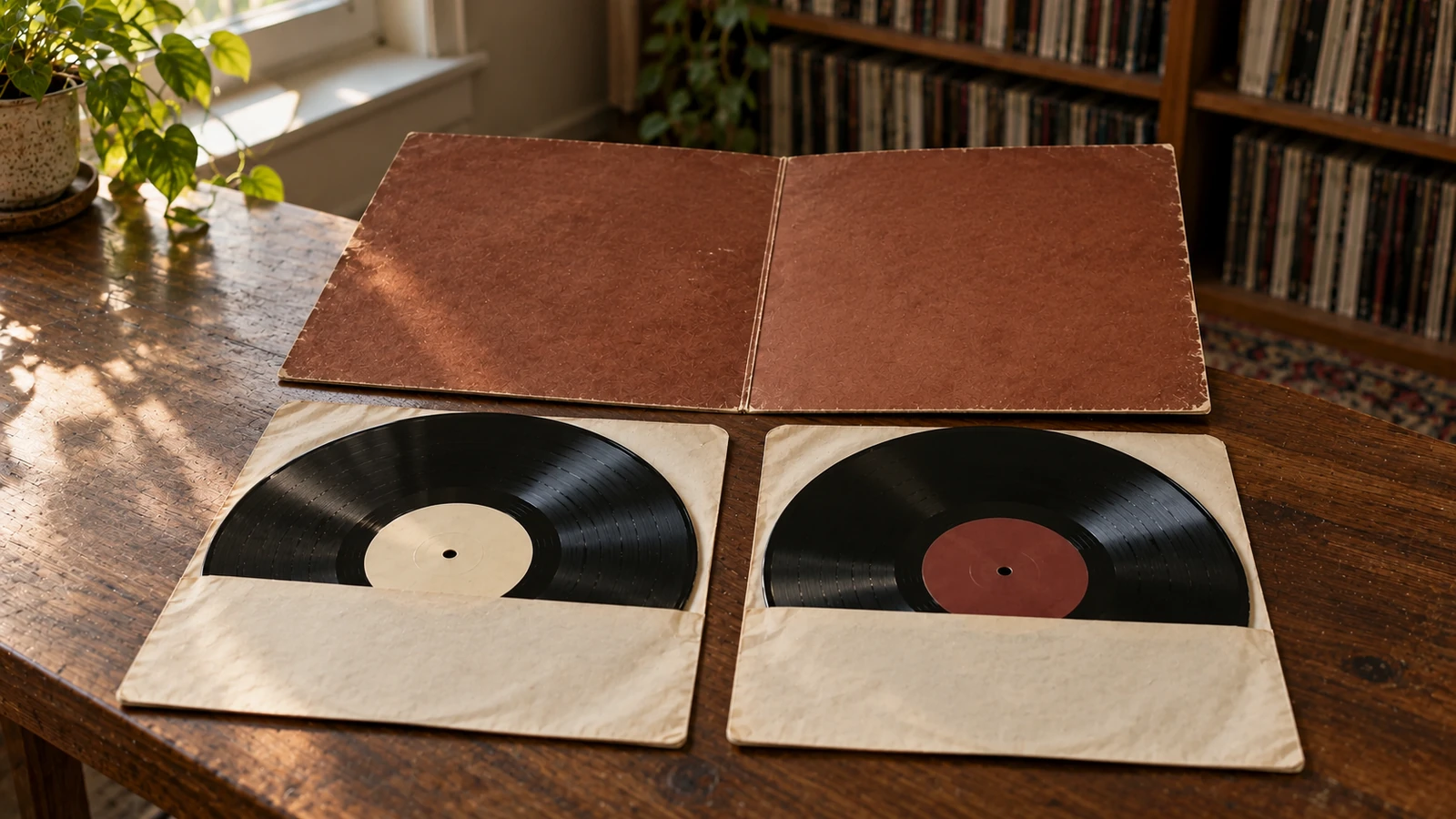
For serious jazz collectors, Music Matters offers Blue Note catalog reissues spread across two 45 RPM discs per album. The format allows wider groove spacing and shorter playing time per side—both beneficial for sound quality.
These are expensive. They’re also sonically remarkable. If jazz is your passion and your system can reveal the differences, Music Matters represents the format’s potential.
The Technical Details
45 RPM advantage. Many audiophile releases use 45 RPM instead of standard 33⅓. Wider groove spacing, higher velocity for better high-frequency response, less inner-groove distortion because each side is shorter. The trade-off: albums require multiple discs and more frequent flipping.
Vinyl weight. 180-gram pressings are heavier than standard 120-140g, providing better stability and often (though not always) better sound. Some audiophile labels use 200-gram for maximum heft. Weight alone doesn’t guarantee quality, but it correlates.
Pressing plants. Not all plants are equal. Quality Record Pressings (QRP), RTI, Optimal, and Pallas have earned audiophile trust. Where a record was pressed matters.
The vinyl compound. Standard pressings often contain recycled material. Audiophile labels use virgin vinyl—or proprietary formulations—for quieter surfaces. You hear this in silent passages and in the noise floor between tracks.
Is It Worth the Price?
Honest answer: it depends.
Your system matters. Budget turntables may not reveal the differences premium pressings offer. As equipment improves, so does the return on quality vinyl. If you’re spinning on a $200 setup, a $50 MoFi might sound identical to a $25 standard release. If you’re running a $2,000 system, the difference can be striking.
Your ears matter. Some listeners immediately hear improvements; others struggle to detect differences. Neither response is wrong. Trust your perception, not forum consensus.
The specific album matters. For records you’ll play hundreds of times—those desert island albums that matter most—premium pressings make sense. For casual listens, standard releases suffice.
The original recording matters. No remaster can fix a poorly recorded album. Audiophile pressings of well-recorded material shine. They can’t rescue fundamentally flawed sources.
Building an Audiophile Collection
Start selectively. Don’t replace your entire collection with premium pressings. Identify your most-played, most-loved albums and upgrade those specifically.
Research before buying. Not every audiophile release is superior. Some standard pressings match or beat premium reissues. Read reviews on The Absolute Sound, Stereophile, Analog Planet, and the Steve Hoffman Forums. Compare notes on specific pressings.
Consider used audiophile pressings. Older MoFi and AP releases hold value and surface regularly on Discogs and eBay. A used pressing in VG+ condition may outperform a new standard release—and cost less than a new audiophile version.
Trust your ears. Expert opinions guide, but personal preference decides. The best pressing is the one that sounds best to you on your system in your room.
The Deeper Value
Beyond sound quality, audiophile labels offer something less tangible: connection to music’s history. Hearing an album from its original master tape, pressed with care, played on revealing equipment—that’s not just listening. It’s experiencing the recording as it was meant to be heard.
Not everyone cares about that. But for those who do, premium vinyl represents the format at its best: music preserved and presented with maximum fidelity.
Whether you invest selectively or build an entire premium collection, these labels deliver experiences standard pressings can’t match. The difference isn’t subtle. It’s the difference between hearing music and hearing into music.
That’s worth something—exactly how much depends on what music means to you.
Sources: Elusive Disc, Wikipedia - Mobile Fidelity, Vinyl Gourmet, The Vinyl Adventure