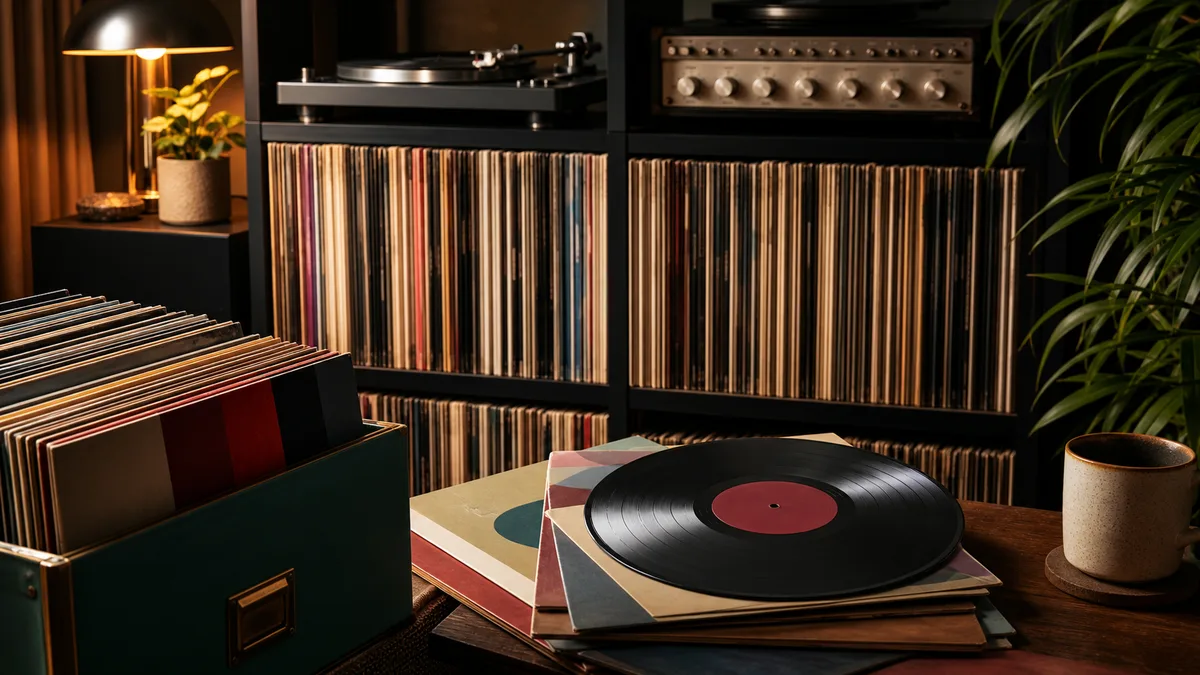
It happens gradually. First you have twenty records that fit comfortably on a single shelf. Then fifty. Then two hundred. One evening you’re standing in front of your collection, wanting to hear a specific album, and you realize you have no idea where it is.
Every collector reaches this moment. The question isn’t whether you need a system—it’s which system fits how you actually live with music.
The Classic: Alphabetical by Artist
This is how record stores do it, and there’s a reason. Simple, universally understood, endlessly scalable.
Artist by last name, A through Z. Band names go by their first significant word (most collectors file “The Beatles” under B, not T, which prevents an absurdly large T section). Within each artist, albums can be chronological or random—your choice.
The alphabetical approach works beautifully when you know exactly what you want to hear. It works less well when you’re browsing for a mood. Miles Davis ends up next to Mac DeMarco. The Velvet Underground neighbors Van Morrison. There’s no inherent relationship between adjacent records.
For large collections, particularly shared ones where multiple people need to find things, alphabetical remains hard to beat. Everyone understands it. Anyone can navigate it.
The Mood Approach: Genre-Based
Organize by musical style first, then alphabetically within each section. Now when you want something funky, everything funky is together. Jazz over here, rock over there, electronic in the corner.
The trick is keeping genres broad. Five categories plus miscellaneous works better than fifteen categories you can’t remember. Rock. Jazz. Soul. Electronic. Classical. Miscellaneous. Done.
Genre organization reflects how many people actually choose music—by mood rather than alphabet. The challenge comes with artists who defy categorization. Where does Prince go? Bowie? Björk? Pick a rule, apply it consistently, and don’t overthink it.
The Compromise: Hybrid Genre-Alphabetical
Most serious collectors land here eventually. Divide into genre sections, then alphabetize within each. It’s how good record stores organize: you go to the jazz section, then find artists A-Z within it.
This approach captures the benefits of both systems. Want something specific? Go to the genre, then the letter. Want to browse a mood? Flip through a whole section. It scales well, makes intuitive sense to visitors, and adapts as collections grow.
The setup takes longer than pure alphabetical. You’re making genre decisions for every record. But once it’s done, maintenance is straightforward.
The Timeline: Chronological
Some collectors organize by release date. 1960s here, 1970s there, everything in historical order.
This turns your collection into a music history lesson. Browsing becomes a journey through eras. You see how sounds evolved, notice connections between artists who recorded in the same years, experience music as a timeline rather than a catalog.
The downside: finding a specific album requires knowing when it was released. That’s natural for some people and utterly foreign to others.
Chronological organization works beautifully for curated collections focused on particular eras. It’s challenging for sprawling collections that span decades and genres.
The Personal History: Autobiographical
In the novel High Fidelity, the protagonist reorganizes his records autobiographically—by when each album entered his life. First record purchased goes first. Latest acquisition goes last.
It sounds chaotic, and for anyone else navigating your collection, it is. But for the collector, this approach transforms shelves into personal history. Every record triggers a memory. That album I bought in college. The one I found on vacation. The gift from someone I loved.
Only you can navigate it. Only you would want to. That might be the point.
The Practical: Mood and Energy
Some collectors organize by how records feel rather than what they technically are. Morning Coffee section. Dinner Party section. Late Night section. Workout music. Melancholy music. Focus music.
This mirrors how streaming playlists work, but in physical form. When you want background for cooking dinner, you don’t want to think about genres or alphabets—you want to grab something appropriate.
The challenge: mood is subjective and changes. Today’s “melancholy” record might feel different next year. Albums that span moods create filing dilemmas. But for collections focused on particular listening contexts, this approach makes everyday use frictionless.
Making It Work
Whatever system you choose, a few practices help:
Use dividers. They transform a solid wall of spines into navigable sections. Alphabetical tabs, genre labels, whatever matches your system. Options range from cheap cardboard to elegant wood.
Create a “now playing” zone. Keep a small section near your turntable for current favorites, recent arrivals, or tonight’s listening queue. This reduces handling of your main collection and keeps your rotation accessible.
Store properly regardless of system. Vertical, never stacked. Not too tight (you shouldn’t have to force records out). Away from heat and humidity. Outer sleeves protecting jackets. Quality inner sleeves protecting vinyl.
Go digital too. A digital catalog lets you search instantly, know what you own while shopping, track condition and pressing details, and share your collection with others. Physical organization handles browsing; digital handles searching.
When Systems Fail
Signs your organization needs attention:
You can’t find records you know you own. Your genre sections no longer match how you think about music. New acquisitions pile up without homes because filing them feels overwhelming. Browsing your collection feels frustrating rather than enjoyable.
Reorganization isn’t failure—it’s evolution. Collections change, tastes change, systems should change too. And reorganizing is actually a great excuse to rediscover records you’d forgotten.
The Right Answer
There’s no universally correct system. The right organization is the one you’ll actually maintain, that helps you find what you want, that makes browsing enjoyable, and that fits your space.
Some people love elaborate systems with subcategories and cross-references. Others keep loose groupings and rely on memory. Both approaches work if they serve the collector.
The goal isn’t perfection—it’s putting on more records. Whatever system gets you from “I want to hear music” to needle in groove with minimum friction is the right system for you.
Your shelves, your rules. Find what works and enjoy the music.
Sources: Vinyl IQ, Livingetc, Big Fudge Vinyl, Sound Matters