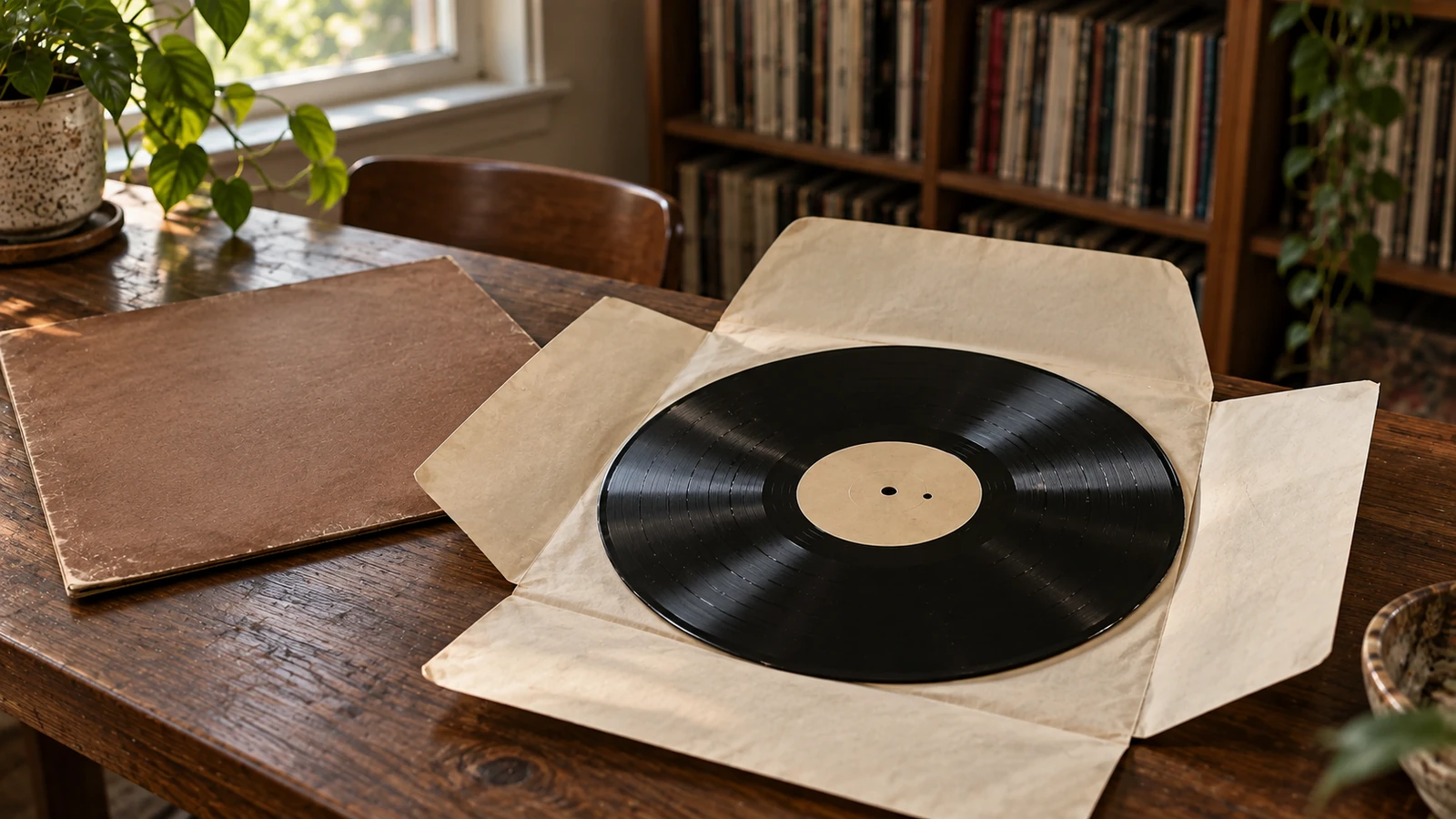
Every time a record slides into a paper sleeve, something bad happens. Not dramatically bad—no one hears it at first. But microscopic paper fibers are scratching the surface. Static is building. Dust is being attracted and held against the grooves.
Do this a hundred times, a thousand times, over years of listening, and the damage becomes audible. Pops and crackles that weren’t there before. A haze over the music. Degradation that can’t be reversed.
The solution costs less than a cup of coffee per record: quality inner sleeves.
What Paper Actually Does
Those paper sleeves that come with new records look innocent enough. They’re not.
Paper sheds fibers. Every time you slide a record in or out, tiny particles end up on the vinyl surface. Some settle into grooves. Some create micro-scratches over time.
Paper generates static. Friction from sliding creates electrical charge. That charge turns your record into a dust magnet, pulling particles from the air and holding them.
Paper is rough. Even high-quality paper has texture that vinyl shouldn’t be rubbing against repeatedly. The cumulative effect of years of friction isn’t subtle.
None of this happens immediately. Records survive paper sleeves for decades. But quiet passages reveal the truth—surface noise that shouldn’t be there, a brightness that wasn’t in the original recording.
The Sleeve Hierarchy
Not all protection is equal. Here’s how options rank:
Pure Polyethylene (HDPE)
High-density polyethylene sleeves are the archival standard. Completely anti-static. Ultra-smooth. No fiber shedding. They won’t degrade over time, won’t react with your vinyl, won’t cause any problems ever.
The only downside: they’re slippery. Records can slide out if the jacket is tilted. And they cost slightly more than alternatives. For records you really care about, these are the answer.
Poly-Lined Paper
A hybrid: paper on the outside for structure, polyethylene on the inside for protection. The smooth poly interior protects the vinyl while the paper exterior provides rigidity and easier handling.
These are the most popular choice among serious collectors—they offer excellent protection without the slipperiness of pure poly. Mobile Fidelity’s Original Master Sleeves are the classic example, with plastic on both sides of the paper layer.
Rice Paper
Traditional audiophile choice, especially popular in Japan. Gentle on vinyl, good anti-static properties, attractive appearance. More expensive and less widely available than poly options, but genuinely excellent.
Plain Paper
What most new records come with. Replace these immediately on any record you care about. They’re fine for temporary storage, not for a collection you want to keep.
Brands That Deliver
Mobile Fidelity Original Master Sleeves — The industry standard. Poly-lined on both sides, optimal rigidity, consistent quality. Many collectors use these exclusively.
Big Fudge — Quality poly-lined sleeves at reasonable prices. Good option for re-sleeving an entire collection without breaking the budget.
Invest In Vinyl — Solid budget option with decent anti-static properties. Fine for most collections.
Sleeve City — Offers variety including pure HDPE and premium poly-lined options. Good if you want choices.
Making the Switch
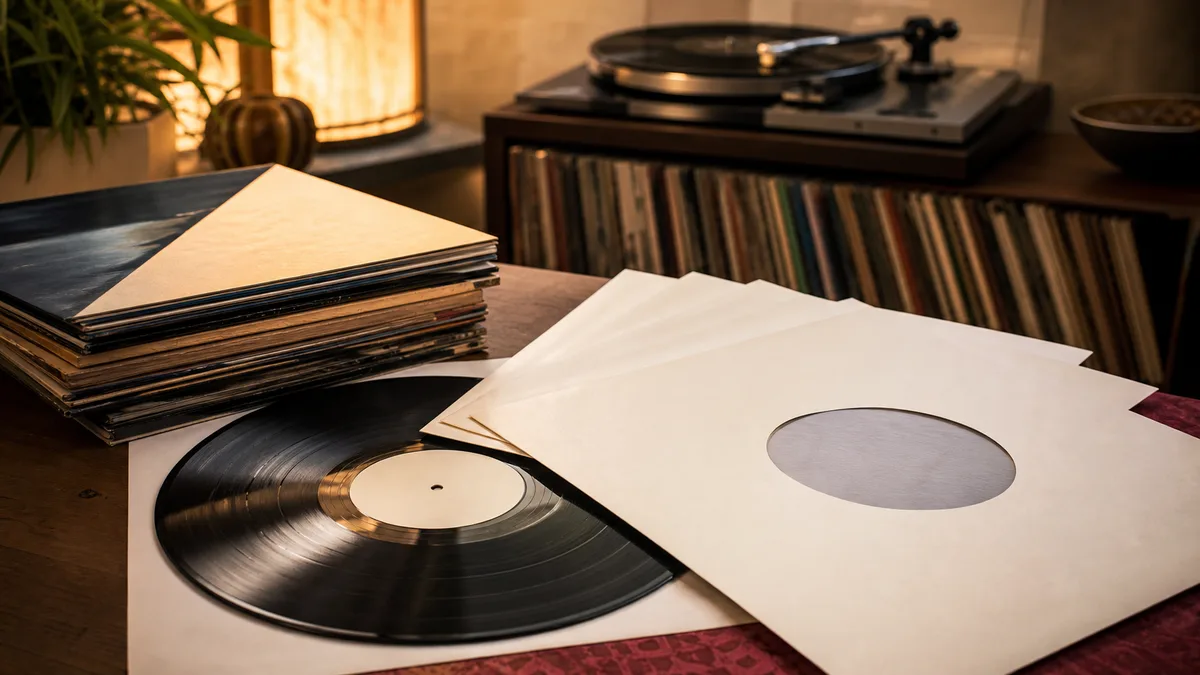
The process is simple:
- Remove the record from its current sleeve
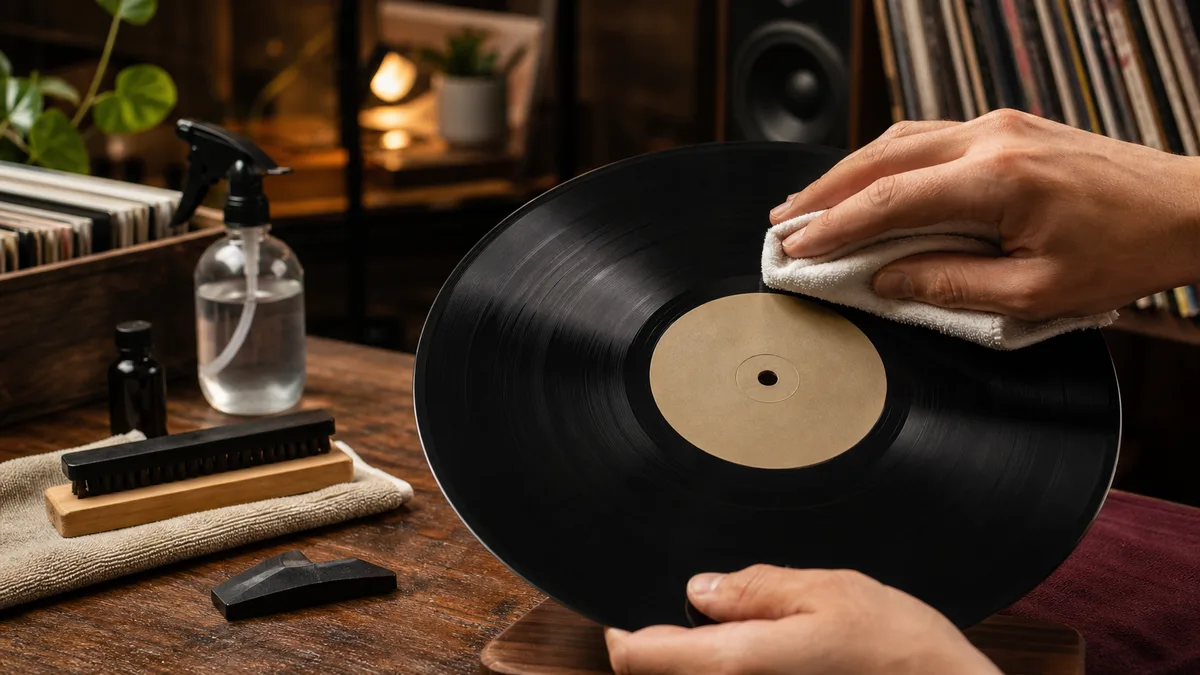
- Check for dust or debris (clean if needed)
- Slide the record into the new sleeve
- Place the sleeved record into the jacket
A few details matter:
Orientation. Put the sleeve opening facing up or toward the jacket spine—never toward the jacket opening. This prevents records from sliding out accidentally.
Don’t force it. If a sleeve feels tight, don’t jam the record in. Forcing creates friction. Find sleeves that fit properly.
One record per sleeve. Never double up, even temporarily. Records rubbing against each other cause damage.
Keep the originals with art. If your record came with a printed inner sleeve, keep it—just store it behind the record in the jacket rather than using it for the vinyl itself.
When to Replace
Immediately: Any record with a plain paper sleeve that you actually care about. Don’t wait. Every play in a paper sleeve causes microscopic damage.
With new purchases: Replace stock sleeves before the first shelving. Make it part of your new-record routine.
During cleaning: When you deep-clean a record, replace the sleeve too. Clean vinyl back into a dirty sleeve defeats the purpose.
The Math
Quality sleeves cost roughly 10-40 cents each depending on type and quantity. For a 500-record collection, completely re-sleeving runs $50-200.
Compare that to replacing a single damaged record ($20-50+), or professional cleaning to remove embedded debris ($2-5 per record), or the irreplaceable value of rare pressings you’ll never find again.
Inner sleeves are possibly the best value in vinyl collecting. Low cost, immediate benefit, protection that lasts forever.
The Outer Sleeve Too
While you’re protecting the vinyl, protect the jacket. Outer sleeves shield artwork from shelf wear, prevent ring wear from visible vinyl, block dust and moisture, and keep all components together.
Standard 3-mil poly works fine. 4-mil is more rigid if you prefer that. Resealable options add convenience. Like inner sleeves, quality outer sleeves are cheap relative to what they protect.
Common Questions
Do new records need re-sleeving? Check what they come with. Many labels now include poly-lined sleeves. If it’s plain paper, replace it before shelving.
How often should sleeves be replaced? Quality poly sleeves last indefinitely. Replace if they become visibly dirty, torn, or develop static issues—but that rarely happens.
Can sleeves be reused? If clean and undamaged, yes. But they’re cheap. When in doubt, use fresh ones.
What about records I rarely play? Those especially need protection. A record sitting in paper for years accumulates more damage than one being played regularly and handled carefully.
The Bottom Line
This isn’t about audiophile obsession or unnecessary expense. It’s about basic stewardship. Records can last generations if stored properly. Paper sleeves undermine that longevity slowly and invisibly.
The upgrade takes minutes per record and costs almost nothing. Your collection deserves better than paper.
Make the switch. Your future self will hear the difference.
Sources: New Vinyl Day,Discogs, BCW Supplies, Sound Matters