Spend enough time around serious vinyl collectors, and the mono versus stereo debate will come up. Strong opinions. Passionate arguments. Occasionally actual hostility over something that seems like it should be straightforward.
But here’s the thing: once you understand what’s actually going on, the debate starts making sense—and you’ll approach collecting differently.
The Basic Difference
Simple version: mono sends the same signal to all speakers. Stereo splits it into left and right channels, creating spatial separation.
But the implications for vinyl go much deeper than that definition suggests.
The Case for Mono
The Punch Factor
Mono recordings often deliver a more direct, powerful sound. Without separation between channels, everything hits you together. Many listeners find this creates a more immediate experience—the music seems to leap out of the speakers rather than spreading across a soundstage.
Original mono pressings often sound louder, with clearer instrumentation. There’s a cohesion that gets lost when sound is divided.
How It Was Actually Made
Here’s what many collectors miss: for albums from the mono era, mono was the primary format. Stereo was the afterthought.
Before the mid-1960s, artists and producers worked on the mono mix first—sometimes exclusively. The stereo version might be created by a different engineer, sometimes without input from the artist, sometimes just a hasty fold-down or artificial separation.
When you buy a mono pressing of a 1950s or early 1960s album, you’re hearing what the artist actually approved. The stereo version might be someone else’s interpretation.
The Master Tape Problem
A practical consideration: mono master tapes for classic albums have often sat untouched for decades. Stereo masters, continuously reissued and copied, may be in worse condition.
When labels reissue mono versions, they’re sometimes working from tapes in better shape than the stereo masters. The result can sound superior simply because the source material is better preserved.
The Case for Stereo
Space and Immersion
Stereo creates a sense of space that mono can’t match. You hear the drum kit to the left, piano to the right, vocals centered. This separation creates a more complex, immersive experience.
For many listeners, the expanded soundstage feels more natural—closer to how we experience live music in physical space.
Complex Arrangements
Albums with intricate production benefit from stereo. When a song has layered vocals, multiple instruments, and detailed effects, stereo allows each element room to breathe. Details that would be buried in a mono mix become audible.
Post-1968 Reality
After 1968, major labels largely abandoned mono for consumer releases. Albums from the 1970s onward were designed for stereo. If mono versions exist at all, they’re afterthoughts or promotional oddities.
For anything post-1970, stereo isn’t just the better choice—it’s usually the only choice.
The Problems with Early Stereo
Fake Stereo
Some albums were originally mono, then “electronically rechanneled” for stereo release. Labels called it “Duophonic stereo.” Collectors call it “fake stereo.”
These recordings take a mono source and artificially create left/right separation. The results often sound worse than either genuine mono or true stereo. If you see “electronically rechanneled” on a label, be cautious.
The Goofy Panning Era
Before engineers figured out stereo mixing, early stereo records could sound genuinely bizarre. Instruments and vocals were sometimes panned hard left or right with nothing in between.
The Beatles’ early stereo mixes are infamous for this: drums and bass on one side, vocals on the other. These choices made some sense on 1960s hi-fi systems but can sound jarring on modern equipment.
Which Should You Actually Buy?
Choose mono when:
- The album was released before 1968
- It’s blues, soul, early rock, or jazz from the mono era
- The mono version was the primary release
- You value punch and directness over soundstage
- You’re buying first pressings and want what the artist heard
Choose stereo when:
- The album was released after 1968
- It’s prog rock, psychedelia, or anything designed for spatial effects
- The stereo mix is known to be the preferred version
- You prefer immersive, wide soundstages
- No quality mono version exists
Genre Guidance
Mono often wins: Early Beatles (through Revolver), classic blues, Northern Soul and Motown, early Bob Dylan, vintage jazz on Blue Note and Prestige.
Stereo often wins: Progressive rock, late 1960s psychedelia, electronic and ambient music, large-scale classical, anything from the 1970s onward.
Equipment Considerations
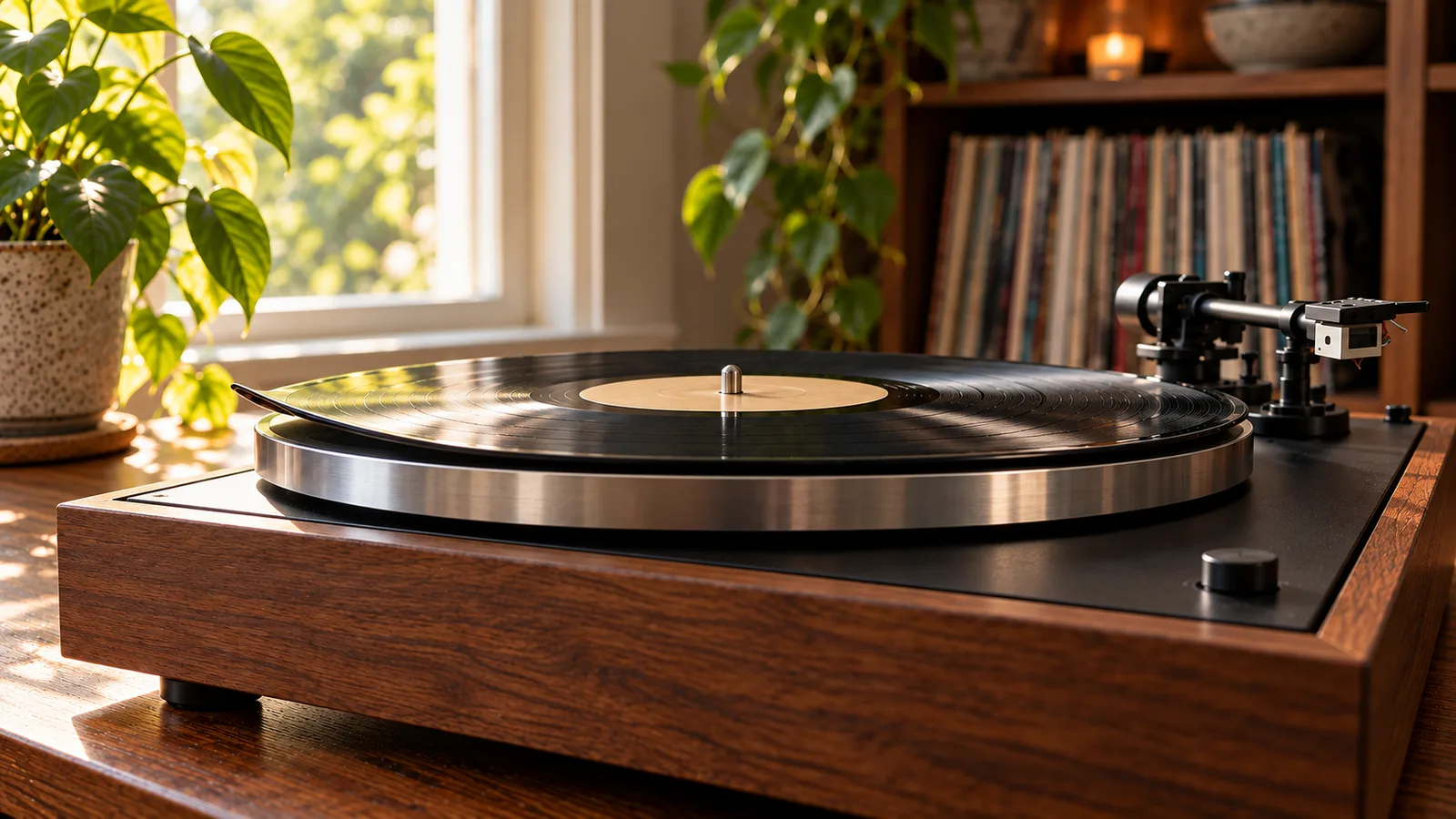
If you’re serious about mono, a dedicated mono cartridge makes a real difference. Unlike stereo cartridges playing mono records, a true mono stylus is optimized for single-channel grooves: reduced surface noise, better tracking, improved clarity, no vertical movement picking up noise.
Some collectors maintain separate turntables for mono and stereo. That’s commitment—but it pays dividends in sound quality.
If you only have a stereo system, many preamps offer a mono summing option. This can improve mono records played on stereo equipment, though it’s not quite the same as a dedicated setup.
Collecting Both
For vintage albums, owning both versions has become increasingly common. The mono and stereo mixes are often genuinely different—different instrumental balance, sometimes different takes, different effects.
Sgt. Pepper’s in mono was personally approved by The Beatles. Pet Sounds in mono was Brian Wilson’s preference. Kind of Blue reveals different aspects in each version.
Both versions aren’t redundant. They’re different experiences of the same music.
The Bottom Line
There’s no universal answer to mono versus stereo. What matters is understanding the difference and making informed choices.
Neither format is inherently better. But for any specific album, one version might be exactly what you’re looking for—and knowing which one saves money and delivers better listening experiences.
Your ears will develop preferences. Trust them.
Sources: Vinyl.com, Sumiko, The Sound of Vinyl, LondonJazzCollector, Rare Records