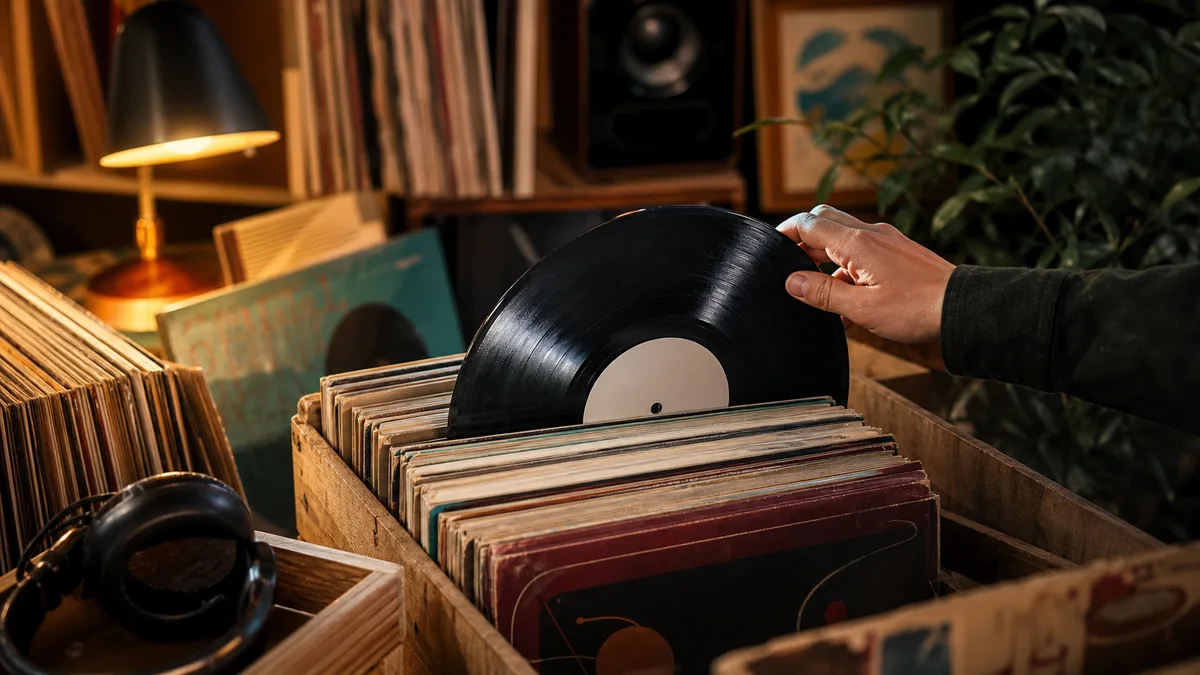
There’s a feeling that online shopping will never replicate: your fingers flip past another Herb Alpert, another Christmas compilation, another copy of Frampton Comes Alive… and then they stop. Something catches your eye. You pull it out. Your heart rate picks up a little. Could this be…?
That’s crate digging. It’s part treasure hunt, part meditation, part history lesson. And when it pays off—when you find something genuinely special hiding in a dusty bin—there’s no high quite like it.
The Whole Point Is Not Knowing
Crate digging emerged from hip-hop culture, where DJs and producers would spend hours hunting through record bins for obscure samples. But the term now covers any adventurous search for vinyl—whether you’re chasing rare pressings, filling gaps in your collection, or just seeing what surprises the universe has in store.
It’s the opposite of clicking “buy now” on Discogs. You don’t know what you’ll find. That uncertainty is the whole point. The hunt is the hobby.
Where the Treasures Hide
Record Stores
The obvious choice, but don’t overlook the dollar bins. Staff picks can introduce you to music you’d never discover otherwise. And if you become a regular? Shop owners start remembering your tastes, setting aside things they think you’d like. That relationship is worth cultivating.
Thrift Stores
This is where patience gets rewarded. Goodwill, Salvation Army, whatever charity shops exist near you—they all receive random donations, price everything at a couple bucks regardless of actual value, and turnover happens constantly.
The catch: most visits yield nothing. You’ll flip through the same worn copies of easy listening compilations over and over. But then, one day, you’ll pull out something incredible that someone clearly didn’t know they were giving away.
Timing helps. Tuesday through Thursday mornings tend to be good—weekend donations have been processed, but weekend crowds haven’t picked through everything yet.
Estate Sales
This is where the serious finds happen. When lifelong collectors pass away, their families often don’t know what they have. Entire collections can go for garage sale prices.
The strategy: arrive early on day one for first pick at full price, or wait until day three when everything’s half off and take what remains. Check estatesales.net or similar sites for listings.
A collector once found an original pressing of Kind of Blue in a box marked “$2 each” at an estate sale. The previous owner had been collecting jazz since the 1950s. His family just wanted the house emptied.
Flea Markets and Swap Meets
High volume, variable quality. Vendors range from casual sellers cleaning out their basements to professional dealers who know exactly what they have. Prices are negotiable. Bring cash. Go early.
Garage Sales
Completely unpredictable. Most have nothing. Occasionally, you stumble onto something spectacular priced to sell fast. Follow neighborhood Facebook groups for listings and be willing to burn some Saturday mornings on dead ends.
What to Actually Look For
Signs That Something Might Be Valuable
Labels tell stories. Original label designs differ from later reissues. Promotional stamps (“DJ Copy,” “Not for Sale”) indicate releases that never hit retail. White label test pressings are by definition rare.
Catalog numbers matter. Lower numbers often mean earlier pressings. If you know the label’s numbering system, you can spot first pressings without pulling out your phone.
Country of origin counts. First-country pressings typically command premiums. Japanese pressings have a reputation for superior quality. UK originals are sought after for British artists.
Physical clues. Heavier vinyl weight often indicates older/better pressings. Gatefold sleeves, original inner sleeves with artwork, included posters and inserts—these all add value and suggest completeness.
The Condition Check
Before you buy, actually look at what you’re getting:
Pull the record out and hold it up to the light. Scratches, warps, and scuffs will be visible. Check the sleeve for ring wear, splits, and water damage. Inspect the label for writing or stickers someone might have added. And give it a subtle smell—musty means mold exposure.
Condition affects value dramatically. The same album might be worth $1 or $100 depending on its state. A cheap price on a trashed record isn’t actually a deal.
The Unwritten Rules
Crate digging has etiquette, and experienced diggers notice when it’s violated.
Respect the space. Put records back where you found them. Handle them carefully—what you pass on becomes someone else’s find. Don’t hog the bins; move along if others are waiting.
Respect other diggers. Leave at least one row between you and the next person. Don’t reach into their section. If you grab something someone else was clearly eyeing, don’t be that person.
Respect the seller. Don’t aggressively lowball on fair prices. If something’s not for sale, accept it gracefully. A friendly relationship today means better treatment next time.
Building the Eye
The best crate diggers can spot interesting records without checking their phones. They’ve internalized enough knowledge that recognition is instant.
How do you get there? Study label histories and how designs changed over time. Learn catalog number sequences for labels you care about. Memorize cover art for artists and genres you love. Read collector forums. Handle lots of records—the knowledge accumulates.
Certain genres hide more value than casual sellers recognize: Northern Soul 45s, original jazz pressings on labels like Blue Note and Prestige, psych rock on small labels, early hip-hop 12” singles, regional funk and soul. If you learn these worlds, you’ll see things others miss.
The Phone Question
Purists dig without digital assistance. There’s something to that—part of the joy is discovery without a safety net.
But realistically, technology helps. The Discogs app lets you scan barcodes for quick identification and check recent sale prices. My Vinyl+ tracks your collection so you don’t accidentally buy duplicates. Use tools to inform decisions, but don’t spend your entire dig staring at a screen.
The Trap
Here’s the thing about cheap records: they add up fast, and most of them aren’t worth playing.
It’s tempting to grab every $1 record that looks vaguely interesting. But you’ll end up with a collection full of mediocre albums you’ll never actually put on. Be strategic. Know what you’re actually looking for versus what’s just an impulse. Factor condition into the equation—a worn record isn’t worth playing even if it’s cheap.
Set a monthly budget. Stick to it. Let some things go.
The Mindset
Accept these truths and you’ll be happier:
You’ll leave empty-handed sometimes. That’s normal. Not every trip produces results, and that’s okay.
The best finds are unexpected. Stay open to discovery. The record you weren’t looking for might become your favorite.
Patience pays. The hunt is part of the hobby, not an obstacle to it.
Your weird taste is an advantage. When you love obscure stuff that nobody else is chasing, you’re more likely to find it underpriced and overlooked.
The Stories
Every digger accumulates stories. The $2 thrift store find that Discogs valued at $500. The estate sale where nobody else realized what was in those boxes. The garage sale with twenty years of promotional copies still sealed.
These stories fuel the hunt. They remind you what’s possible. And eventually, you’ll have your own.
The only way to get there is to start digging.
Sources: Moose Vinyl, Vinyl.com, Record Player Pro, Legend Vinyl