Every vinyl collector has heard it: “Colored vinyl sounds worse.” It’s one of those truisms that gets passed around in forums and record stores, usually stated with absolute certainty by someone who heard it from someone else.
But is it actually true?
The answer, like most things in audio, is more nuanced than the conventional wisdom suggests. Let’s dig in.
The Quick Version
If you don’t want to read the whole thing: modern colored vinyl sounds essentially identical to black vinyl. Picture discs, however, genuinely do sound worse—and there’s a real technical reason for it.
Now let’s explore why.
Where the Myth Comes From
There’s a historical basis for the skepticism. Black vinyl isn’t black by accident—that color comes from carbon black mixed into the PVC compound. And that carbon isn’t just pigment; it actually strengthens the vinyl, improving structural stability and reducing surface noise.
Colored vinyl uses dyes instead of carbon black. In the early days, these dyes didn’t reinforce the PVC the way carbon did, and the quality difference was sometimes audible.
But here’s the thing: that was decades ago. Manufacturing has evolved enormously.
What Changed
Modern PVC formulations and pressing technology have essentially closed the gap. Today’s quality pressing plants produce colored vinyl that performs identically to black vinyl in any meaningful listening test.
The mastering matters more than the color. The pressing plant’s quality control matters more than the color. The actual vinyl weight and composition matter more than the color.
A well-pressed translucent blue record from a reputable plant will sound better than a sloppily pressed black record from a budget operation. Every time.
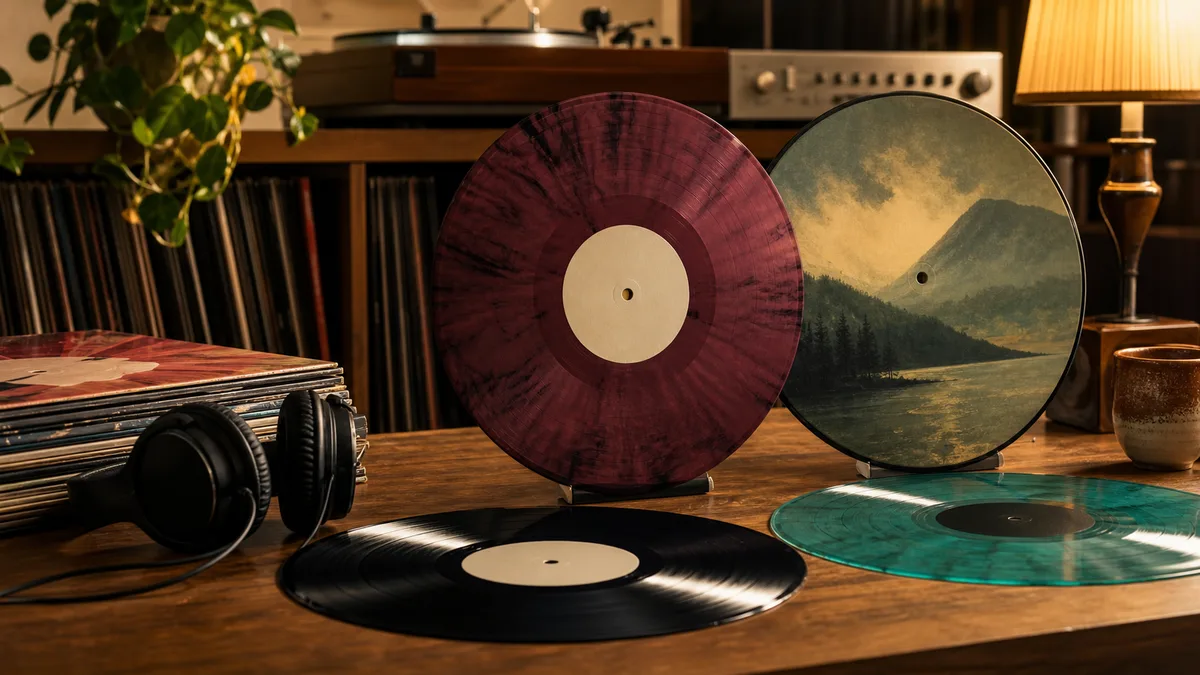
One collector ran a blind test with friends: three pressings of the same album—standard black, solid red, and marble swirl. Nobody could consistently tell which was which by sound alone. The colored ones they expected to sound “worse” scored just as high as the black pressing.
Some Colors Are Trickier Than Others
That said, not all colored variants are created equal.
Glow-in-the-dark vinyl does have documented issues. The phosphorescent particles don’t integrate as smoothly into the PVC compound, and pressing plants note that these can cause increased surface noise.
Metallic and glitter variants introduce tiny particles that can create microscopic inconsistencies the stylus picks up, especially on bass-heavy passages.
Heavy splatter patterns with multiple colors swirled together can occasionally have minor issues at the color boundaries—though modern techniques have minimized this significantly.
Simple solid colors and subtle marbling? Those are indistinguishable from black vinyl in sound quality.
Picture Discs: The Exception
Here’s where the conventional wisdom holds up. Picture discs genuinely do sound worse, and there’s no getting around it.
The reason is structural. A regular record is solid PVC with grooves pressed directly into it. A picture disc is essentially a sandwich: a vinyl core, printed artwork on both sides, then a thin plastic sheet over the image. The grooves are pressed into that plastic layer, not into solid vinyl.
That thin plastic layer is the problem. It can’t hold grooves as precisely as solid PVC. The result: increased surface noise, reduced dynamic range, altered tonal balance (often brighter/thinner), and faster wear with repeated plays.
This isn’t a manufacturing deficiency that can be fixed—it’s inherent to the construction. No amount of technology improvement changes the fundamental physics.
The honest truth about picture discs: they’re made for display, not for critical listening. If you love the artwork and want it on your wall, wonderful. But if you’re buying it to play, understand the trade-off. Many collectors buy both—a picture disc for display and a standard pressing for the turntable.
What Actually Affects Sound Quality
In order of importance, here’s what determines how a record sounds:
-
The mastering. A great master sounds great on any color. A bad master sounds bad even on audiophile-grade black vinyl.
-
The pressing plant. Quality plants with good equipment and skilled technicians produce consistent results. Budget operations produce variable results.
-
Quality control. Inspection catches warps, off-center holes, and pressing defects before they reach you.
-
Vinyl weight and composition. 180g pressings tend to be more stable and less susceptible to warping. The actual PVC formulation matters.
-
The color. This is at the bottom of the list for a reason.
How to Buy Smart
If sound quality is your priority: don’t automatically dismiss colored variants. Research the pressing plant if you can. Check reviews. Heavier weight (180g) often indicates more care was taken. Avoid glow-in-the-dark and heavy metallic variants for critical listening sessions.
If aesthetics are your priority: go wild. Modern colored vinyl sounds great. Picture discs make excellent display pieces. Limited color variants often appreciate in value. Just maybe buy a standard pressing too if you want the best audio experience.
Red flags to watch for: Extremely cheap colored pressings (quality control was probably skipped). Unknown pressing plants with no track record. Picture discs marketed as “audiophile quality” (they’re not, they physically can’t be). Heavy multi-color splatter from questionable sources.
The Bottom Line
The “colored vinyl sounds worse” myth is largely outdated. It made sense in earlier manufacturing eras; it doesn’t reflect modern reality. Today, with quality pressing plants and evolved PVC formulations, colored vinyl performs on par with black vinyl for all practical listening purposes.
Picture discs remain the genuine exception. Their sandwich construction inherently compromises audio quality, and that’s a trade-off worth understanding.
But here’s the real advice: buy what makes you happy. A gorgeous colored variant that you love looking at will bring you more joy than a black pressing you’re ambivalent about. And if it’s from a quality pressing, it’ll sound just as good.
Life’s too short for boring shelves.
Sources: Vinyl Chapters, The Sound of Vinyl, Discogs, Dunk Pressing