There’s nothing quite as deflating as dropping the needle on a record you’ve been excited to play, only to hear snap, crackle, and pop drowning out the music. We’ve all experienced it. And look, some surface noise is part of the vinyl charm—but when it starts competing with the actual song, something’s wrong.
The good news? Dirty records can almost always be saved. A bit of patience and the right technique can bring even thrift store rescues back to life. One collector found a copy of Kind of Blue at a garage sale that looked like it had been used as a frisbee. After a proper deep clean, it played beautifully. Most of that noise isn’t permanent damage—it’s just years of accumulated gunk sitting in the grooves.
Let’s talk about how to clean records the right way.
Why Bother Cleaning?
Every time a record gets played, a little bit of dust and debris settles into those microscopic grooves. Add in fingerprint oils, smoke residue if the previous owner was a smoker, and whatever was floating in the air, and you’ve got a recipe for noise.
But it’s not just about sound quality. That gunk gets picked up by your stylus, which then transfers it to the next record you play. And the debris itself acts like sandpaper, wearing down the groove walls every time the needle passes over it. Dirty records wear out faster—and they take your stylus with them.
Regular cleaning keeps everything sounding better and lasting longer. It’s one of those small efforts that pays off big.
The Daily Routine: Carbon Fiber Brush
For records in regular rotation, a quick brush before each play is all you need. This is the vinyl equivalent of brushing your teeth.
Get yourself a carbon fiber brush—AudioQuest and Boundless make popular ones, but there are plenty of good options. They’re cheap and last forever.
Here’s the technique: let the record spin on the turntable, hold the brush lightly on the surface, and let it ride for a full rotation or two. The carbon fibers attract dust particles through static electricity. Then slowly sweep the brush toward the edge, collecting the dust. Tap it out after and you’re done.
Takes about ten seconds. Makes a noticeable difference.
When Things Get Serious: Wet Cleaning
For records that haven’t been cared for—thrift store finds, estate sale scores, anything that’s been sitting in a garage for decades—you need to go deeper than a brush can reach.
Wet cleaning is the gold standard. It gets into the grooves and floats out debris that’s been there for years.
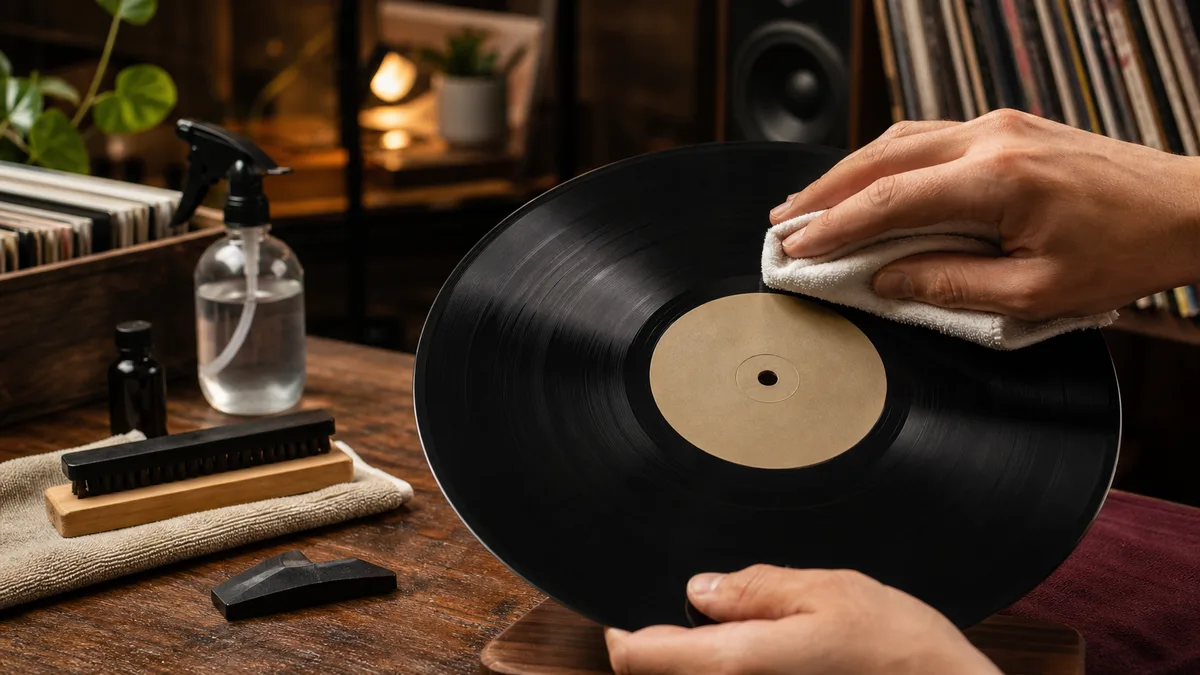
You’ll need a cleaning solution (more on that in a sec), some microfiber cloths, and a soft brush or pad designed for records. There are commercial solutions that work well, or you can make your own with distilled water, a small amount of isopropyl alcohol, and the tiniest drop of dish soap.
The process goes like this: Protect the label first—either use a record clamp or just be very careful not to get it wet. Apply your cleaning solution to the record surface, use your brush to work it gently into the grooves with circular motions following the groove direction, then wipe it off with a clean microfiber cloth. If you used soap, do a rinse pass with just distilled water.
Let it dry completely before playing. Stand it up vertically and give it fifteen minutes or so.
One crucial detail: never use tap water. The minerals in tap water leave deposits in the grooves that are worse than the dirt you’re trying to remove. Distilled water only. It’s cheap and available at any grocery store.
Going Pro: Cleaning Machines
If you’ve got more than a casual collection, a cleaning machine might be worth the investment. They save time and do a more thorough job than hand washing.
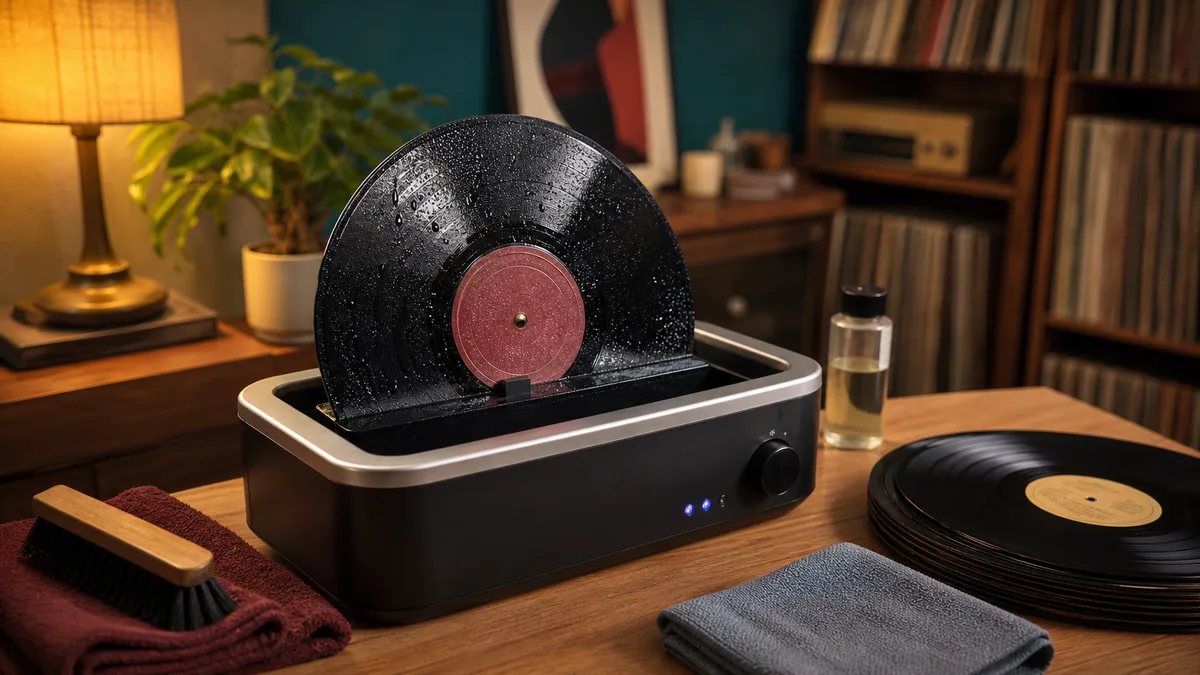
Spin-Clean (around $80-100) is where most people start. It’s a simple basin where the record sits vertically while you rotate it through cleaning fluid. Both sides get cleaned at once, and the results are genuinely impressive for the price. Perfect for cleaning a batch of thrift store finds in one session.
Vacuum cleaners like the Record Doctor or Pro-Ject VC-S ($300-500) add suction to the equation, pulling dirty fluid out of the grooves instead of just wiping it off. This is where you start seeing serious improvements, especially on really grungy records.
Ultrasonic cleaners like the Degritter ($3000+) are the nuclear option. They use high-frequency sound waves to create microscopic bubbles that implode against the record surface, dislodging particles from deep in the grooves. If you’ve got a valuable collection or you’re serious about audio quality, nothing else comes close. But yeah, they cost as much as a decent turntable.
Things That Will Ruin Your Records
While we’re at it, let’s talk about what NOT to do.
Never use household cleaners. No Windex, no 409, no Pledge. These chemicals can damage the vinyl and leave residues that attract even more dust.
Skip the paper towels. They’re abrasive and leave fibers behind. Microfiber only.
Don’t play wet records. This seems obvious, but people do it. Wet vinyl is more susceptible to damage, and you’ll gunk up your stylus.
Never stack records while they’re drying. Water trapped between two records is a mold invitation.
And while we’re at it—don’t forget to clean your stylus, too. A dirty needle just puts all that grime right back on your freshly cleaned records.
Building Good Habits
The best cleaning is the cleaning you don’t have to do. A few habits will keep your records cleaner in the first place:
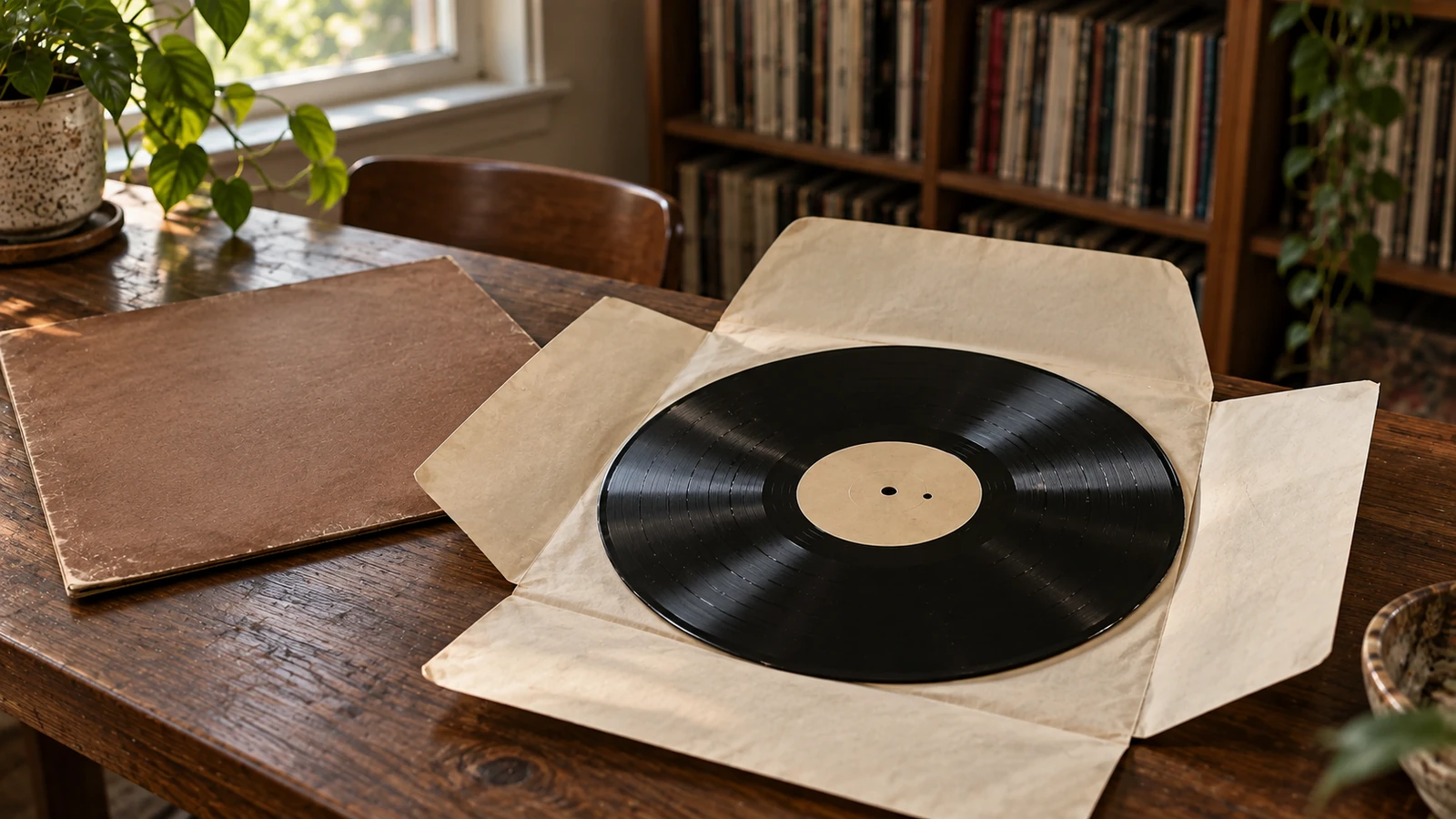
Replace those paper inner sleeves with poly-lined ones. Paper sheds particles and can scratch the vinyl every time you slide it in and out. Poly sleeves are smooth and anti-static. They cost almost nothing and they protect your records for life.
Handle records properly. Edges and labels only. Never touch the playing surface with your fingers. Those oils are murder on grooves.
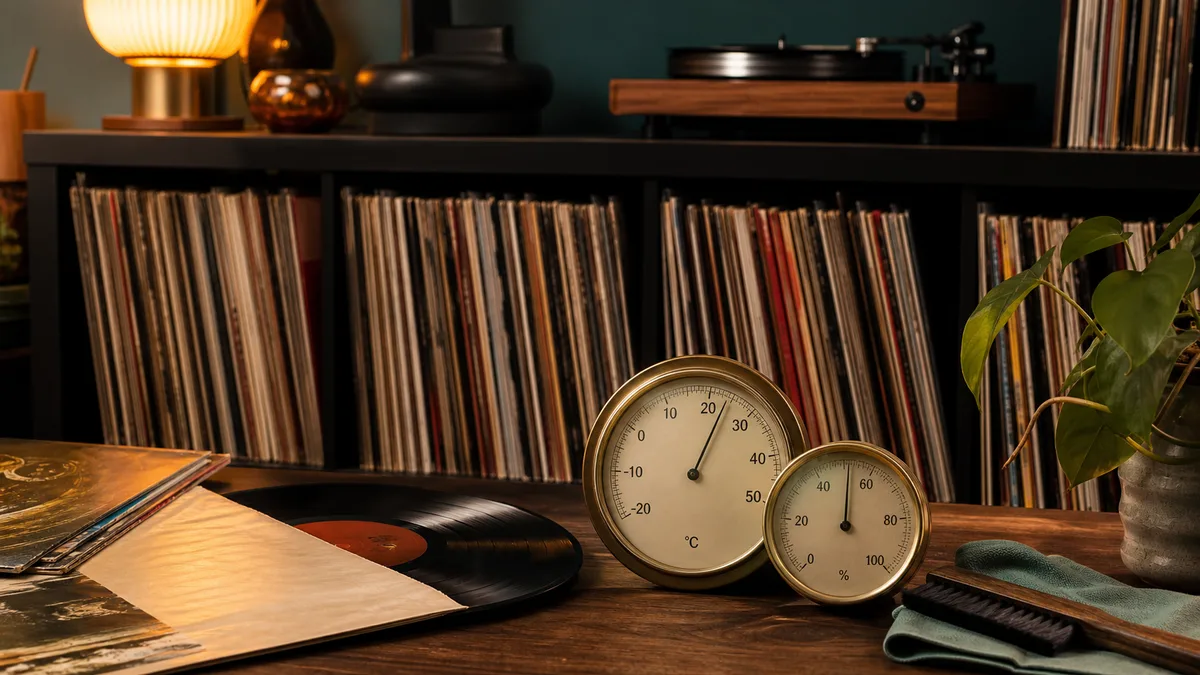
Store them vertically in a cool, dry place. Records lying flat get warped and attract dust.
And brush before every play. Ten seconds of prevention beats an hour of cleanup.
The Payoff
Clean records sound better. That’s the bottom line. All that warmth and detail that makes vinyl special—it’s hiding under a layer of dust and grime on a lot of collections.
Take an evening to clean through your most-played records. The difference will remind you why you fell in love with the format in the first place.
Your ears deserve it.
Got a cleaning tip that works for you? Share it with us at [email protected].