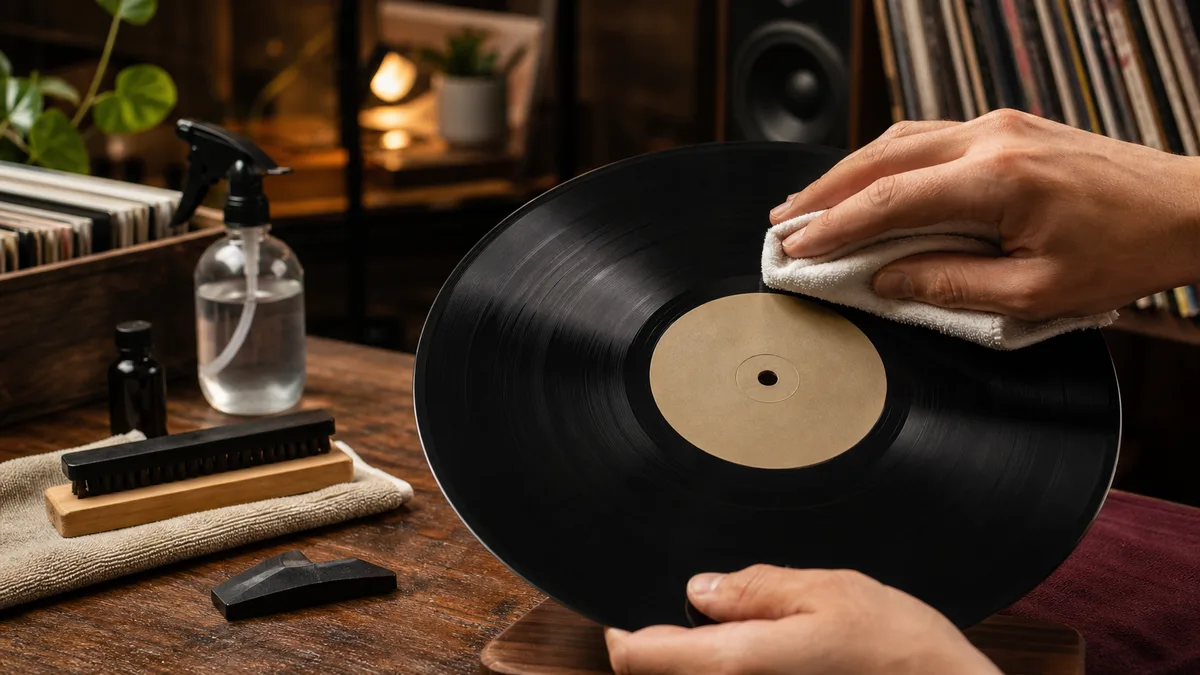
There’s a moment every collector experiences with used records. You’ve done the brush, the wet wash, maybe even run it through a Spin-Clean—and there’s still noise. That crackling, that underlying hiss that won’t quit. You hold the record up to the light and it looks clean. But something’s still in there, deep in those grooves, mocking your efforts.
This is where ultrasonic cleaning enters the picture. It’s the nuclear option—the deep clean that reaches places nothing else can. And for a lot of collectors, the first time they heard a properly ultrasonically cleaned record was genuinely revelatory.
The Science (Made Simple)
Ultrasonic cleaners create tiny bubbles in a water solution through high-frequency sound waves. These bubbles are microscopic—far smaller than a human hair, small enough to fit into record grooves. When they collapse, they release a tiny burst of energy.
Now imagine millions of these microscopic explosions happening across the entire surface of a record, reaching into every groove, dislodging decades of accumulated gunk that no brush or cloth could ever touch.
That’s ultrasonic cleaning. It sounds almost too good to be true, but the physics are real and the results speak for themselves.
Why Collectors Swear By It
The advantages over traditional methods are significant:
Nothing physically touches your record. No brushes scraping across the surface, potentially dragging particles along. The bubbles do the work without contact.
It goes everywhere. Those grooves are tiny, and they go deep. Brushes ride along the top; ultrasonic bubbles reach the bottom.
Consistency matters. Hand cleaning depends on technique—some spots get more attention than others. Ultrasonic treatment is uniform across the entire surface.
It handles the hard cases. Mold, smoke residue, decades of dust cemented in by humidity—stuff that laughs at normal cleaning often surrenders to ultrasonic treatment.
One collector described cleaning a record that had been stored in a smoker’s home for thirty years. Standard cleaning barely touched it. After ultrasonic treatment, the difference was so dramatic they thought they’d swapped records by accident.
The Reality Check
Before you get too excited, some honest caveats:
It’s not cheap. A decent setup runs several hundred dollars minimum. Dedicated units purpose-built for records can cost over $1000.
It takes time. Each cleaning cycle runs 10-30 minutes, plus drying time. You’re not quickly running through a stack.
It won’t fix damage. Scratches are physical damage to the groove walls. No cleaning method repairs them. Ultrasonic cleaning removes contaminants—it doesn’t rebuild vinyl.
There’s a learning curve. Water temperature, cleaning solution concentration, timing—getting optimal results takes some experimentation.
Setting Up a System
You’ve got two basic approaches: build your own setup with off-the-shelf components, or buy a purpose-built record cleaning machine.
The DIY Route
The ultrasonic tank is the core. Look for 35-45 kHz frequency (that’s the sweet spot for vinyl), with temperature control. Tank size determines how many records you can do at once—6 liters handles a few records, 10-15 liters lets you batch process.
A rotation system keeps records moving during the cleaning cycle for even treatment. Commercial record rotators exist, or some collectors rig up slow-spinning motors. Manual rotation works but gets tedious.
Drying is crucial—you can’t play wet records. Air drying works but takes forever. A vacuum record cleaner speeds things up dramatically. Some collectors use microfiber cloths carefully, though that reintroduces contact.
A DIY setup can come together for $200-400 if you’re resourceful. Add a vacuum drying solution and you’re looking at $800-1400 total.
Purpose-Built Units
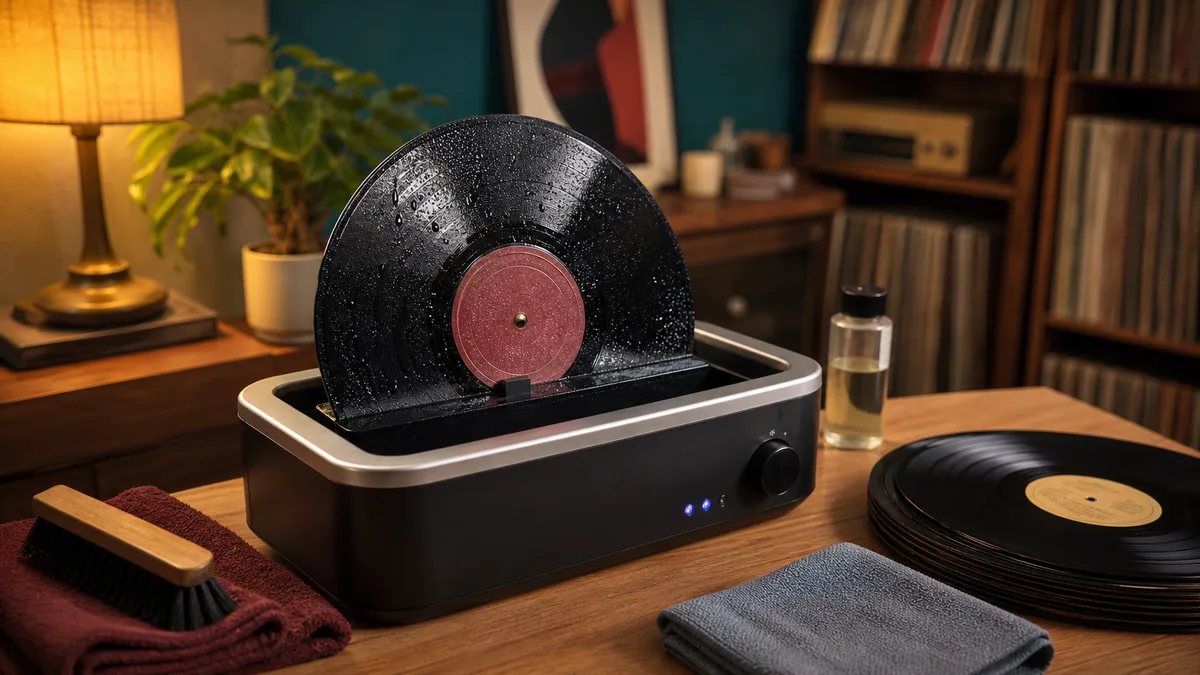
Machines like the Degritter, Audio Desk Systeme, or the budget-friendly Humminguru combine everything into one package. Insert a record, press a button, receive a clean record.
They cost more ($500-2000+) but eliminate the hassle of managing multiple components and figuring out the process yourself. For many collectors, the convenience is worth the premium.
The Actual Process
For those going the DIY route, here’s what works:
The solution matters. Distilled water is non-negotiable—tap water leaves mineral deposits. Add a small amount of surfactant (wetting agent) to help the bubbles penetrate grooves. Some collectors add 5-10% high-purity isopropyl alcohol. Never use dish soap; it leaves residue.
Temperature control is critical. Around 130°F (55°C) is the sweet spot. Go above 135°F and you risk warping the vinyl. Seriously, don’t exceed this.
Keep records vertical and spaced. About an inch apart is ideal. Make sure the labels stay above the water line—wet labels are ruined labels.
Run time depends on condition. Lightly dusty records might need 10 minutes. Decades of grime might need 20-30.
Rinse if you’re thorough. A final pass in pure distilled water removes any lingering cleaning solution.
Dry completely. No exceptions. Wet records attract dust immediately, and moisture sitting in grooves is bad news.
Who Actually Needs This?
Be honest with yourself about where you are:
This makes sense if:
- You regularly buy used or vintage vinyl
- You have a significant collection (200+ records)
- You’ve inherited records in unknown condition
- You’re an audiophile who notices subtle noise issues
- You’re dealing with mold, smoke damage, or serious neglect
This is probably overkill if:
- You mainly buy new records from reputable labels
- You have a small collection that you maintain well
- You’re a casual listener who doesn’t notice minor surface noise
- You’re on a tight budget with other priorities
The math can work in your favor, though. If you regularly rescue $20-50 used records that need restoration, a $500 cleaning setup pays for itself surprisingly fast. Plus, cleaner records mean less stylus wear, saving money on cartridge replacements down the line.
The Results
When ultrasonic cleaning works, it really works:
Surface noise drops dramatically—50-90% reduction isn’t uncommon on dirty records. Those persistent pops and clicks often disappear. Dynamics improve because the stylus is tracking clean grooves instead of fighting through debris.
One collector put it perfectly: “My thrift store finds sound like new pressings now. Records I’d written off as too noisy to enjoy are back in regular rotation.”
That’s the promise of ultrasonic cleaning. It won’t turn every beat-up record into a pristine copy, but for records that are dirty rather than damaged, it’s often the difference between “unplayable” and “genuinely enjoyable.”
Worth the investment? For serious collectors who regularly deal with used vinyl, absolutely. For everyone else, know it exists for when you need it—some records deserve the deep clean.
Sources: High-End Audio, The Vinyl Archivist, Deaf Man Vinyl, What Hi-Fi?