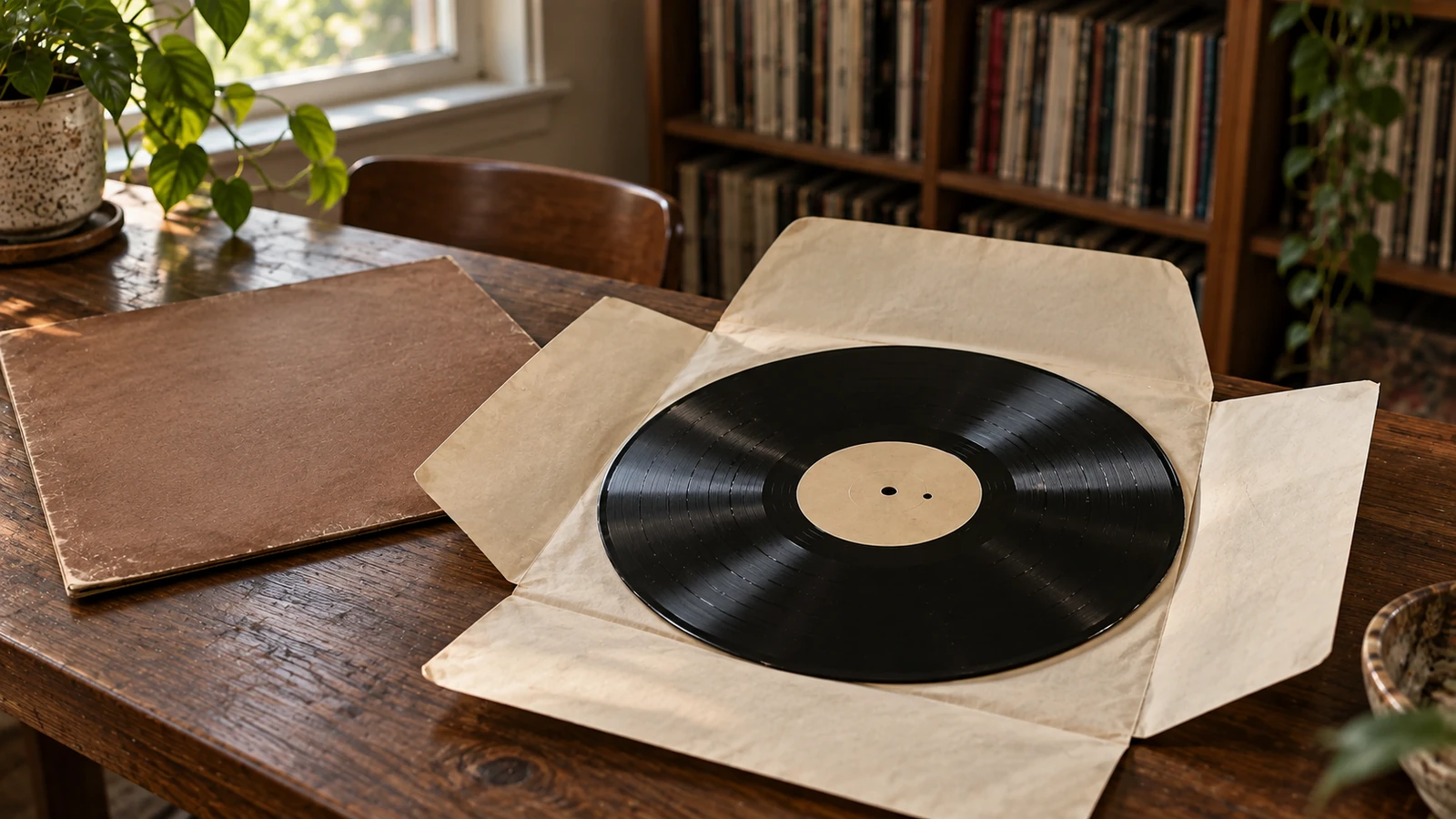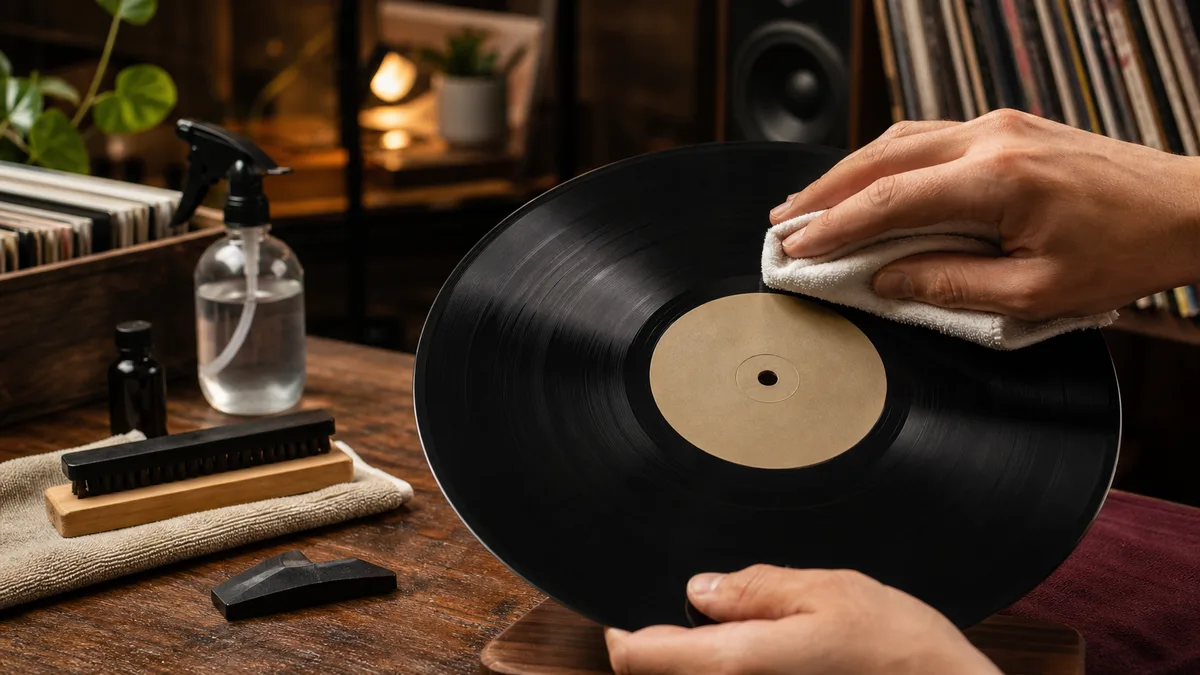
A collector once shared a horror story that still makes people wince. He’d inherited his father’s record collection—hundreds of LPs from the 1960s and 70s, including original pressings of albums that would make any collector jealous. Stored them in the attic for “safekeeping” while renovating the house. One hot summer later, he went to retrieve them and found a warped, mold-spotted disaster. Decades of careful collecting, destroyed by a few months of neglect.
It’s a brutal lesson: vinyl is tougher than people think, but it has enemies. Heat. Humidity. Negligence. Your records don’t need much from you, but they do need the right environment.
Why Environment Matters
Records are made from PVC—polyvinyl chloride—and it’s sensitive stuff. Too hot, and the vinyl softens. Too humid, and mold colonizes your sleeves and creeps onto the records themselves. Too dry, and static builds up, attracting every dust particle in the room.
The good news? If you’re comfortable in a room, your records probably are too. The bad news? Lots of places we think are fine for storage—attics, basements, garages—are actually terrible.
The Magic Numbers
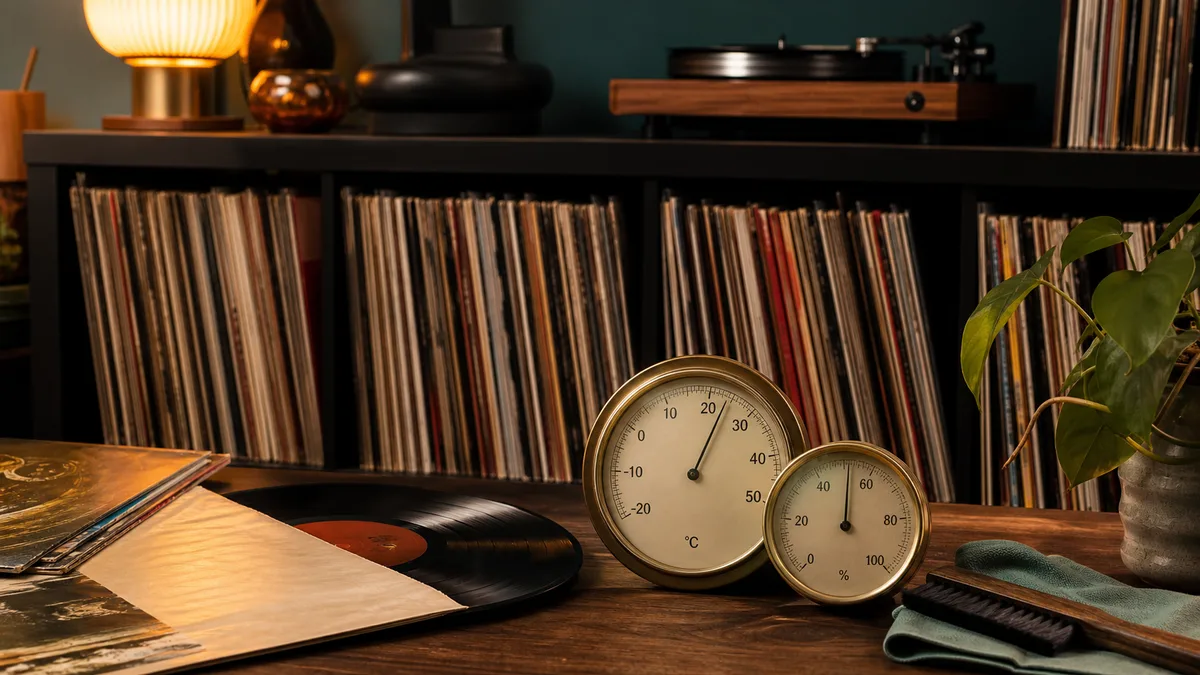
Temperature: 65°F to 70°F (18°C to 21°C)
This is the sweet spot. Records stay stable, vinyl stays solid, everyone’s happy.
Above 80°F, you’re entering the danger zone. Warping becomes a real risk. Hit 90°F or higher, and vinyl starts to soften—even brief exposure can cause permanent damage. And direct sunlight? A record left in a sunbeam can warp in minutes, no matter what the ambient temperature is.
Common killers:
- Cars in summer. Interior temperatures can hit 140°F. Never leave records in a car, not even “just for a few minutes.”
- Attics. Temperature swings wildly, getting brutally hot in summer.
- Near windows. Direct sun is the enemy.
- By radiators or heating vents. Consistent low-level heat warps records slowly but surely.
Cold is less dangerous, but extreme cold makes vinyl brittle. If your records have been somewhere cold, let them warm up gradually to room temperature before playing them.
Humidity: 40% to 50% relative humidity
Too humid and you get mold—that musty smell, those spots on the sleeves, that nightmare scenario where paper inner sleeves stick to the vinyl surface. Album artwork warps and deteriorates. It’s ugly.
Too dry and static becomes a constant battle. Paper sleeves get brittle and tear. Surface noise increases.
Somewhere in the 40-50% range keeps everything balanced.
Where to Put Them (and Where Not To)
Good locations:
- Climate-controlled living spaces—where you hang out, basically
- Interior rooms away from exterior walls
- Dedicated shelving away from foot traffic and vibrations
Terrible locations:
- Attics. Temperature swings are violent, humidity often problematic.
- Basements. Unless they’re properly finished and dehumidified, basements tend to be damp. Flooding risk is real.
- Garages. Uncontrolled climate, dust, temperature extremes. Just no.
- Near exterior walls. More exposure to outdoor temperature changes.
- Close to HVAC systems. The vibrations can affect records, and the airflow isn’t great.
The Fundamentals of Physical Storage
Vertical, always. Store records like books on a shelf, standing upright. Never stack them horizontally. The weight of stacked records creates pressure that leads to warping, and the record jackets get ring wear from the edges of records below.
Support them properly. Records shouldn’t lean at severe angles. Use sturdy shelving that keeps them roughly vertical. A record leaning against nothing will slowly warp under its own weight.
Upgrade your sleeves. If your records are still in the original paper inner sleeves, consider switching to polyethylene or polypropylene alternatives. Paper sheds particles, builds static, and can scratch vinyl every time you slide it in and out. Poly sleeves are smooth, anti-static, moisture-resistant, and last forever. They cost almost nothing per record.
Dealing With Problem Environments
Not everyone has a perfectly climate-controlled listening room. Here’s what helps:
For humidity issues:
- A dehumidifier is essential if you’re in a humid climate or storing records anywhere damp
- Silica gel packs in storage boxes absorb moisture in enclosed spaces
- Air conditioning naturally dehumidifies while cooling
For dry air:
- Humidifiers add moisture during dry winter months
- Even houseplants help regulate humidity naturally
For temperature:
- Keep records away from heat sources—obvious but often ignored
- Thermal curtains block heat from windows
- Ceiling fans distribute air evenly, preventing hot spots
A Simple Tool: The Hygrometer
A hygrometer measures humidity, and you can get a decent digital one for under $20. Stick it in your storage area and check it occasionally, especially during seasonal changes. Knowing you have a problem is the first step to fixing it.
Some collectors get obsessive about monitoring conditions. You don’t have to go that far. Just knowing that your storage space is in the safe zone gives peace of mind.
Long-Term and Off-Site Storage
If you’re storing records in a facility or keeping them somewhere you won’t access often:
- Insist on climate control. Non-climate-controlled storage units are basically expensive garages.
- Use proper storage boxes. Record boxes with some ventilation, not sealed plastic totes that trap moisture.
- Add silica gel packs. Helps maintain stable humidity.
- Check on them. Don’t assume conditions stay stable. Visit periodically, especially after seasonal changes.
- Insure them. If your collection has significant value, make sure it’s covered.
The Bottom Line
None of this is complicated. Records want to be where you want to be—comfortable room temperature, reasonable humidity, out of direct sunlight. They want to stand upright on sturdy shelves in decent sleeves.
Get those basics right, and your collection will outlast you. Get them wrong, and even the most valuable records become unplayable artifacts.
That story about the ruined collection in the attic? The collector who told it now keeps his rebuilt collection in his living room, right where he can see it and enjoy it. “They’re not doing anyone any good boxed up somewhere,” he said. “And at least in here, I know they’re safe.”
Good records deserve good homes.
Sources: Freestyle Vinyl, Groove Guardian, Neo-Online, Microforum