There’s a story that circulates in collector circles about someone who bought a copy of The Velvet Underground & Nico at a yard sale for fifty cents. Looked like any other old record. Turns out it was a torso-cover first pressing—worth several thousand dollars. The seller had no idea. Neither did the buyer, at first.
That’s the thing about first pressings: they look almost identical to later versions. Same album. Same songs. But the difference in value can be staggering—sometimes 10 to 20 times more, occasionally even higher.
So how do you tell them apart? It takes some detective work, but it’s not as mysterious as it might seem.
What Makes First Pressings Special
When an album first comes out, it gets pressed from stampers cut directly from the original master tape. Everything’s fresh—the stamper hasn’t been worn down by thousands of pressings, the master hasn’t been copied and recopied. Many collectors believe this translates to better sound quality, and honestly, there’s something to it. First pressings often have a clarity and presence that later versions lose.
But beyond the audio, there’s something else going on. A first pressing is the original artifact. It’s what fans bought on release day. It’s the version that was spinning in dorm rooms and living rooms when the album was new. There’s history in that.
Reading the Dead Wax
The best place to start is the dead wax—that smooth ring between the last groove and the label. Every record has information etched or stamped there, and learning to read it is like learning a secret language.
You’ll find matrix numbers, which tell you about the specific stamper used. You might find engineer initials—”RL” for Robert Ludwig, “BG” for Bernie Grundman—masters whose work collectors actively seek out. Sometimes there are handwritten messages or symbols.
The key is knowing what to look for on the specific album you’re investigating. A first pressing of Led Zeppelin I has different markers than a first pressing of Rumours. Discogs is invaluable here—look up the album, find the original pressing, and note exactly which matrix codes and markings are associated with it. Then compare to what’s in your hands.
It takes time to learn, but once you get the hang of it, you’ll be checking the dead wax on every record you encounter.
Labels Tell Stories
Record labels aren’t static—they evolve over time. Companies change their logo designs, their color schemes, their text layouts. These changes are like geological strata: you can date a pressing by what the label looks like.
Take Atlantic Records. Early Led Zeppelin pressings came on turquoise labels. Later ones were orange. If someone’s trying to sell you a “first pressing” of Led Zeppelin II with an orange label, something’s wrong.
Beyond color, look at the fine print. Early labels often have a different texture—more matte, less glossy. The fonts might be slightly different. Text might be arranged differently. These details matter.
Some of this you can learn from research, but some of it you develop by handling lots of records. Visit stores that deal in vintage vinyl. Hold different pressings of the same album side by side. Your eye starts to pick up the differences.
The Feel of the Vinyl
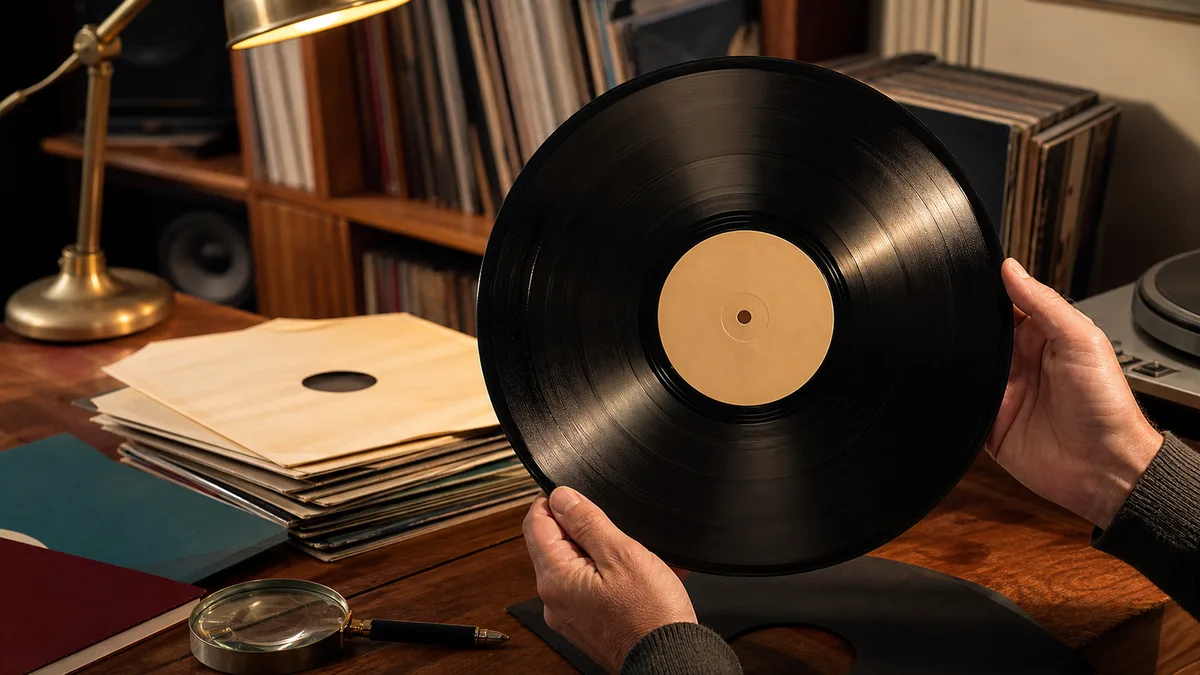
This one’s subtle, but real: first pressings often feel different in your hands.
In the glory days of vinyl production, records were pressed on heavy, quality vinyl. By the 1980s and especially the 1990s, cost-cutting meant thinner, flimsier discs. If you’re holding what’s supposed to be a 1969 pressing and it feels flimsy, be suspicious.
There’s also the simple fact that stampers wear down. The first records off a stamper are sharp and clean. Later ones, as the stamper degrades, show subtle imperfections. Experienced collectors can sometimes feel the difference in groove quality.
Packaging Clues
The sleeve and everything that came with it can be dead giveaways.
Barcodes are the big one. Barcodes weren’t standard on records until the late 1970s, and some labels didn’t adopt them until the 1980s. If you’re looking at a supposedly 1960s pressing with a barcode on the sleeve, it’s not original.
Printing quality matters too. Original sleeves were often laminated, with a particular sheen that later reprints lack. The paper stock might be different—heavier, different texture. Colors can shift between printings.
What’s inside counts. Original pressings often came with extras: lyric sheets, posters, stickers. The Dark Side of the Moon famously included posters and stickers. If those are missing, maybe the record’s been repackaged—or maybe it was never a first pressing at all.
The Trap of “Original”
Here’s something that trips people up: “original pressing” doesn’t mean “first pressing.”
An album might have been in production for years during its original release. A 1975 pressing of an album released in 1973 is still an original pressing—it’s from the original production run, not a later reissue. But it’s not a first pressing.
For value and sound quality purposes, collectors specifically want the earliest pressings—the first stampers, the first batch off the line. Later original pressings are worth more than reissues but less than true first pressings.
Country Matters
Abbey Road was released simultaneously in the UK and US in 1969. Are both first pressings? Technically yes, but they’re different pressings from different plants.
Collectors often have preferences. Generally, the pressing from wherever the album was recorded or first released is considered the “true” first. For most British acts, that’s UK pressings. For American artists, US pressings.
Japanese pressings get special attention too—not as “first pressings” but as high-quality alternatives, often with unique packaging.
Use the Tools Available
Nobody memorizes the matrix codes for every album ever pressed. That’s what databases are for.
When you find a record you want to verify:
- Find the catalog number on the spine or label
- Look it up on Discogs
- Compare every detail you can against the documented first pressing
- Check the photos users have uploaded of confirmed copies
Apps like My Vinyl+ can speed this up—scan a barcode to pull up release info, cross-reference against Discogs data, and keep notes on what you’ve verified. Building this habit saves you from expensive mistakes and helps you spot deals others miss.
Developing the Eye
Like any skill, identification gets easier with practice. Start with records you already own—research them, figure out which pressings you have. Hit up record stores and handle different versions of the same album. Ask questions. Join collector communities where people discuss this stuff obsessively.
Every collector has stories of the one that got away—the first pressing they didn’t recognize until it was too late. But they also have stories of incredible finds, moments when the knowledge paid off. That’s part of what makes this hobby addictive.
The records are out there. Learning to recognize them is half the fun.
Sources: Atlas Records, Discogs Price Guide, Diggers Factory, Microforum