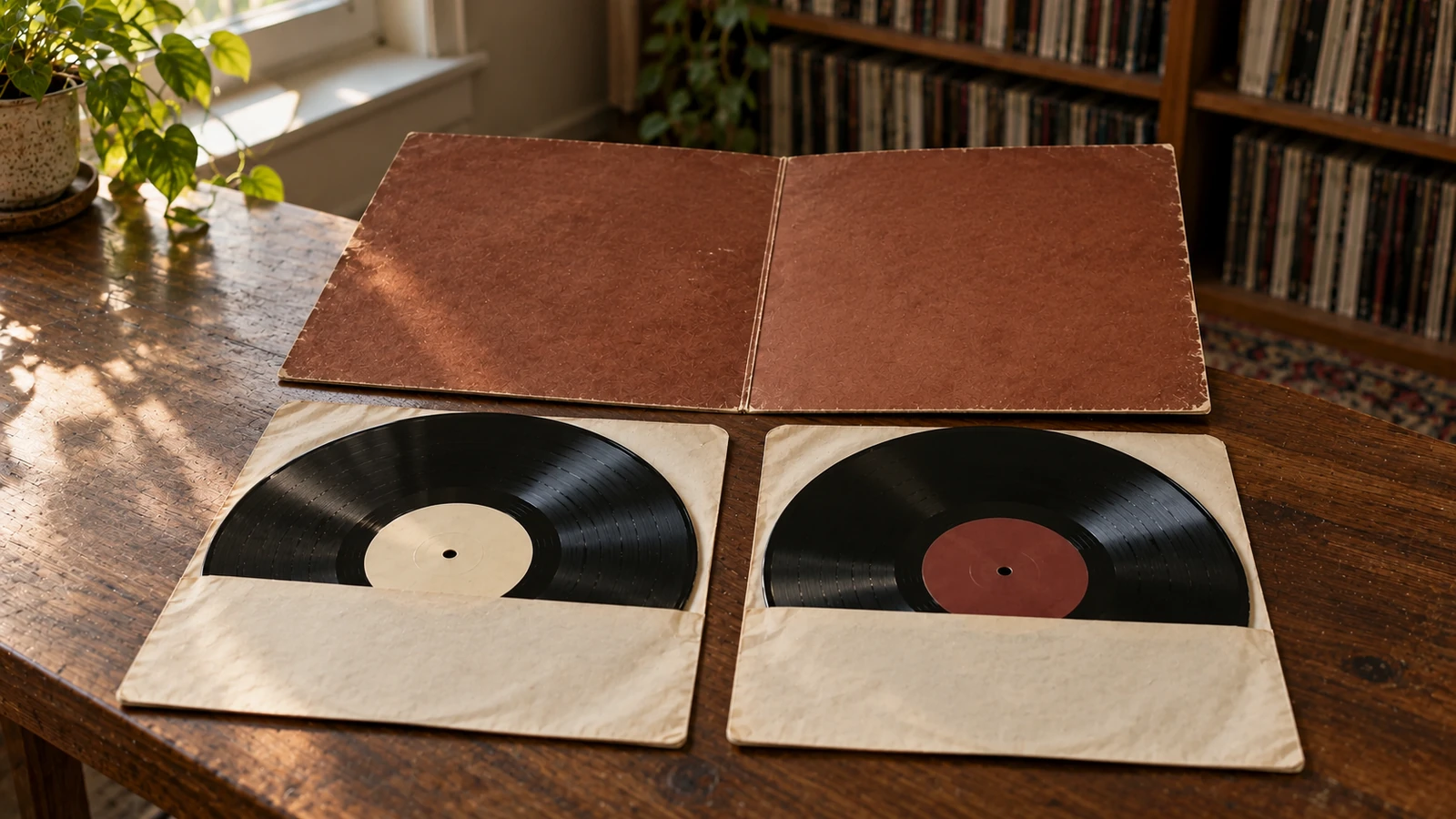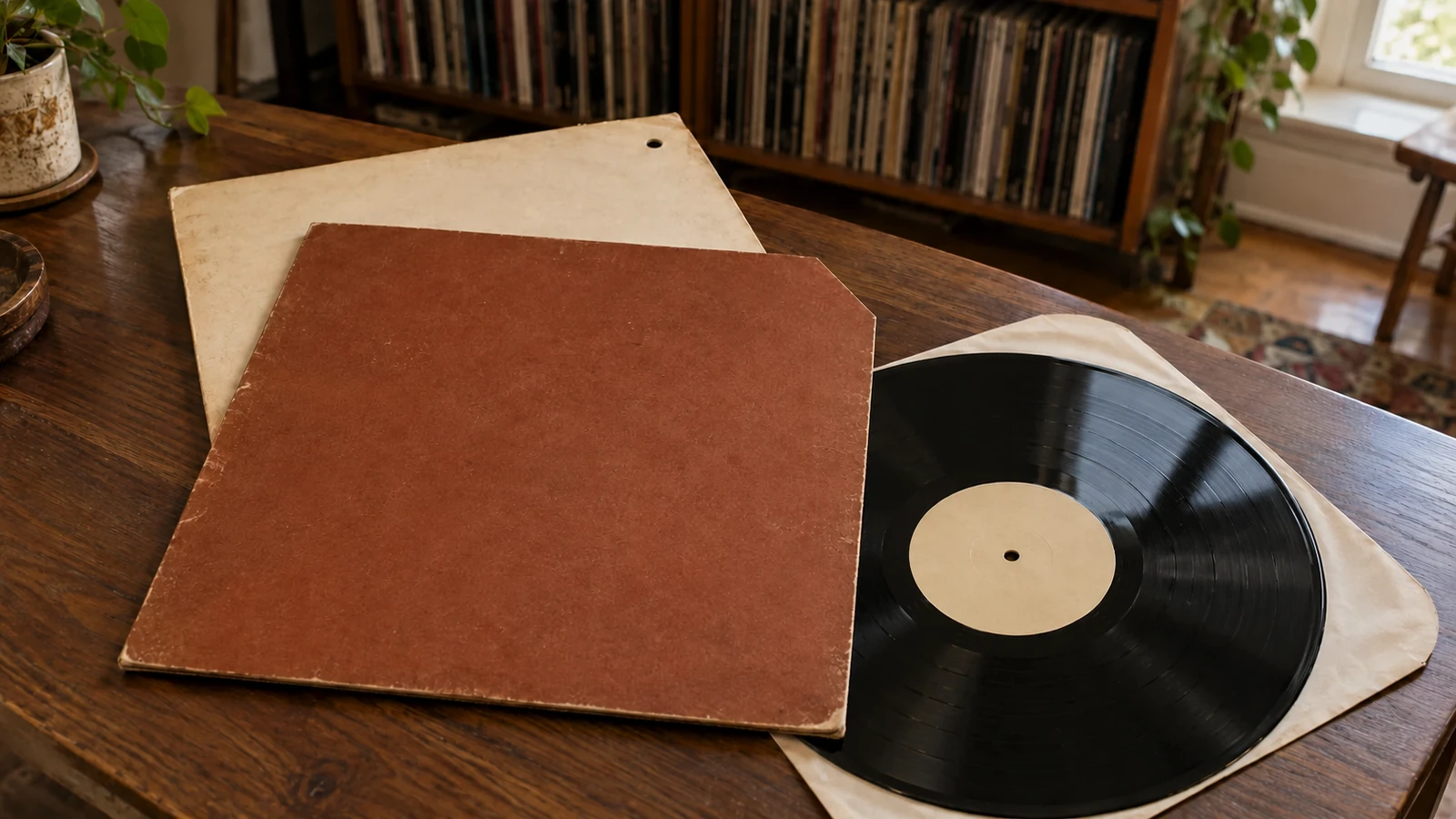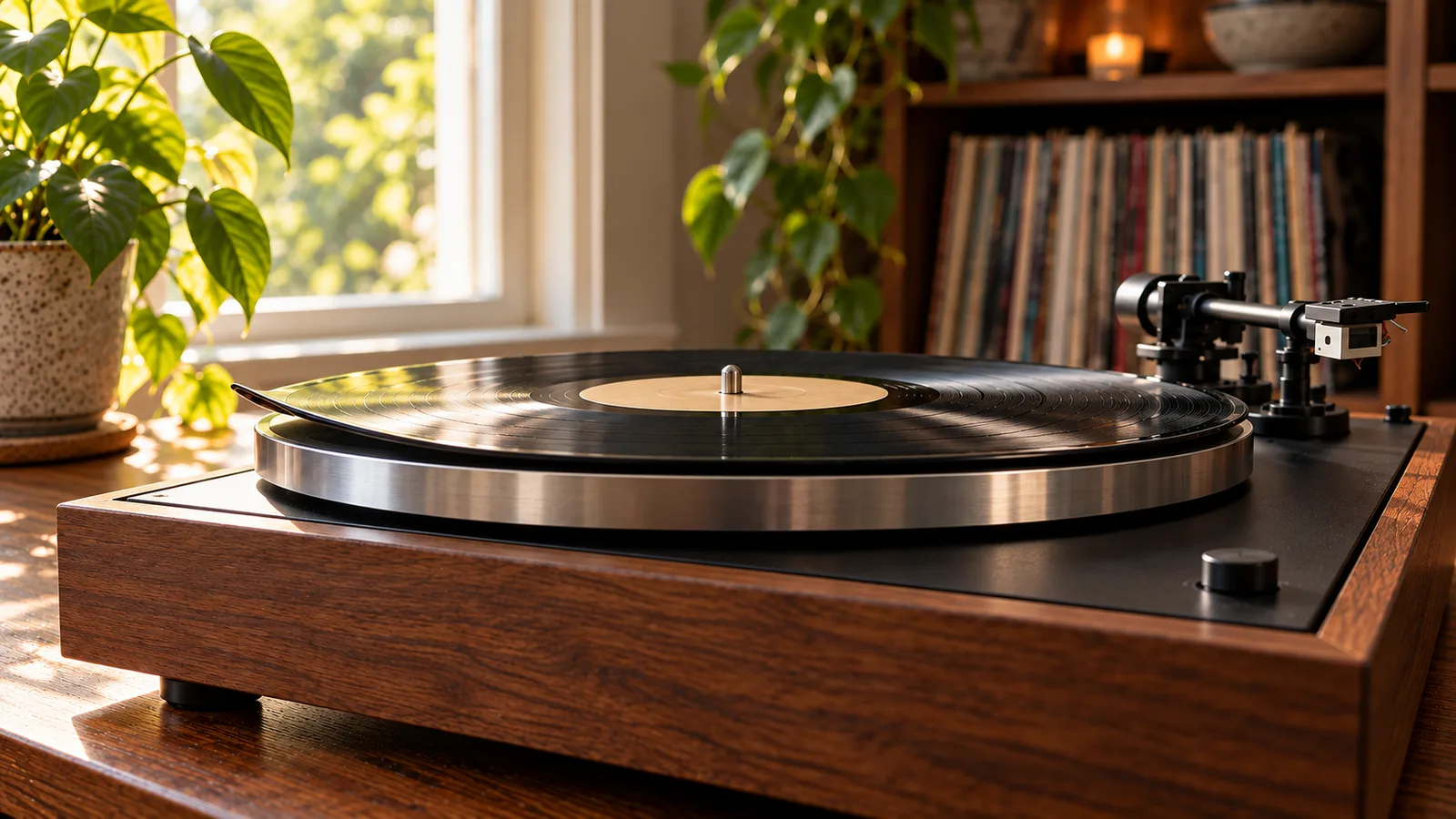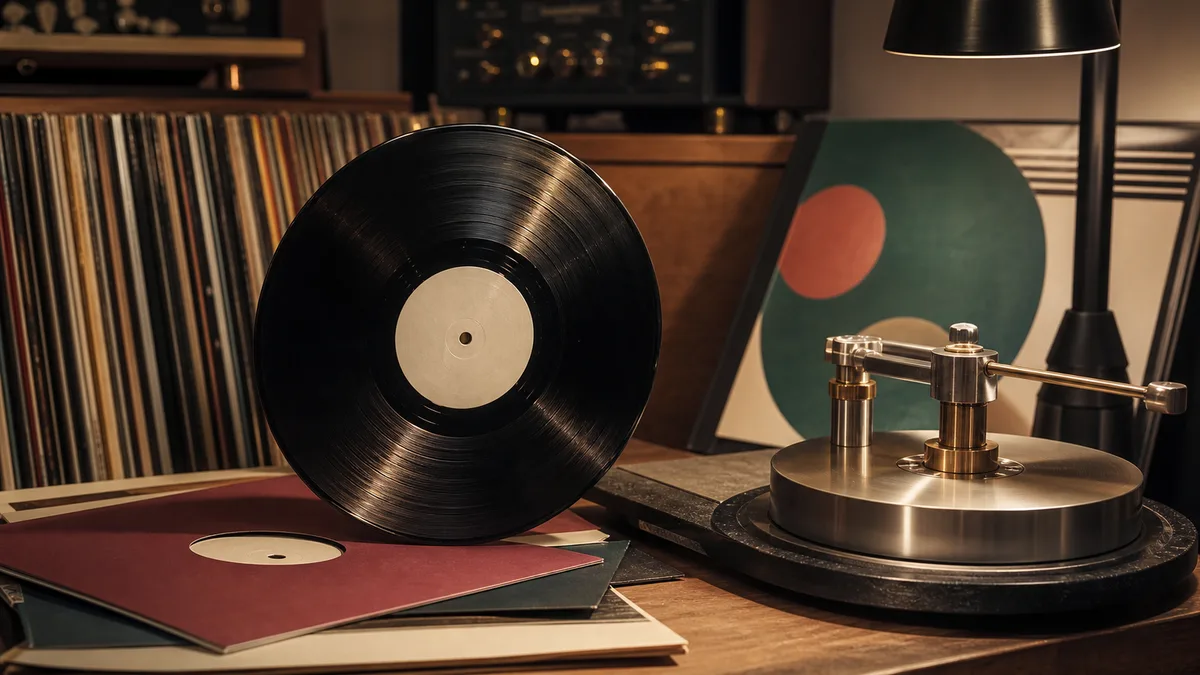
Most vinyl records go through the same basic pipeline: recorded in a studio onto multi-track tape, edited and mixed, then sent to a pressing plant where the final mix is cut onto a lacquer, which becomes the master for stampers, which become your record.
Direct-to-disc skips all of that. The audio goes from the microphones directly to the cutting lathe. No tape. No editing. No second chances.
That’s not a gimmick. It’s a fundamentally different approach to recording — and once you understand why audiophiles take it seriously, it makes a lot more sense.
How It Actually Works
A direct-to-disc session is set up like a live performance in a room with a cutting lathe. Musicians play the material, the signal goes straight to the lacquer disc being cut in real time, and that’s the master. One lacquer. One take per side, essentially.
The practical constraints are significant:
There’s no editing. If a musician makes a mistake, they start again. No punch-ins, no comping, no fixing it in post. The recording has to be right the first time.
The session length is limited by disc space. A standard 12-inch 33⅓ RPM record holds roughly 20-22 minutes per side at normal groove spacing. Longer sides require wider-groove cuts at the cost of dynamic range, or shorter playing times. This is why direct-to-disc albums tend to be either concise or split across multiple discs.
The engineering has to be precise. Because there’s no tape to clean up in the mix, the recording chain has to be immaculate. Every noise, every buzz, every technical limitation ends up on the lacquer. The equipment, the room, the performance — everything has to work.
The lacquer is the master. Unlike conventional recordings where tape is the source and the lacquer is derived from it, here the lacquer is the primary recording. This creates a genuinely unique artefact.
Why It Sounds Different
The case for direct-to-disc sound comes down to what tape does to audio.
Magnetic tape has a noise floor — a baseline level of hiss that’s present even on professional equipment. More importantly, tape compression and equalisation are applied during the recording process, which changes the sound in ways that engineers spend careers learning to work with or around.
Cutting directly to disc eliminates that step. The theory — and, in practice, the experience of many listeners — is that the soundstage, dynamics, and tonal accuracy preserved in a direct-to-disc recording are closer to what actually happened in the room.
The Sheffield Lab records from the 1970s are the most famous examples. Their direct-to-disc recordings of things like Santana and The Rolling Stones were sold through the Columbia House record club and became collector items partly on the basis of their sound quality alone.
More recently, Emil Berliner Studios (named for the inventor of the gramophone) has continued to offer direct-to-disc recording as a service, producing what they describe as “unique and irreplaceable” lacquer discs for artists and projects that want the format.
Why Collectors Value These Records
Several reasons:
They’re genuinely limited. You can’t repress a direct-to-disc recording in the conventional sense without either returning to the original session files (if they exist) or booking another direct-to-disc session. The original lacquer is a one-of-a-kind recording medium. This makes certain early Sheffield pressings genuinely scarce in a way that a “limited edition” standard pressing isn’t.
The packaging tends to match the ambition. Labels that go to the trouble of direct-to-disc recording typically invest in the full package — better vinyl, quality pressing, thoughtful presentation. It’s not a format for casual releases.
The listening experience is different. Whether or not you can hear the difference — and that debate is real and valid — many collectors report that direct-to-disc pressings have a quality they describe as more “live” or “present.” That subjective experience is part of the appeal.
Some are historical artefacts. Direct-to-disc was the only way to record before tape became standard. Earlier recordings made this way — from the 1940s and 1950s — are valuable not just as music but as documents of a recording process that no longer exists.
How to Find Direct-to-Disc Pressings
These aren’t common in standard record shops, but there are reliable routes:
Specialist audiophile labels. Acoustic Sounds and Analogue Productions both produce direct-to-disc and cutting-edge half-speed mastered pressings targeted at serious listeners. Their catalogues are online and searchable.
Sheffield Lab and similar catalogues. Early Sheffield pressings — particularly the ones that came through Columbia House — appear in secondhand markets. First editions in good condition command a premium.
Auction and specialist dealers. Forums like Steve Hoffman Music Matters and Vinyl Engine have direct-to-disc collectors who buy, sell, and discuss specific pressings. Discogs also has a direct-to-disc tag you can search.
Emil Berliner Studios. If you want to hear the format live — or even commission your own direct-to-disc recording — they operate as a working studio and are worth exploring just to understand the process.
The Honest Limitations
It’s worth being direct about a few things:
The format doesn’t automatically mean better music. A bad performance recorded direct-to-disc is still a bad performance. The format is a delivery mechanism for the recording, not a quality filter.
The difference may not be audible on all equipment. If you’re playing records on a modest setup, the subtleties that direct-to-disc preserves may not be accessible to you. This isn’t a criticism of the format — it’s just that the chain matters. A perfect lacquer cut on a $300 turntable still has to compete with the rest of your signal path.
They’re expensive. The economics of direct-to-disc — one session, no editing, premium materials — mean these records aren’t cheap. For most collectors, a few carefully chosen titles make more sense than a broad collection.
Forgery and misrepresentation exist. As with any premium category, some pressings are misrepresented as direct-to-disc when they aren’t. Buy from reputable sources, especially for expensive acquisitions.
Should You Hunt One?
If you’re interested in sound quality for its own sake — not as a proxy for other things — direct-to-disc recordings are one of vinyl’s more interesting frontiers. The experience of hearing a recording made without tape isn’t just audiophile posturing. It genuinely is a different window onto the music.
If you’re a collector who cares about the history of the format, these records are part of the story. They represent a moment when recording technology was at a crossroads, and some engineers chose the path that led to the cutting lathe rather than the multitrack.
Either way, they’re worth hearing at least once — on good equipment, with an open mind about what you’re listening for.
Sources: Wikipedia: Direct-to-disc recording, PS Audio: Direct to Disc, Your Sound Matters: What Does Direct-to-Disc Vinyl Mean?, Emil Berliner Studios: Direct-to-Disc, A&M Corner Forums: Direct-to-disc recordings explained