Every few months, a new vinyl headline does the rounds.
Sales up. Revenue up. Vinyl beats CDs again. The format is saved, long live the format.
The headlines are fine, but they aren’t usually the part that helps collectors. The useful question is what those numbers change in real life, especially if you’re the person actually buying records rather than just cheering from the sidelines.
The latest round of reporting gives us a few solid clues.
The headline numbers
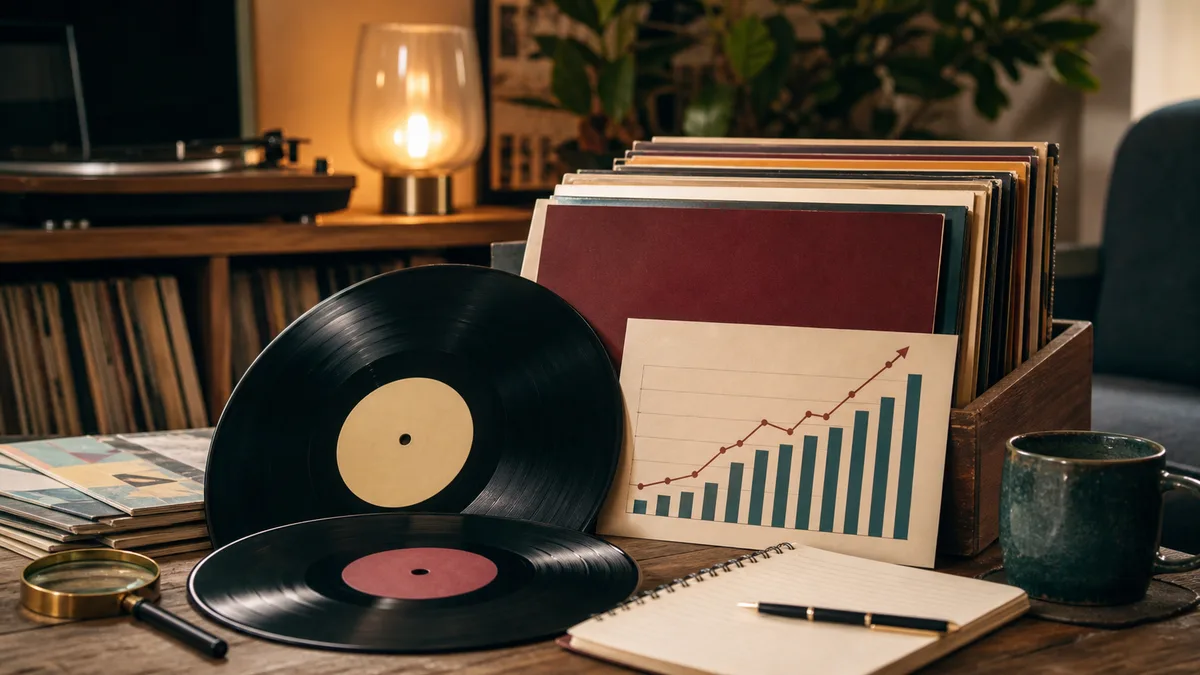
Billboard’s coverage of the RIAA 2025 year-end report says overall physical music revenue in the US rose 5% to $1.38 billion, up from $1.32 billion in 2024, with vinyl continuing to do a lot of the work. Billboard’s earlier midyear coverage also said vinyl LP sales totaled 22.1 million units in the first half of 2025, down 1% year over year, while value still remained strong.
That combination matters more than the celebratory framing around it.
It suggests vinyl is no longer just a novelty-growth story where every chart moves up in a straight line. It’s now a mature physical format with enough demand and enough pricing power to hold value even when unit movement gets less dramatic.
What that usually means at shelf level
For collectors, three things tend to follow.
1. New release prices are unlikely to get kinder
If revenue stays healthy while unit growth flattens out, labels don’t feel much pressure to make vinyl cheaper. Quite the opposite.
The market keeps proving that buyers will still pay for premium packaging, exclusive variants, anniversary editions, and artist bundles. That doesn’t mean every release deserves the price, but it does mean the industry has little incentive to reverse course.
If you’ve been hoping the standard new-LP price will suddenly become more reasonable in 2026, I wouldn’t count on it.
2. Bigger titles will keep getting the nicest treatment
When vinyl remains a dependable premium format, major artists and catalogue heavyweights get the deluxe rollout first. Better packaging, more variants, more retailer exclusives, more expanded editions.
That’s great if you collect popular artists with strong label support. It’s less great if your taste leans niche, because smaller releases can still get squeezed on availability even while the overall market looks healthy from a distance.
3. Independent shops still matter more than the headlines admit
One of the better details in Official Charts’ Record Store Day 2026 coverage is that more than 300 indie shops across the UK are participating this year. That figure doesn’t tell the whole story of shop health, obviously, but it does underline something important: vinyl culture still depends heavily on specialist retail, not just mass-market stock drops.
If vinyl stays valuable, indie shops remain one of the main places where collectors get context, recommendations, fairer access to limited titles, and actual community.
That’s easy to forget when every sales story gets written like the entire market lives inside a spreadsheet.
The part collectors should watch more closely
Not every positive market signal is equally useful.
The number I care about more is the relationship between demand, pricing, and quality.
Because once vinyl becomes reliably lucrative, the temptation is obvious. Push more variants. Raise prices. Keep the premium framing. Hope buyers don’t look too hard at whether the pressing, mastering, and packaging really justify it.
That’s where collectors need to stay a bit sceptical.
A healthy market is good. A market full of expensive but mediocre physical products is less exciting.
So, should collectors feel optimistic?
Mostly, yes, with a small dose of suspicion.
The good news is that vinyl still has cultural and commercial weight. Labels keep investing in it. Artists still want these releases to matter. Shops still build events around them. That’s all real.
The less cheerful part is that success doesn’t automatically make the collector experience cheaper, easier, or more honest. Sometimes it just makes the marketing better.
Which means the same basic rules still hold:
- Buy records you genuinely want to play
- Be selective with “premium” editions
- Support good local shops when you can
- Don’t confuse a rising market with a better deal
That’s probably the clearest way to read the 2025 data from a collector’s side.
Vinyl is doing well. That doesn’t mean every vinyl release is.
And honestly, it’s better to remember the difference.
Sources: Billboard: U.S. recorded music revenue hit $11.5B in 2025 amid growth in paid subscriptions and vinyl, Billboard: U.S. recorded music revenue hits $5.6B in first half of 2025, Official Charts: Record Store Day 2026 full list of releases