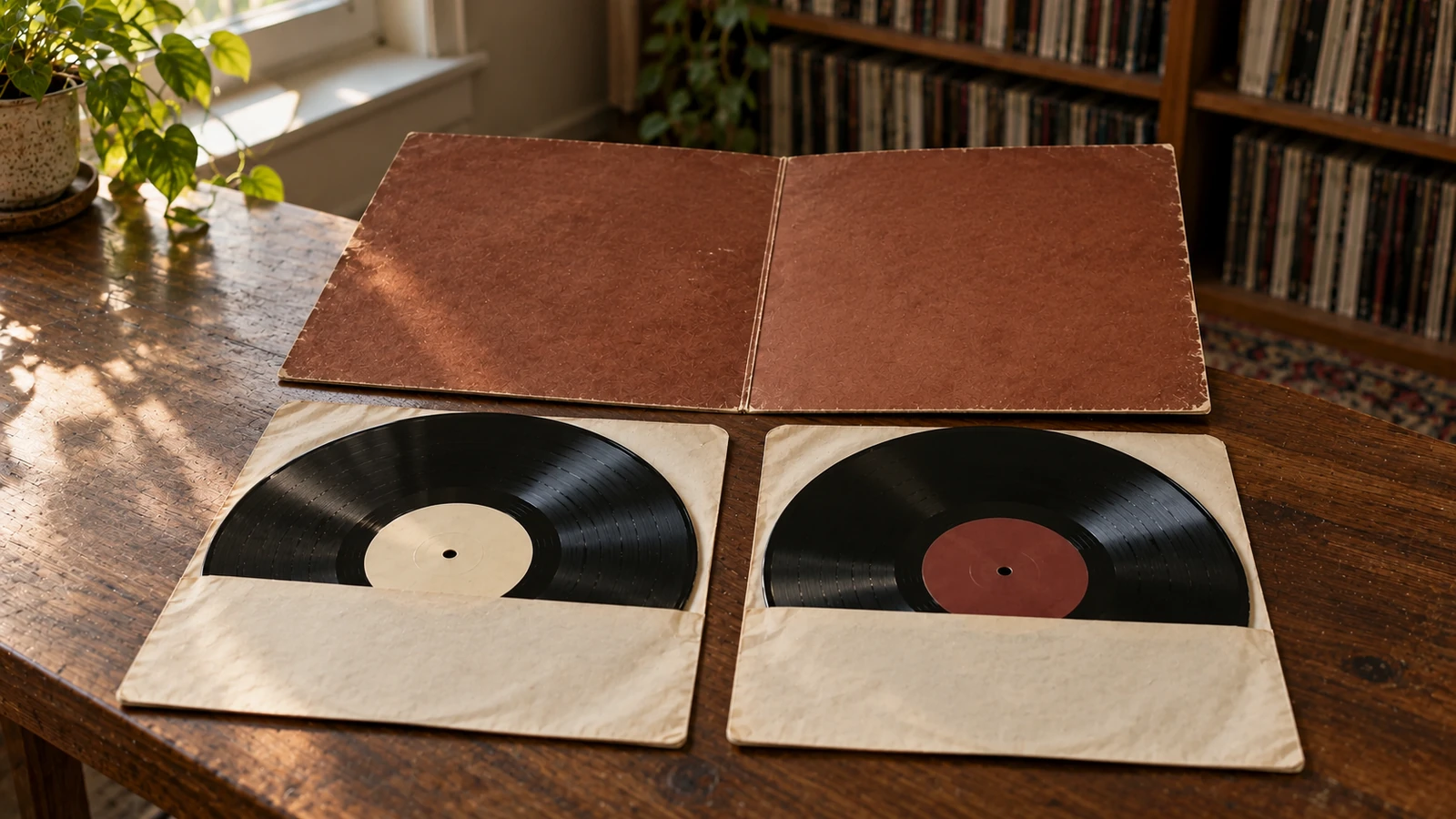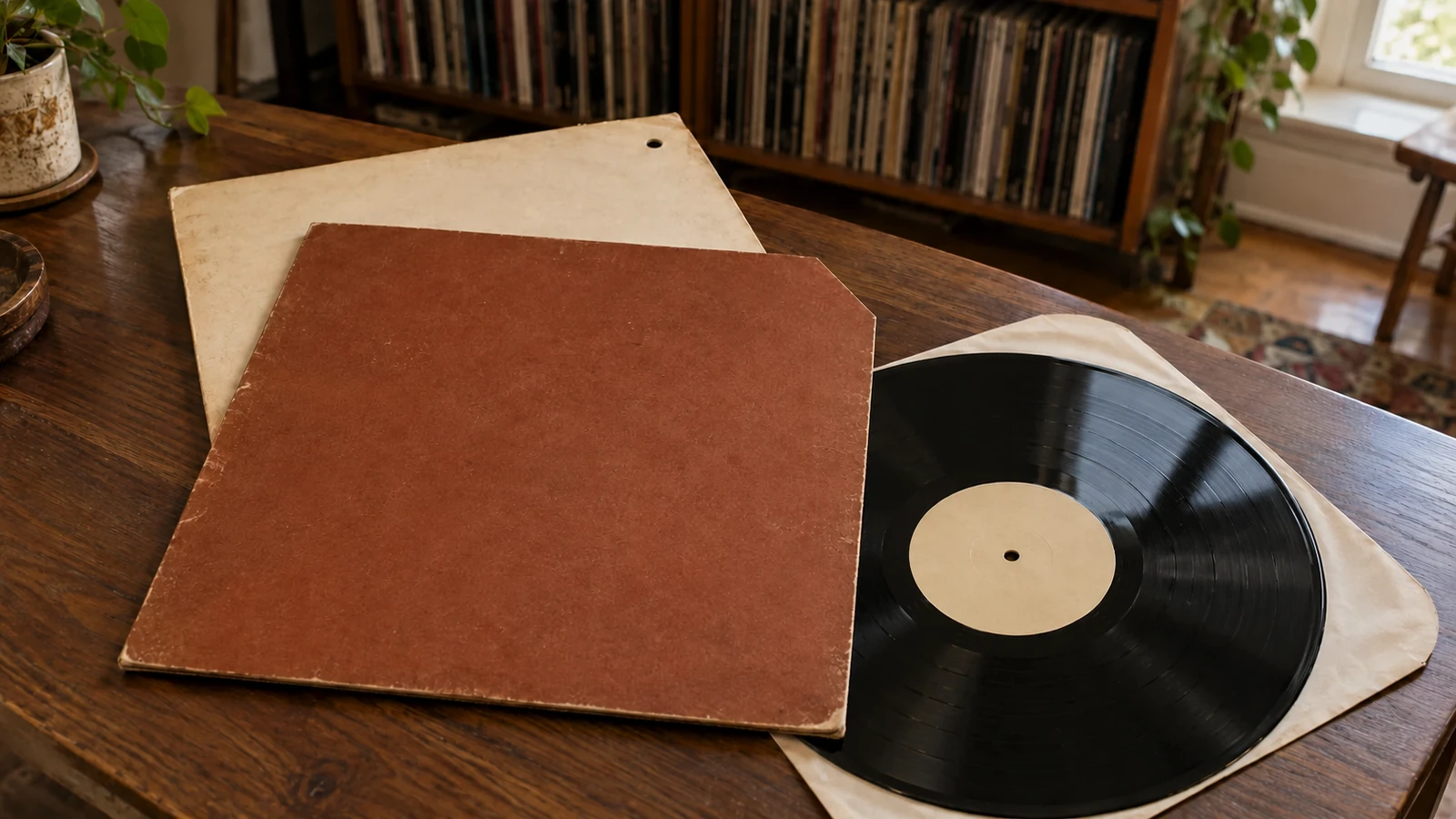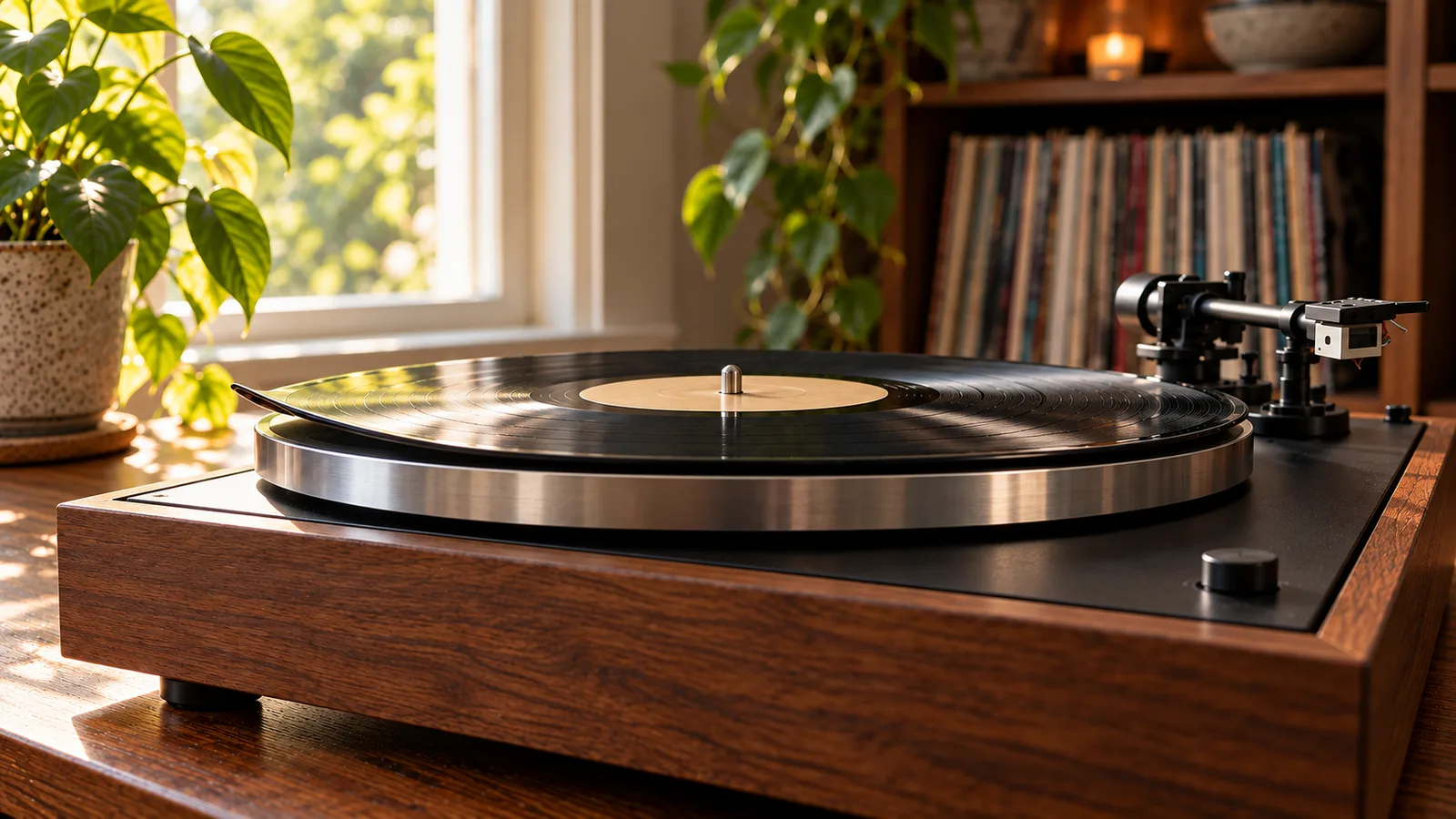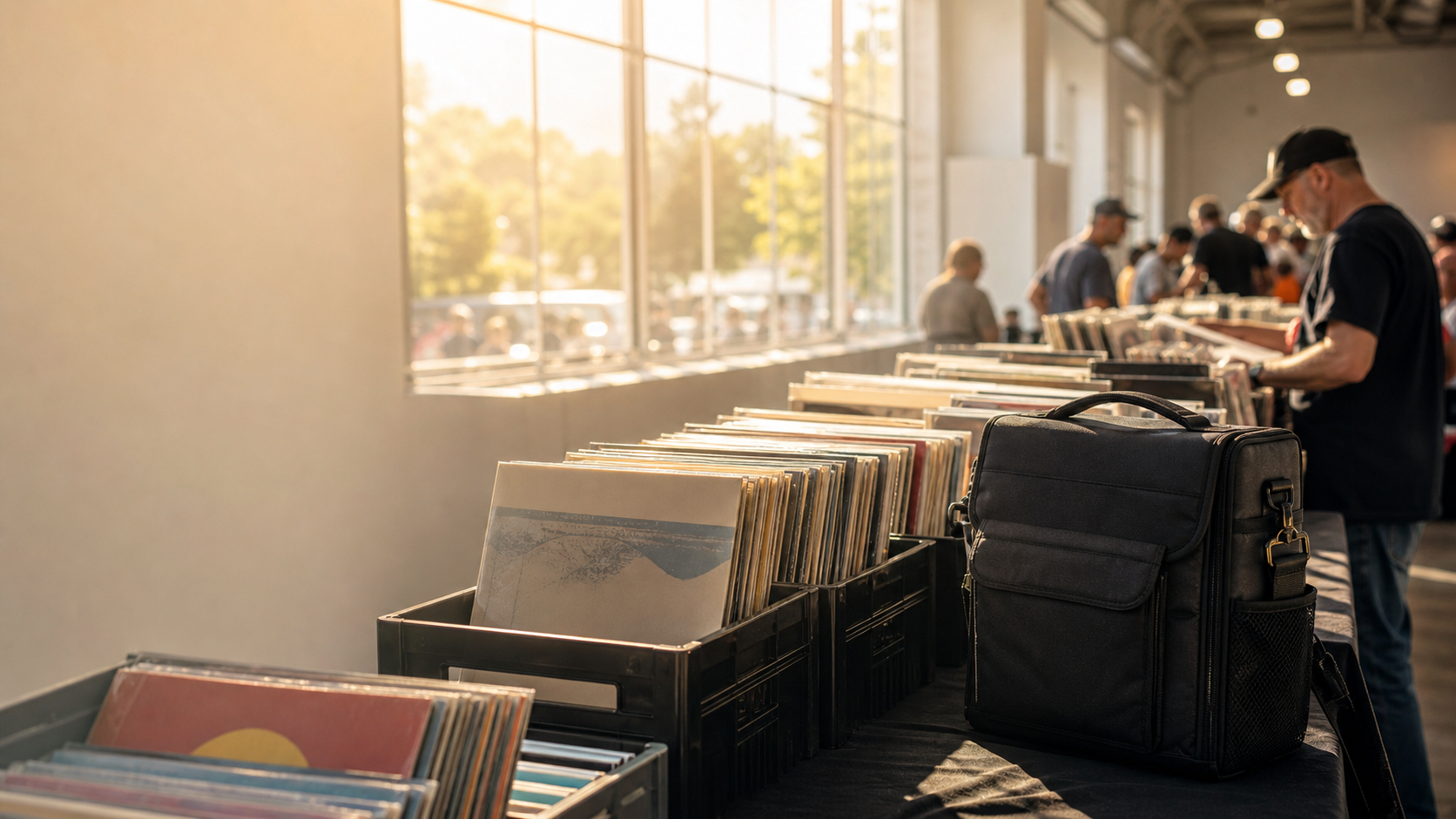
July is a brilliant month for record fairs, but it is also the month when vinyl collecting becomes a little more physical. You are carrying tote bags through hot streets, standing in rooms full of people, checking condition under whatever light the venue gives you, and then trying to get everything home before the sun has had its way with your new finds.
That matters this weekend. VIP Record Fairs lists Bedford on Saturday 11 July, Vinyl Tap’s UK fair calendar is full of late-July dates from Southampton to London, and the Met Office says the UK is in a prolonged hot spell with temperatures widely above 30°C in places. Good digging weather, in other words, but not necessarily good record-handling weather.
This is not another general storage lecture. The question here is more immediate: if you are going to a summer record fair, how do you buy well, avoid avoidable damage, and get the records home in the same condition you paid for?
Bring the Boring Bag
The best record fair bag is not the coolest one. It is the one that keeps records upright, shaded, and supported.
A thin tote is fine if you are buying one or two cheap LPs and going straight home. For anything more serious, bring a rigid record bag, a square shopper with a flat base, or a small messenger bag that holds 12-inch records vertically without forcing the corners. If the bag collapses around the records, every knock on a train barrier or venue doorway becomes sleeve damage.
Two small upgrades help:
A spare outer sleeve or two. Useful for anything without protection, especially textured sleeves, delicate 60s jackets, imports with OBI strips, or records with loose inserts.
A flat stiffener. A clean piece of cardboard from an LP mailer can sit at the outside of the stack and stop the whole bag flexing. You do not need to over-engineer it. You just want the records to stay flat and upright.
Avoid black plastic bags if you can. They absorb heat, offer no structure, and make it too easy to leave records leaning at a bad angle while you keep digging.
Inspect Faster, Not Sloppier
Hot, busy fairs encourage rushed buying. That is where mistakes happen.
The inspection routine should be short enough that you actually do it every time:
Check the sleeve first. Corners, spine, water staining, ring wear, seam splits. If there is a musty smell, assume the record has lived somewhere damp.
Pull the disc and angle it to the light. You are looking for feelable scratches, groove wear, cloudy patches, edge warps, and dish warps. Fair lighting is often terrible, so use the brightest corner of the room or your phone torch angled across the surface. Do not blast the seller or other buyers with light; just give yourself enough contrast to see the surface.
Look at the spindle hole and labels. Heavy spindle marks are not automatically bad, but they tell you the record has been played a lot. A clean sleeve with a very heavily marked label may mean the grade is optimistic.
Set it down flat for a second if you are unsure. A visible ripple at the edge is easier to spot when the record is not flexing in your hands. If a record already has a warp in the room, heat on the journey home is not going to improve it.
The point is not to become difficult. It is to avoid paying near-mint prices for a VG record because the queue behind you made you hurry.
Heat Changes the Journey Home
Most records do not warp because they spent ten minutes outside. They warp because heat meets pressure, bad angles, direct sunlight, or a hot car.
That means the danger points after a fair are predictable:
A car boot or back seat in direct sun. This is the big one. If you drove, put records in the cabin, upright, shaded, and take them indoors as soon as you get home. Do not leave them in the boot while you stop for lunch.
A packed train or tube. Keep the bag in your hand or between your feet, not pressed sideways under luggage. If you have to put it down, stand it upright against your leg.
Outdoor food and drink stops. The record bag should not sit on a sunlit pavement while you have a coffee. Put it in shade, keep it vertical, and do not rest anything on top of it.
Long walks after the fair. If the day is genuinely hot, plan the boring route home: shortest walk, least direct sun, least standing around. The rare record can wait for a nicer photo later.
This is where My Vinyl+ can be quietly useful. If you spot something interesting but the condition is borderline, add it to your wantlist or notes rather than buying out of panic. A fair is not a one-time portal to every record on earth. You are allowed to leave something behind.
Ask Better Questions at the Table
Good sellers usually do not mind practical questions. They would rather sell to someone who understands condition than deal with a complaint later.
Useful questions:
“Has this been play-graded?” Visual grading is common, especially at fairs, but play-grading matters for records with marks, older mono pressings, or anything expensive.
“Is the pressing matched to the sleeve?” Secondhand records get swapped around over decades. If the matrix, label, and sleeve variant matter to you, check before paying.
“Do you have a better copy behind the table?” Dealers often keep pricier stock boxed separately. Ask politely, especially if you are looking for a specific artist or label.
“Would you hold this for ten minutes?” If you are comparing copies or checking prices, some sellers will hold a record briefly. Do not abuse it. If you walk away for half an hour, expect it to be gone.
What not to do: spend five minutes researching a record on your phone while blocking a crate in a busy aisle. Step aside. Let people dig. You will get better treatment from sellers and fellow collectors if you move like you understand the room.
Be Careful With Sealed Records
Sealed vinyl at a summer fair is tempting. It looks safe. It also hides everything.
A sealed record can still be warped, off-centre, dish-shaped, or pressed badly. Shrinkwrap can tighten over time and pull a sleeve out of shape. In hot weather, a sealed record left in a sunny car or window display is especially worth questioning.
That does not mean “never buy sealed.” It means sealed is not the same as guaranteed. For modern reissues, ask about returns if there is a pressing fault. For older sealed records, decide whether you are buying it as a collectible object or as something you actually plan to open and play. Those are different purchases.
If the price is high because it is sealed, be honest with yourself: are you paying for music, condition, scarcity, or the psychology of untouched shrinkwrap?
Pack Online Orders Like It Is July
Summer fairs often lead to summer Discogs orders. You find one title in person, then go home and hunt the missing album in the same run. The same heat logic applies.
Discogs’ seller guidance recommends proper record mailers, placing the disc outside the jacket for unsealed records to help prevent sleeve damage, and sandwiching records between cardboard inserts so they do not move inside the package. As a buyer, you can ask for that politely before paying, especially if the record is expensive or travelling during a heatwave.
A good note to a seller is simple:
“Could you please ship the record outside the jacket, inside an outer sleeve, with stiffeners? It is very hot here this week, so anything that keeps it flat and immobile would be appreciated.”
That is not fussy. That is clear. Most serious sellers already do some version of it.
The Fair-Day Checklist
Before you leave:
- Take a structured bag that holds LPs upright
- Bring one or two spare outer sleeves
- Check the day’s route home, especially if public transport is disrupted by heat
- Decide your budget before the room starts working on you
- Add wantlist priorities to My Vinyl+ or Discogs so you are not relying on memory
At the fair:
- Inspect sleeve, disc, labels, and warp before paying
- Step aside when checking prices
- Ask whether expensive records have been play-graded
- Keep purchases vertical and out of direct sun
After the fair:
- Go home before the long lunch
- Move records indoors immediately
- Let hot records return to room temperature before playing
- Add condition notes while you still remember what you bought
The Bottom Line
Summer record fairs are worth the effort. You get the fun of real digging, actual conversations with sellers, and the chance to compare copies in a way online buying still cannot match.
Just treat July like July. Heat, pressure, sunlight, and careless carrying are the things that turn a good find into a regret. Bring a better bag, inspect with a calm routine, and get your records home without making them survive an endurance test.
The best fair purchase is not just the one you find. It is the one that still plays beautifully when you get it onto the turntable that evening.
Sources: Met Office: Prolonged spell of hot weather continues into next week, VIP Record Fairs Events Diary, Vinyl Tap UK Record Fairs, Discogs: Packing and Shipping Items After You Make a Sale