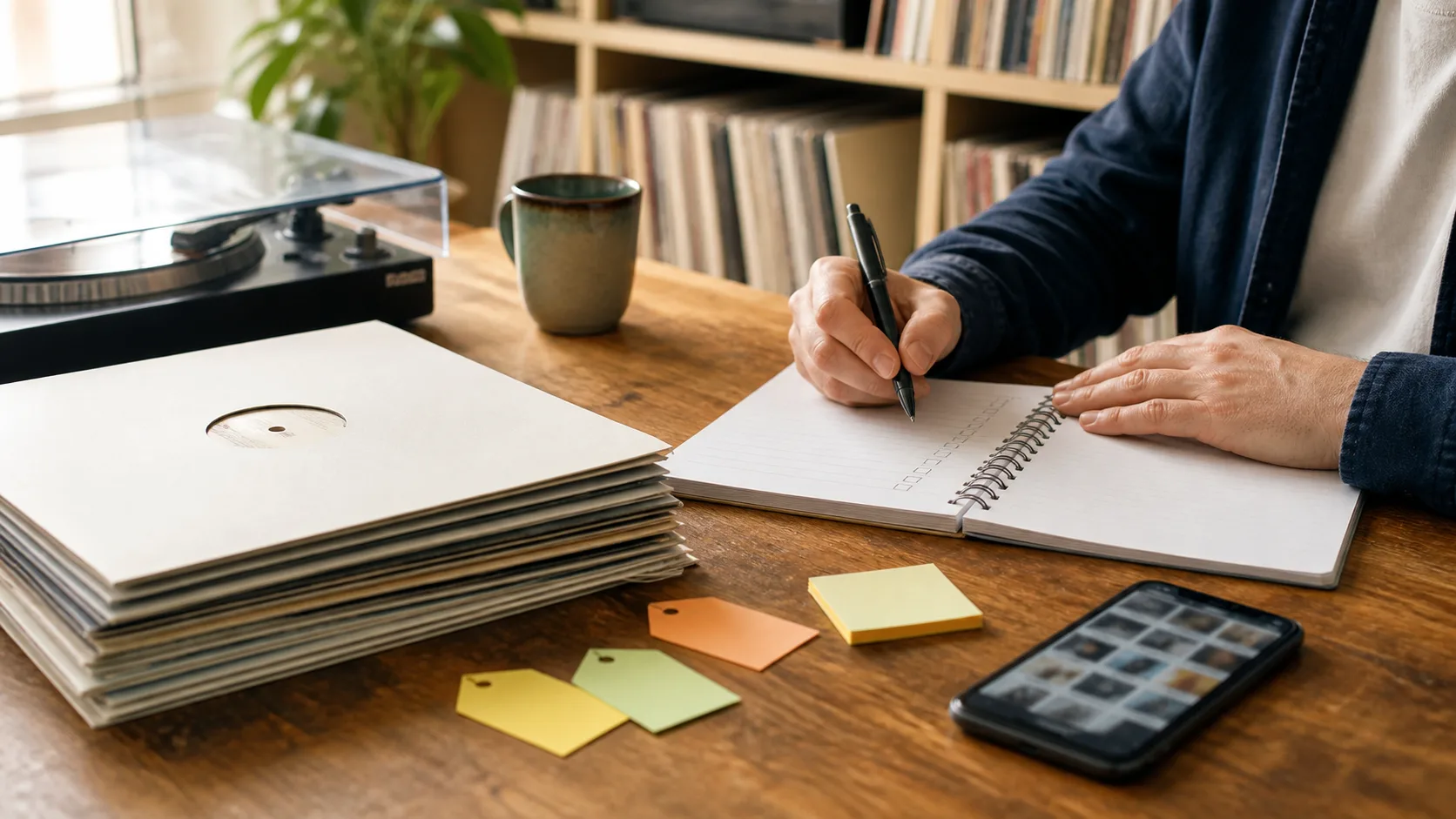
A wantlist should stop you from buying the wrong record.
Too often, it does the opposite. It becomes a loose pile of albums you vaguely want, records you already bought, variants you stopped caring about, expensive originals you will never pay for, and reissues you meant to compare later. Then a listing appears, the price looks almost reasonable, and the wantlist gives you pressure instead of clarity.
That is not a wantlist problem. It is a structure problem.
Discogs, marketplace alerts, shop newsletters, label stores, and price trackers can all help you notice records. But noticing is not the same as deciding. A useful wantlist tells you which edition you want, what condition is acceptable, what price makes sense, and when to walk away.
Here is how to build one that works in the real world.
Split Wants From Intentions
Not every record you want deserves the same treatment.
Start by separating your wantlist into three levels:
- Curious: records you might buy if the right copy appears cheaply.
- Active: records you are genuinely looking for this year.
- Priority: records where you know the edition, condition, and price ceiling.
Most collectors mix all three together. That is why wantlists get noisy. A casual “that would be nice someday” album triggers the same mental reaction as a serious grail. The list becomes emotionally loud and practically useless.
Keep the casual layer loose. Use it for discovery, reminders, and shop browsing. The active layer should be smaller. The priority layer should be tiny: the records you would actually act on if a good copy appeared today.
That one distinction makes the rest easier.
Choose the Edition Before You Chase the Price
The cheapest copy is not always the right copy.
Before a record becomes an active want, decide what kind of edition you are looking for:
- original pressing
- early repress
- modern audiophile reissue
- standard black vinyl
- coloured or limited variant
- mono or stereo copy
- specific country or label version
- complete copy with insert, booklet, obi, poster, or hype sticker
- any clean playable copy
That last option is valid. Not every record needs a forensic pressing hunt. Sometimes the goal is simply to own a good-sounding copy you will play.
The danger is leaving the edition question open. If you do, every listing becomes a fresh debate. You start comparing a sealed reissue, a noisy original, a coloured variant, and a cheaper European repress as if they solve the same problem. They may not.
Use Discogs release pages to understand the main versions, then write down the version you actually want. In My Vinyl+, this is a good use for notes: save the target edition, the reason you prefer it, and any identifiers you need to check later.
Set a Price Ceiling While You Are Calm
Price decisions are worse when a listing is live.
Set your ceiling before the record appears. Not a fantasy value. A number you would be comfortable paying after shipping, tax, and fees.
For each priority want, write down:
- maximum delivered price
- acceptable currency range
- whether you will pay more for Near Mint
- whether sleeve condition matters
- whether completeness changes the ceiling
- whether you would rather wait for a reissue
This protects you from two common mistakes.
The first is paying a premium because a record has been on your list for years, even though the copy in front of you is not the copy you wanted. The second is missing a fair deal because you have to research everything from zero while someone else buys it.
Discogs marketplace history can be useful for context, but do not treat any median value as a command. Condition, country, shipping cost, seller reputation, and exact pressing all matter. Your ceiling is not “what the internet says.” It is what this record is worth to your collection.
Write the Condition Rule
A wantlist without condition rules is only half a wantlist.
For each serious target, decide the minimum condition you will accept:
- Near Mint only
- VG+ record with a clean sleeve
- VG is fine if play-graded
- sleeve damage is acceptable, vinyl damage is not
- no writing, water damage, seam splits, or missing inserts
- only buy if photos show the actual copy
This matters because collectors often know the title they want but not the compromise they are willing to make. Then the first affordable copy appears in weak condition and the internal negotiation begins.
Make the rule boring and specific.
“I want this record in VG+ or better” is less useful than “VG+ vinyl is fine, sleeve can have light corner wear, but no seam split and no missing booklet.” That gives you something to compare against when the listing arrives.
For cheap, common records, keep the rule simple. For expensive or frequently counterfeited records, make the rule stricter. Ask for photos, check the seller, and verify the pressing before paying.
Add a Reason to Every Priority Want
The reason is what stops the list becoming a trophy cabinet.
For each priority record, write one sentence:
- “Upgrade noisy copy.”
- “Need mono version because current stereo mix is weak.”
- “Favourite album, want a clean playing copy.”
- “Complete the label run.”
- “Replace warped modern pressing.”
- “Buy only if the standard edition is cheaper than the deluxe.”
- “Wait for a repress unless a local copy appears.”
That sentence is small, but it changes the decision.
If the reason is “upgrade noisy copy,” you should not buy another visually graded copy with no play notes. If the reason is “complete the label run,” you may care more about edition and sleeve completeness. If the reason is “want a clean playing copy,” a modern reissue may solve the problem better than an overpriced original.
The reason keeps the want attached to the collection you actually have.
Keep Alerts Narrow
Alerts are useful when they are specific. Broad alerts become noise.
Watch the records that are ready for action:
- the exact Discogs release you want
- a trusted seller’s listing
- a label or artist store product page
- a retailer restock page
- a saved search with clear price and condition filters
Do not alert every casual want. You will train yourself to ignore the notifications.
A good alert should answer one question: “Should I look at this now?” If the answer is usually no, the alert is too broad.
This is also where your price ceiling helps. An alert for “any copy” is much weaker than an alert for “a copy under my delivered-price ceiling from a seller I would actually use.” Some collectors use Discogs notifications, some use retailer emails, and some use external page monitors for product pages or restocks. The tool matters less than the discipline: only monitor records where you already know what a good opportunity looks like.
Review the List After You Buy Something
The most common wantlist mistake is never removing anything.
After each purchase, do a quick cleanup:
- remove the exact record if the goal is complete
- move upgrade targets to a lower priority if the new copy is good enough
- keep a different edition on the list only if you still have a reason
- add purchase price and condition notes to your collection
- record what you would do differently next time
This is where a collection app and a wantlist support each other. My Vinyl+ helps you keep the owned copy clear: edition, value, condition, notes, and whether it solved the reason you wanted the record in the first place. Your wantlist can then stay focused on what is still missing.
Without that cleanup, you end up chasing records you already solved.
Use a Five-Field Wantlist Template
For any serious target, keep the entry simple:
- Target edition: the version, pressing, or acceptable range.
- Reason: why this belongs in your collection.
- Condition rule: minimum record and sleeve condition.
- Price ceiling: maximum delivered price.
- Action trigger: what makes you buy, offer, wait, or ignore.
Example:
Target edition: Any clean 1970s UK pressing, not a later budget reissue.
Reason: Upgrade a noisy copy I still play often.
Condition rule: VG+ or better vinyl, light sleeve wear acceptable, no writing or water damage.
Price ceiling: GBP 45 delivered.
Action trigger: Buy from a trusted seller with clear photos; otherwise wait.
That is enough. You do not need a spreadsheet with twenty columns unless you enjoy one. The goal is to make the buying decision easier when the record appears.
The Bottom Line
A wantlist should be a buying system, not a wish drawer.
Split casual wants from serious targets. Choose the edition before you chase the price. Set your ceiling while you are calm. Write the condition rule. Add a reason. Keep alerts narrow. Clean up the list after each purchase.
The result is a wantlist that helps you buy fewer wrong records and more right ones.
That is good for your budget, good for your shelves, and good for the part of collecting that matters most: knowing why each record belongs there.
Sources: Discogs: How Do I Use The Wantlist Feature?, Discogs: Best Practices For Buying Safely On Discogs, Discogs: Inflation Is Changing the Way We Collect Records, PageCrawl: Vinyl Price and Restock Alerts, My Vinyl+ collection workflow context.