Overseas vinyl can look like a bargain right up until the parcel reaches your door.
The record price is clear. The rest is where collectors get caught: shipping, VAT, customs duty, courier handling fees, weak mailers, return postage, currency conversion, and a seller who may be asleep when you are awake.
That does not mean international buying is a bad idea. Some records only make sense from overseas: Japanese pressings, European small-label releases, US-only variants, private seller copies, and older pressings that rarely surface locally. The trick is to treat the listing price as the start of the decision, not the decision itself.
Before you pay, run the order through a simple overseas-buying checklist.
Start With the Landed Cost
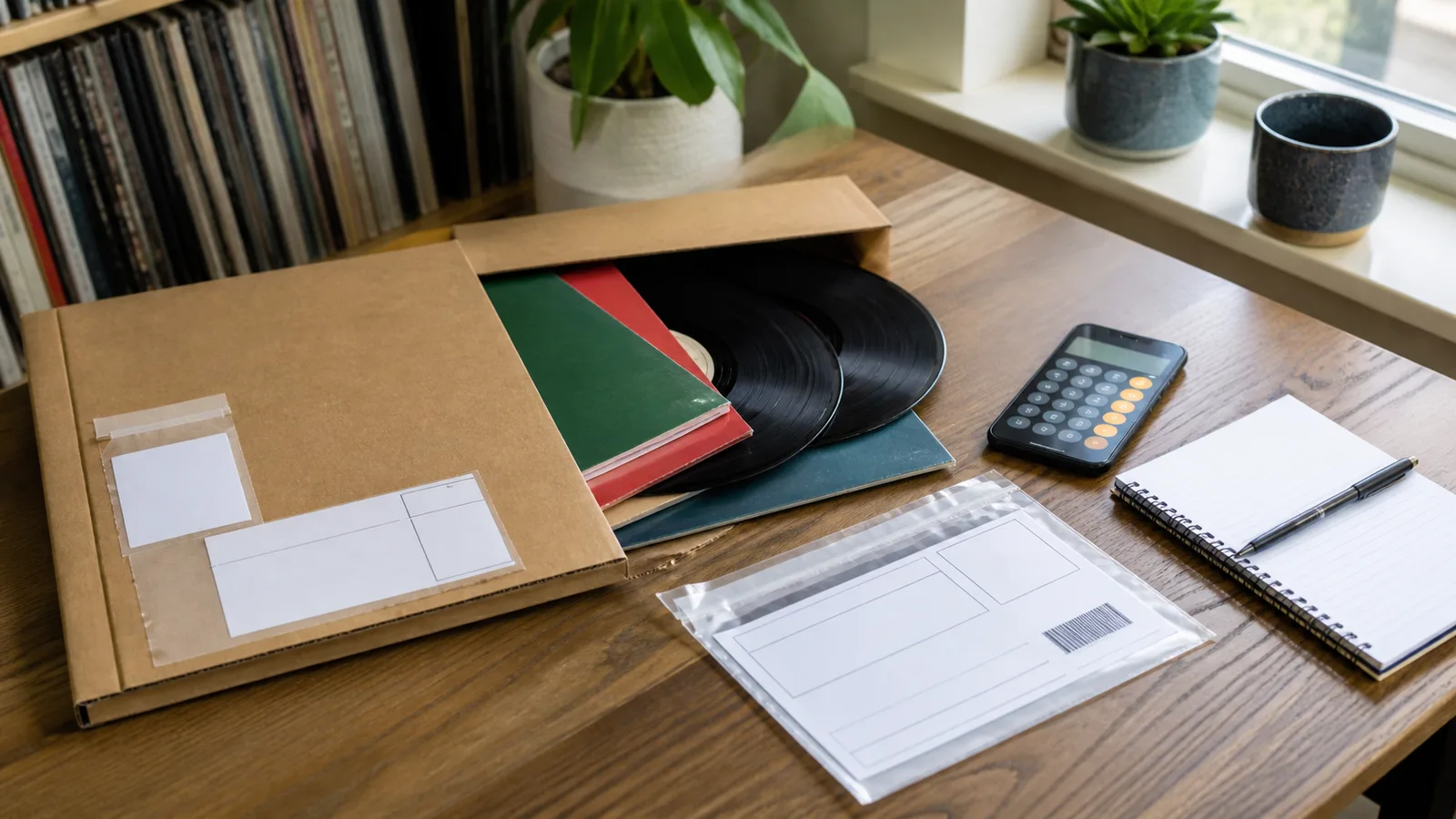
The useful price is not the record price. It is the landed cost: everything you expect to pay before the record is safely in your hands.
Build the number like this:
- Record price
- Shipping
- Marketplace tax collected at checkout
- Expected import VAT or local sales tax
- Possible customs duty
- Courier or postal handling fee
- Currency conversion fee
- Return postage risk if the record arrives wrong
You do not need a perfect tax calculation for every casual purchase. You do need to know when a tempting price is only tempting because half the cost is hiding offscreen.
For UK collectors, GOV.UK is clear that VAT can be charged on goods sent from abroad, and that VAT may be paid either when you buy or to the delivery company before delivery. It also notes that VAT is charged on the total package value when paid to the delivery company, including postage, packaging, insurance, and any duty owed. For goods worth more than GBP 135, customs duty can also apply depending on the type of goods and where they came from.
EU buyers have a similar “check before you click” problem. The European Commission’s customs guidance explains that import VAT rules apply to low-value consignments entering the EU, with marketplace and Import One Stop Shop processes used in some cases for consignments not exceeding EUR 150.
The rule is simple: check your own country’s import rules before assuming the checkout total is final.
Read Seller Terms Like Part of the Listing
On a normal domestic order, vague seller terms are annoying. On an overseas order, they are a risk multiplier.
Look for clear answers to:
- which postal or courier service will be used
- whether tracking is included
- whether insurance is included or optional
- how many records can ship for the listed price
- whether records are removed from outer sleeves before packing
- what happens if the parcel is lost
- what happens if the record arrives damaged
- who pays return postage
- whether the seller accepts returns from your country
Discogs tells sellers to put shipping and return policies in their Seller Terms, and buyers should be able to see shipping costs in advance. Treat missing information as a reason to ask before buying, not after the parcel is already moving.
A good seller does not need to write an essay. You are looking for clarity. “Tracked international shipping in a record mailer, buyer pays return postage unless item is not as described” is more useful than a wall of vague disclaimers.
Decide Whether Tracking Is Optional
For cheap records, untracked postage might be a fair gamble. For scarce records, graded records, gifts, sealed editions, or anything you would be upset to lose, tracking is not a luxury.
Ask yourself:
- Would I buy this again if it disappeared?
- Would a refund actually solve the problem, or is this copy hard to replace?
- Is the seller’s country-to-country postal route reliable for records?
- Is the saving meaningful after currency conversion and tax?
- Will I need delivery proof if there is a dispute?
If the record is common, local, and inexpensive, wait for a local copy. If the copy is genuinely hard to find, pay for the shipping service that matches the risk.
The annoying middle ground is the record that is not rare, just temporarily unavailable. That is where collectors overspend. Add it to your wantlist, set a ceiling, and give the market time to breathe before paying international postage on impulse.
Check Packing Before You Check Out
International shipping is not just longer. It usually means more handling: seller to postal service, export sorting, air or road transport, import sorting, courier handoff, local delivery.
That makes packaging matter.
Ask for or look for:
- a proper cruciform or rigid record mailer
- stiffeners for expensive records
- records shipped outside the jacket when appropriate
- corner protection
- no loose movement inside the package
- clear policy for sealed records, where removing the disc from the jacket may not be possible
You do not need to micromanage a professional seller. You do need to be careful with private sellers who are used to mailing books, clothes, or CDs and think a thin cardboard sleeve is enough.
For valuable records, message before buying:
Could you please confirm this will ship in a proper record mailer with tracking? If the record is not sealed, I would prefer the disc outside the jacket to reduce seam-split risk.
That is polite, specific, and easy to answer.
Compare the Exact Edition, Not Just the Album
Overseas buying often happens because one country has the pressing you want.
So make sure it is actually that pressing.
Check:
- catalog number
- barcode
- label
- country
- release year
- matrix or runout notes if available
- sleeve variant
- color or format
- seller photos
- Discogs release page, not only the master release
The more expensive the order, the more you should rely on specific evidence rather than listing shorthand. “UK original” can mean different things to different sellers. A catalog number, runout photo, and sleeve photo are much harder to misunderstand.
This is also where My Vinyl+ helps after the purchase. Save the exact edition, condition, purchase price, seller, and any import notes while the order is fresh. If you later sell, insure, upgrade, or compare copies, you will know what the record actually cost and why you bought that version.
Know Your Dispute Window Before You Need It
International problems are slower.
A domestic parcel might be obviously late after a few days. An overseas parcel can sit in customs, miss scans, or wait for a delivery-fee notice. That delay makes it easy to lose track of the order until the useful support window is closing.
Before buying, note:
- marketplace dispute window
- payment provider protection window
- seller’s return deadline
- estimated delivery range
- tracking number
- customs payment deadline if one appears
PayPal’s Purchase Protection page says eligible purchases may be covered when an order is not received or shows up different than described, subject to terms and limits. Do not treat that as permission to be careless. Treat it as a reason to keep your communication, tracking, order confirmation, and photos in one place.
When the record arrives, check it quickly. Photograph the package if it is damaged, inspect the sleeve, confirm the edition, and play-grade the record if condition was part of the value. If something is wrong, contact the seller with facts, not frustration.
Use a Three-Question Buy Rule
Before you pay for an overseas record, ask three questions.
First: would I still buy this if shipping, tax, and fees were shown as one total price?
Second: is this exact copy meaningfully better than waiting for a local one?
Third: if the record arrives damaged or overgraded, do I have enough evidence and buyer protection to make the problem solvable?
If the answer is yes to all three, the order is probably sensible. If one answer is weak, slow down. Put the record on your wantlist, save the seller, and check recent sale history before turning a small want into an expensive lesson.
The Bottom Line
Buying vinyl from overseas is not just a bigger version of buying locally. The record travels farther, the costs are less obvious, and returns are more painful.
That means the best collectors do the boring checks early: landed cost, import rules, seller terms, tracking, packaging, edition evidence, and dispute windows. None of that removes the fun from collecting. It protects the fun from surprise fees and avoidable damage.
When the right copy is truly overseas, buy it with your eyes open. When it is only impatience dressed up as scarcity, let the wantlist do its job.
Sources: GOV.UK: Tax and customs for goods sent from abroad, European Commission: Customs formalities for low value consignments, Discogs: What Are Seller Terms?, Discogs: Best Practices For Buying Safely On Discogs, Discogs: Discogs’ Tax Policy, PayPal: Purchase Protection.