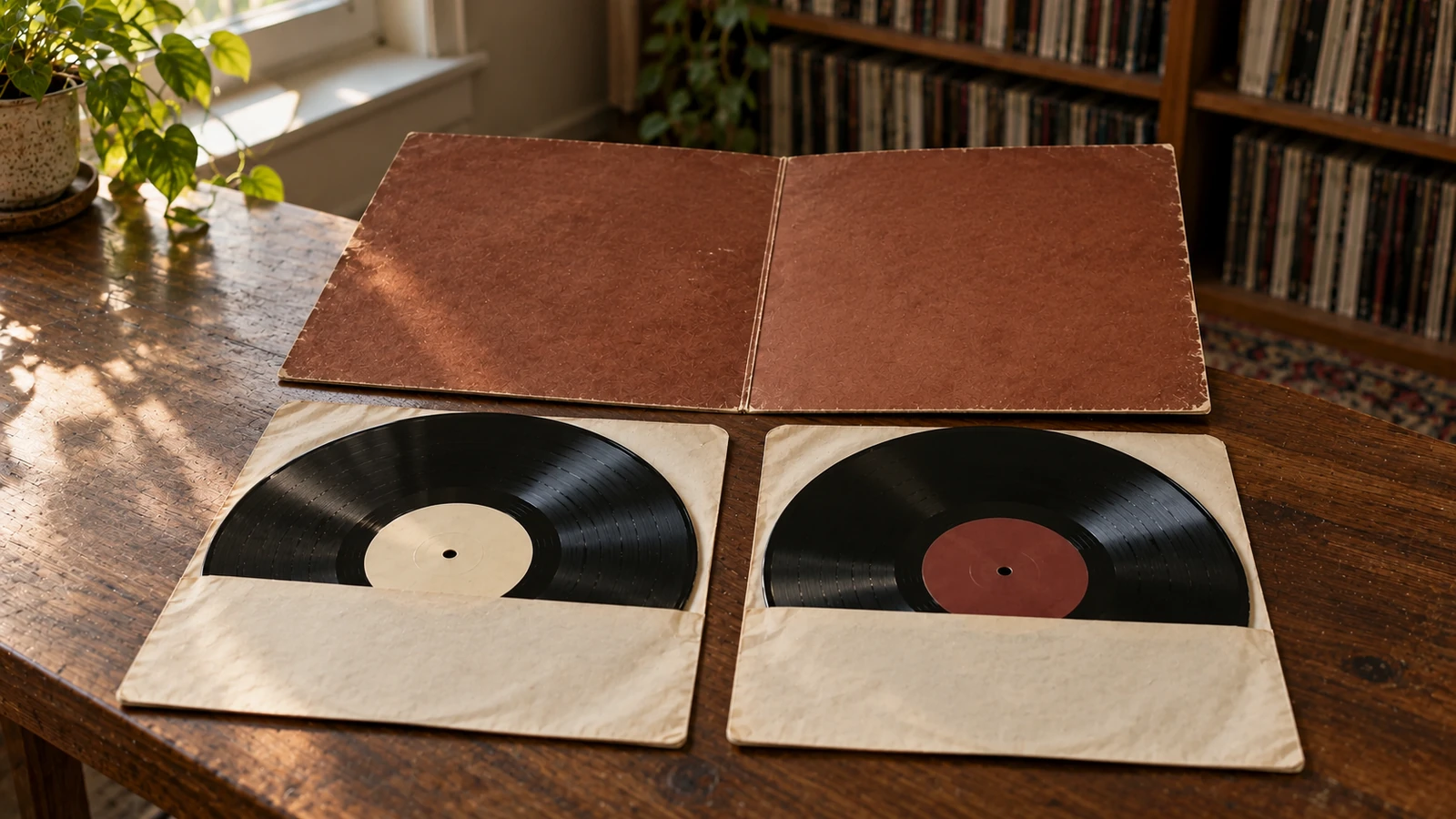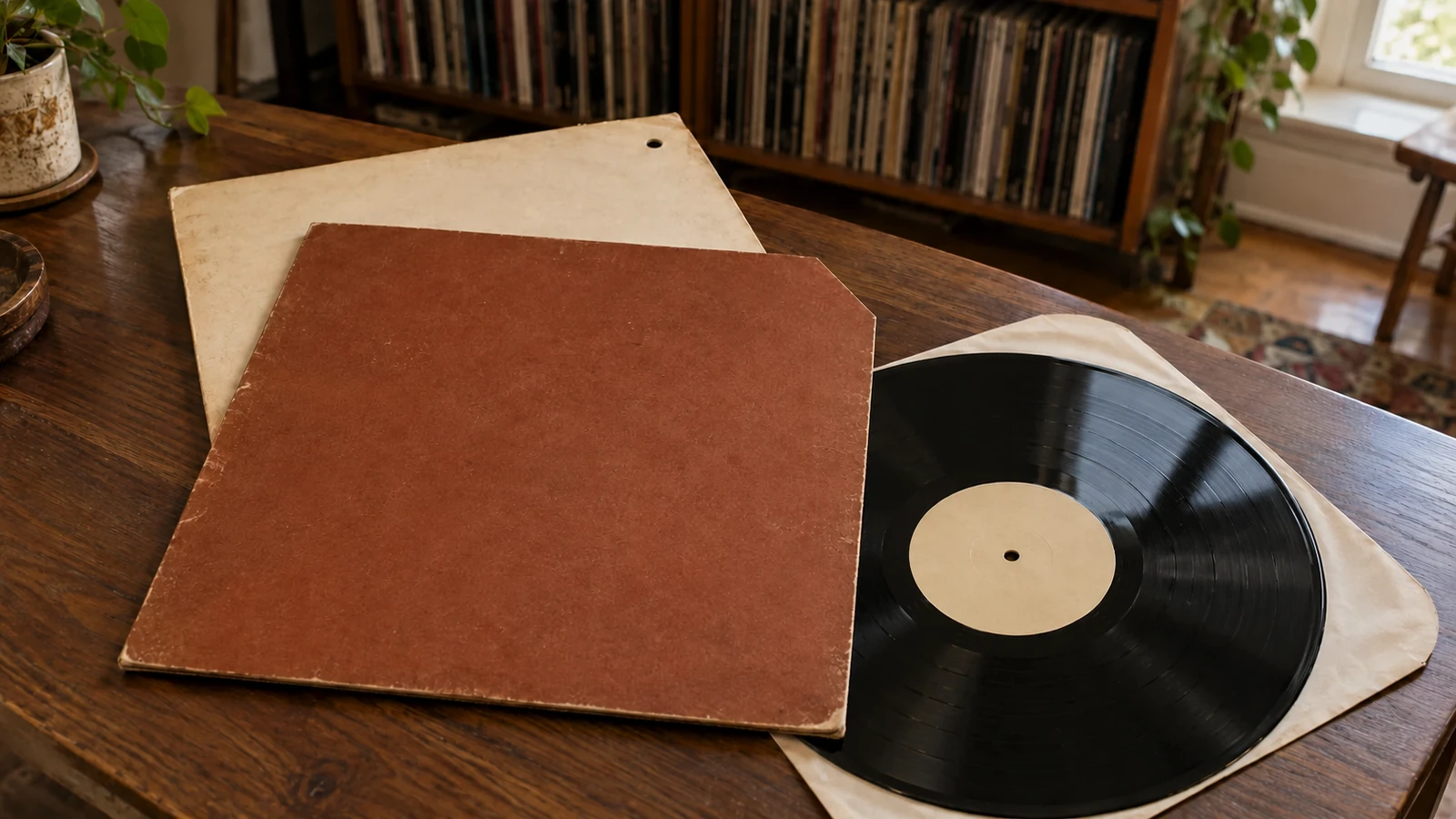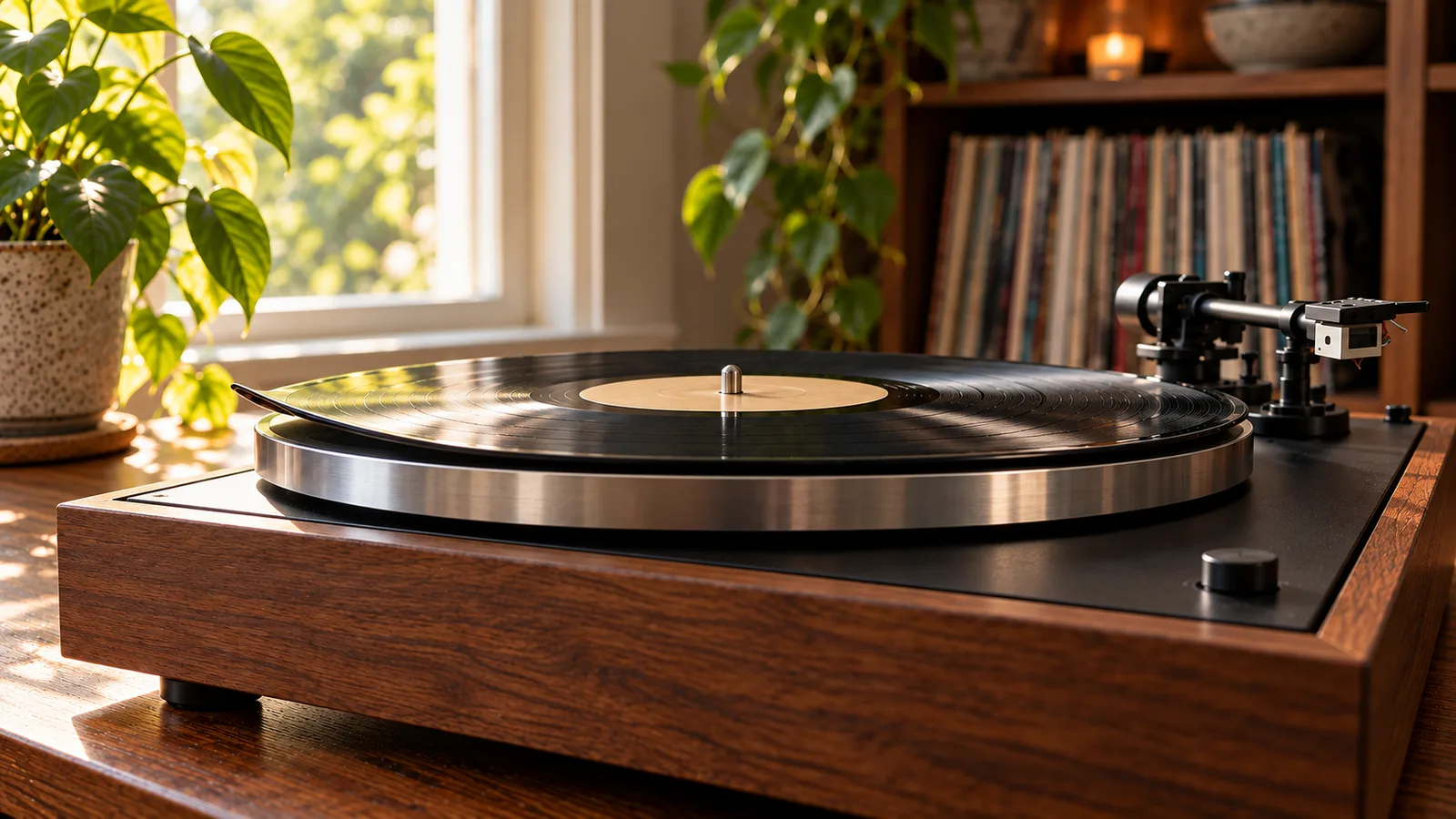
Moving a vinyl collection is not hard because records are fragile in a dramatic way. It is hard because they are heavy, square, easy to overpack, and strangely good at finding every weak point in a cheap cardboard box.
Most moving advice treats records like books. That is where the trouble starts. A box of LPs can become painfully heavy before it looks full. A small gap can let records lean until sleeves crease. A hot car can turn a quick stop into a warp risk. A badly labelled box can leave your best records sitting in a garage for three weeks because you thought it was kitchen stuff.
The goal is simple: keep records upright, supported, cool, trackable, and easy to unpack.
Here is a practical system.
Start With a Quick Collection Audit
Do not begin by pulling everything off the shelves.
Start with a fast audit:
- which boxes, shelves, or crates currently hold records
- which records are valuable enough to deserve extra protection
- which records are already warped, split, moldy, or badly sleeved
- which records you might sell or donate instead of moving
- which boxes need to be unpacked first at the other end
This is where a digital catalogue earns its keep. If your collection is already in My Vinyl+, use it to check what you own, flag high-value records, and add temporary moving notes. If you use Discogs, folders and collection notes can serve the same purpose. The important thing is having a reference that is not trapped inside a sealed box.
You do not need a perfect inventory before moving day. You need enough structure to avoid losing track of the collection while everything else is chaos.
Use Small, Strong Boxes
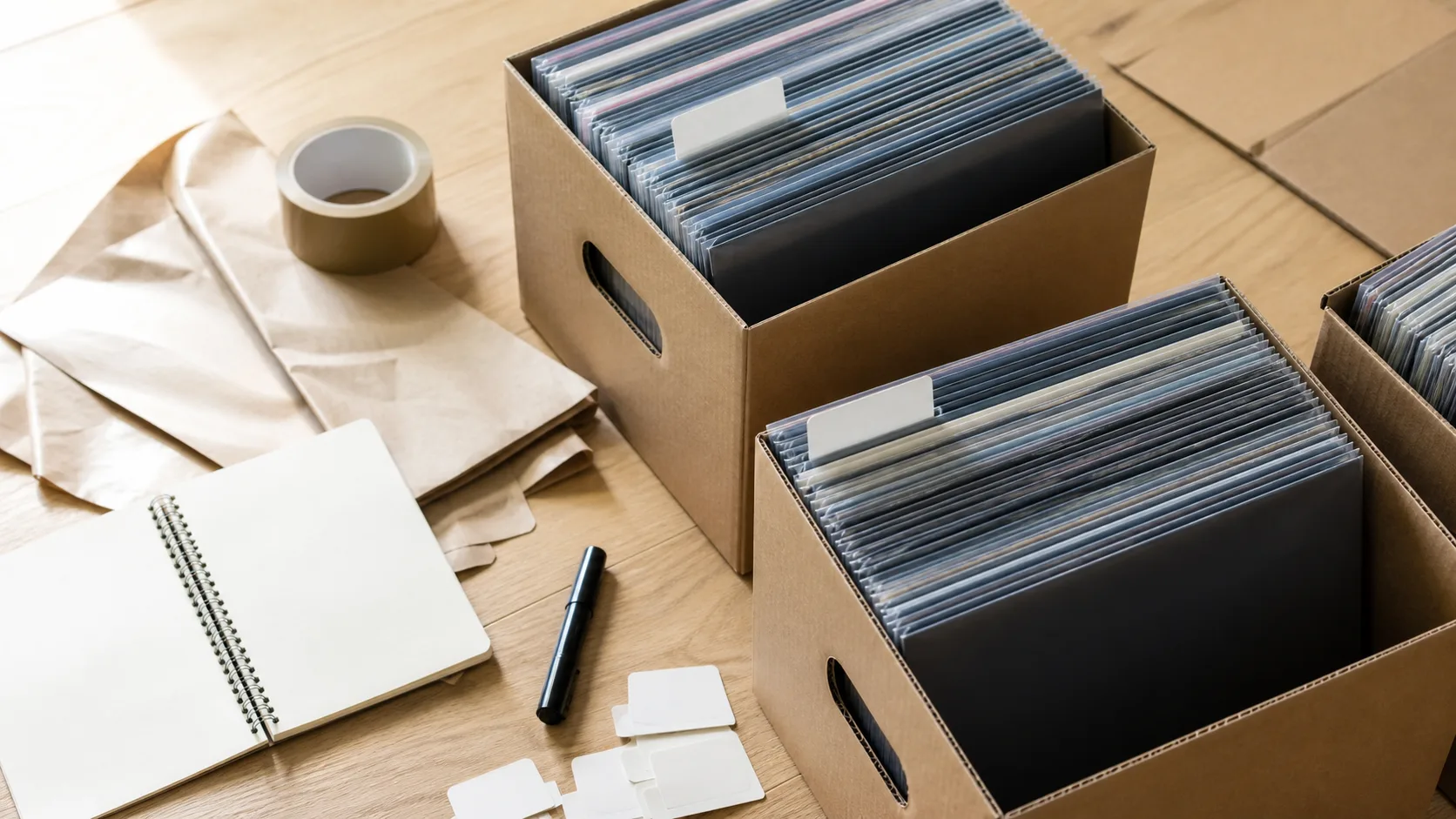
The best record box is boring: small, strong, square, and easy to lift.
Avoid large moving boxes. They encourage overpacking, and overpacked records are brutal to carry. They also put more side pressure on the sleeves at the bottom and make corner damage more likely if the box is dropped or dragged.
Look for boxes that fit LPs upright with a little clearance above the sleeves. Banker’s boxes, purpose-made record mailer cartons, archive boxes, and sturdy small moving boxes can all work if they hold their shape. Test one before committing:
- Put in a row of records.
- Check that the records stand vertically.
- Fill the side gap with padding so they cannot slouch.
- Lift the box safely.
- Make sure the bottom does not bow.
If the box feels heroic when full, it is too big.
Pack Records Upright and Snug
Records should travel the way they should live on the shelf: vertical, not flat.
Do not stack LPs horizontally in a moving box. The weight adds up quickly, and the lower records take unnecessary pressure. Do not pack them so tightly that you have to force the final record in, either. Tight packing can crush sleeve corners and make unpacking miserable.
Aim for snug, not compressed.
Use clean cardboard, bubble wrap, packing paper, or spare outer sleeves to stop movement at the sides. Fill any remaining gap so the records cannot lean diagonally. If a box is only half full, either choose a smaller box or use a firm divider and padding. A half-empty record box is often worse than a full one because the records can shift during every turn and stop.
For especially valuable records, consider moving the disc outside the jacket but inside the outer sleeve. That can reduce seam-split risk on rough journeys. Do it only for records where the extra handling is worth it.
Protect Against Heat Before It Happens
Heat is one of the few moving-day problems that can ruin records fast.
Archival guidance from institutions such as the Library of Congress and National Archives is consistent on the principle: audio materials last best in stable, moderate environments, away from high heat, damp, and sharp swings. A house move is the opposite of that unless you plan for it.
The practical rules:
- do not leave records in a parked car or van longer than necessary
- load records late and unload them early
- keep them out of direct sun while waiting
- avoid garages, sheds, conservatories, and storage units that heat up
- if using movers, mark the boxes clearly as records and ask that they stay upright
- if the weather is hot, move the most valuable boxes yourself in an air-conditioned car
This is less about panic and more about sequence. Records can survive a normal move. They just should not become the first thing loaded and the last thing unloaded on a warm day.
Label Boxes Like Future-You Is Tired
Moving labels often say things like “records” or “living room.” That helps a little. It does not help enough.
Use labels that answer three questions:
- Where does this box go?
- How soon should it be unpacked?
- Is there anything inside that needs special care?
A simple label might be:
Records 03 - Jazz A-M - living room shelf - unpack first
Number every box. Then keep a quick note in My Vinyl+, a notes app, or a spreadsheet:
- Box 01: favourites and current listening queue
- Box 02: new arrivals and uncleaned records
- Box 03: jazz A-M
- Box 04: jazz N-Z
- Box 05: sell/trade pile
That small index makes the collection searchable while it is still packed. It also helps if a box is delayed, misplaced, or accidentally parked in the wrong room.
Keep the Essentials Separate
Pack one small “open first” record kit.
Include:
- carbon fiber brush
- stylus brush
- spare inner and outer sleeves
- microfiber cloth
- small inspection light
- notepad or phone notes checklist
- any records you already know you want to play first
Do not bury setup essentials at the bottom of a random box. When the turntable is back in place, you want to restart cleanly, not rummage through tape and packing paper.
This kit is also useful for inspection. If a sleeve corner is crushed or a box was exposed to damp, you can catch the problem before the record disappears onto the shelf.
Unpack Before You Reorganize
The first job after the move is not a perfect new filing system. It is getting the records out of transit conditions and back into stable storage.
Unpack in this order:
- Move boxes into the room where the records will live.
- Check for damp, crushed corners, or obvious leaning.
- Put records upright on shelves with enough support.
- Leave detailed reorganizing for later.
- Update any box notes, storage locations, or condition issues.
If you changed rooms, shelves, or storage furniture, update the collection location while the memory is fresh. My Vinyl+ notes are useful here: mark a record as “shelf 2,” “overflow cube,” “sell box,” or whatever your real-world system uses. The exact wording matters less than being able to find the record later.
The Moving-Day Checklist
Before the move:
- audit valuable, fragile, and priority records
- remove anything you no longer want to move
- choose small boxes that fit LPs upright
- reinforce box bottoms
- prepare labels and a box index
- separate the open-first kit
While packing:
- keep records vertical
- fill side gaps
- avoid over-compression
- separate high-value records if needed
- number every box
- keep a matching digital note
During transport:
- keep boxes upright
- avoid heat and direct sun
- load records late
- unload records early
- keep valuable boxes with you if the conditions are risky
After arrival:
- check for damage or damp
- shelve records before deep reorganizing
- update storage locations
- note any condition changes
- rebuild your listening queue so the collection feels alive again
The Bottom Line
A good vinyl move is mostly about restraint.
Use smaller boxes than you think you need. Keep records upright. Fill gaps. Control heat. Label everything clearly. Keep a digital index outside the boxes. Unpack into stable storage before you start making the new room beautiful.
Moving will still be annoying. Your records do not need to suffer for it.
Sources: Library of Congress: Care, Handling, and Storage of Audio Visual Materials, National Archives: Audio Guidance: Condition of Materials and Storage, NEDCC: Storage and Handling of Media Collections, Discogs: How Does The Collection Feature Work?, Discogs: Customizing Your Collection Notes, My Vinyl+ collection workflow context.