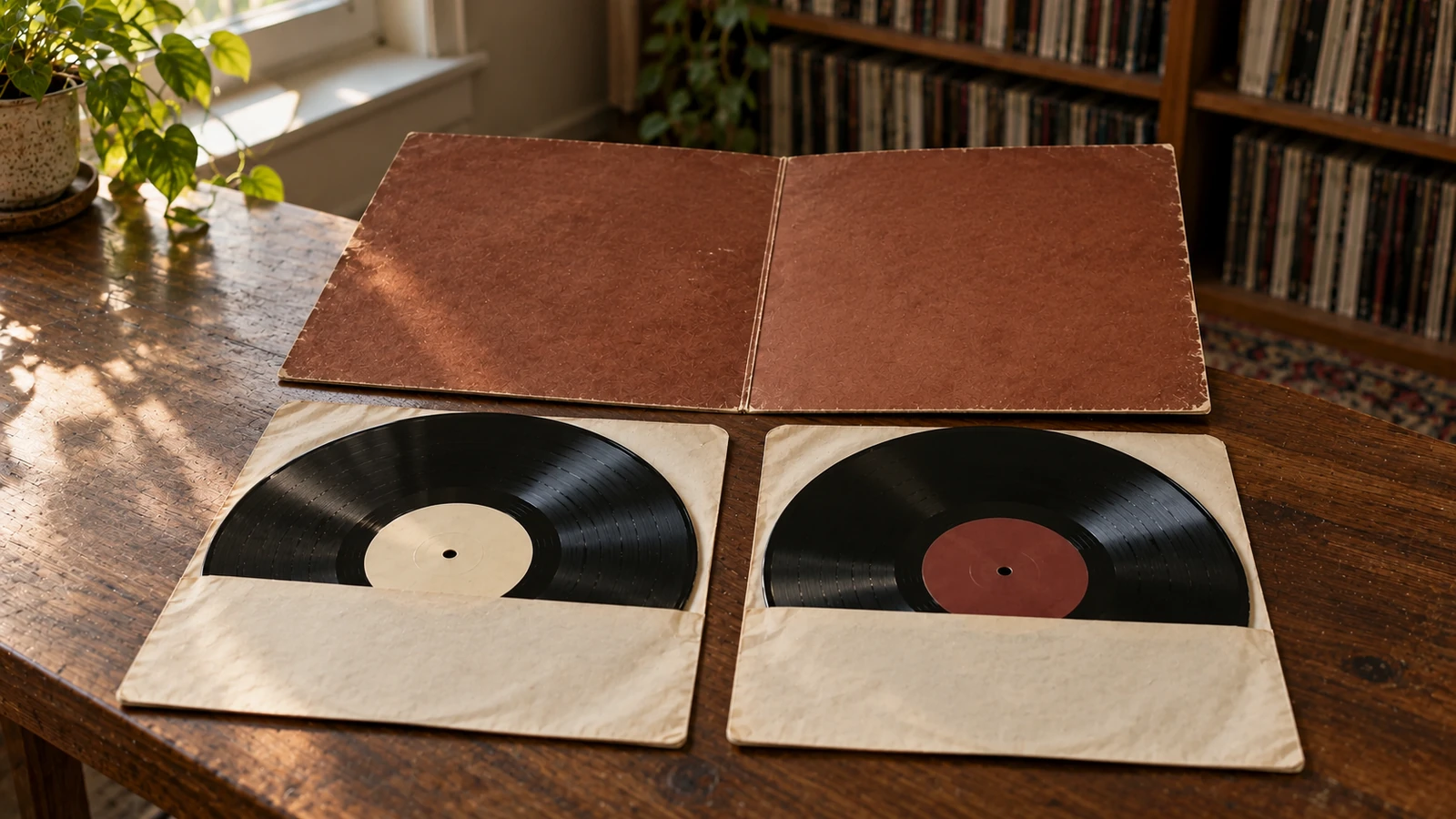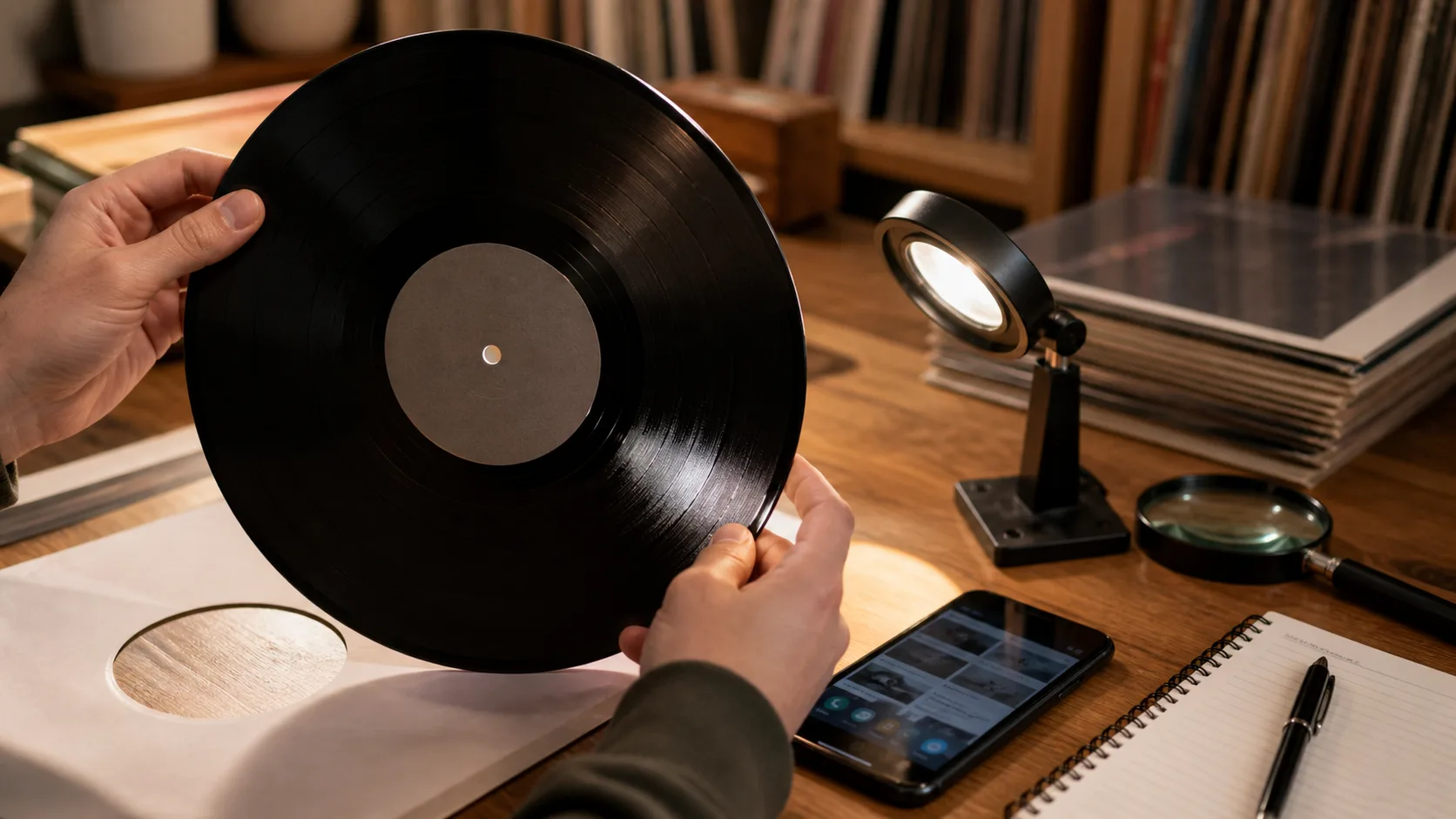
The tiny writing near the label is where a lot of record-collecting arguments get settled.
Two copies can have the same artist, album title, sleeve design, barcode, and catalogue number, yet still be different pressings. One might be an early cut. One might be a later repress. One might use a different mastering engineer, a different plant, or a different stamper. Sometimes that barely matters. Sometimes it changes the sound, the value, or whether the listing you are looking at is even the right record.
That is why matrix and runout numbers are worth learning.
You do not need to become a database editor or memorize every pressing plant mark. You just need a repeatable way to read what is on your copy, compare it with a release page, and save enough detail that future-you does not have to do the same detective work again.
What Matrix and Runout Numbers Actually Are
The runout, often called the dead wax, is the smooth area between the final groove and the label. Pressing plants and mastering rooms often put identifying marks there.
Depending on the record, you might see:
- a matrix number
- side indicators such as A, B, C, or D
- lacquer cut numbers
- stamped plant codes
- hand-etched initials
- mastering engineer marks
- plating or stamper information
- scratched-out earlier numbers
- symbols that only make sense once you compare them with known examples
Discogs treats these as identifiers, alongside barcodes, label codes, catalogue numbers, and other release details. That matters because the runout can separate versions that look identical at a glance.
The main thing to remember: the runout is evidence, not decoration.
Start With the Easy Identifiers First
Do not jump straight to the dead wax if you have not checked the obvious details.
Start with:
- artist and title
- label name
- catalogue number on the sleeve and label
- barcode, if there is one
- country shown on the sleeve or label
- format and speed
- colour, weight, or special edition notes
- inserts, booklets, posters, obi strips, or hype stickers
This gets you close. For many modern releases, it may be enough.
The runout becomes useful when several Discogs release pages still look possible, or when a seller claims a specific pressing and you need proof. It is the difference between “this looks like the right album” and “this looks like the exact version.”
How to Read the Runout Without Damaging the Record
Good light matters more than good eyesight.
Use a lamp, phone torch, or small inspection light at an angle. Hold the record by the edge and label area. Tilt it slowly until the marks catch the light. Some marks are stamped and shallow. Others are hand-etched and easier to see. On dark vinyl, the right angle makes the difference.
A simple process:
- Put the record on a clean inner sleeve or soft surface.
- Read one side at a time.
- Write the characters exactly as they appear.
- Mark stamped and etched parts if you can tell the difference.
- Note scratched-out characters instead of pretending they are not there.
- Photograph the runout if the record is valuable or confusing.
Do not press a pen, phone, or magnifier against the vinyl. You are inspecting the record, not pinning it down.
If a character is unclear, write a question mark and come back after checking the release pages. Guessing is how you accidentally convince yourself you own a rarer copy than you do.
Match the Whole Record, Not One Magic Code
Collectors sometimes treat the matrix number as a password. If it matches, they assume the release is solved.
It is rarely that clean.
Use the runout as part of a wider match:
- Does the label design match?
- Does the catalogue number match?
- Does the barcode match or correctly not exist?
- Does the country match?
- Do the sleeve details match?
- Do the inserts match?
- Does the vinyl colour match?
- Do both sides’ runouts match the release page?
Both sides matter. A-side information alone can be misleading, especially with records that have multiple cuts, represses, or reused metalwork.
When several versions share similar runouts, look for the small differences. A suffix, extra symbol, different side indicator, or stamped plant mark can be the clue that moves you from one version to another.
Know When “Close Enough” Is Enough
Not every record needs forensic treatment.
If it is a common modern album you bought new, you may only need the barcode, catalogue number, and Discogs release match. If it is a cheap secondhand copy you bought to play, a close match may be fine.
Spend more time when:
- the record is expensive
- the seller claims it is a first pressing
- multiple versions look almost identical
- the album has known counterfeits or unofficial pressings
- condition and completeness affect the price heavily
- you plan to sell or insure the record
- you are choosing between an original and a reissue
The goal is not to turn collecting into homework. The goal is to put effort where mistakes are costly.
Save the Detail Once
The most annoying version of this work is doing it twice.
Once you have identified the pressing, save the useful details somewhere you will actually find them:
- exact Discogs release
- catalogue number
- matrix and runout notes
- pressing country
- condition
- purchase price
- seller or shop
- photos for rare or expensive copies
- uncertainty notes, if you are not fully sure
This is where My Vinyl+ fits naturally into the workflow. Use Discogs data to get the release into your collection, then add the human notes that make the entry useful: “runouts match Variant 2”, “sleeve is VG because of top split”, “possible later repress”, or “confirmed by label and dead wax.”
That kind of note saves time in record shops, during selling, and when you are checking whether an upgrade is actually an upgrade.
A Quick Buying Checklist
Before paying serious money for a copy, ask for the proof that supports the claim.
For online listings, look for or request:
- photos of both labels
- clear photos of both runouts
- front and back sleeve photos
- close-ups of inserts or stickers that affect value
- notes on whether the runout is stamped, etched, or partly scratched out
- confirmation that photos show the actual copy for sale
If the seller cannot provide a runout photo for an expensive pressing, slow down. They may be honest and busy. They may also be selling from a generic listing without checking the exact copy. Either way, you do not have enough evidence yet.
For in-person digging, keep the process shorter:
- Check the sleeve and label.
- Check the catalogue number.
- Scan or search the release.
- Compare the runout only if the pressing matters.
- Save a note after you buy it.
That is enough for most real-world shopping.
Common Mistakes
The first mistake is reading only the sleeve. Sleeves get swapped. Inner sleeves get replaced. Stickers fall off. A sleeve can point you toward the right family of releases, but the record itself still needs checking.
The second mistake is trusting a barcode too much. Barcodes are helpful, especially on newer records, but they do not always separate every pressing or variant.
The third mistake is ignoring uncertainty. If you are not sure which version you own, say that in your notes. “Likely 2014 EU repress, runout hard to read” is much better than a confident wrong match.
The fourth mistake is chasing value before identity. You cannot price the record properly until you know what it is.
The Bottom Line
Matrix and runout numbers are not collector trivia. They are a practical way to confirm the exact pressing in your hand.
Use the easy identifiers first. Read both sides in good light. Match the whole record, not just one code. Save the detail once, especially for records you might sell, insure, upgrade, or argue with yourself about later.
The tiny writing near the label will not make every record more valuable. It will make your collection more accurate. That is usually the more useful win.
Sources: Discogs: How To Find Information On A Vinyl Record, Discogs: Database Guidelines 5. Barcodes & Identifiers, Discogs: Database Guidelines 4. Label / Catalog Number, Discogs: Customizing Your Collection Notes, My Vinyl+ collection workflow context.