The record can be graded perfectly and still disappoint the buyer.
All it takes is a loose disc punching through the jacket, a corner meeting a sorting machine, or a thin mailer folding around its contents. The vinyl may survive while the sleeve loses the condition you sold it in.
Good record packing is not complicated. It does require the right order. Protect the disc from the jacket, stop everything moving, then give the package enough rigidity to take a knock.
This workflow is for one or a few LPs sold online, traded with another collector, or posted to a friend. Box sets and large collections need a proper box and more support.
Photograph the record before packing
Start with evidence of the exact copy and its condition.
Photograph:
- both sides of the record
- the front, back, spine, and corners of the jacket
- labels on both sides
- inserts, posters, booklets, and original inner sleeves
- any wear already disclosed in the listing
- the matrix or runout if it identifies a valuable pressing
Keep the sale page, buyer address, declared condition, and photos together until delivery is complete. If the parcel arrives damaged, you will need to separate pre-existing wear from transit damage.
My Vinyl+ can hold the pressing and condition notes while the order is open. Add a short sale note before the copy leaves your shelf. Do not remove it from your collection record until the buyer has received it and the return window has passed.
Use a real record mailer
A pizza box, padded envelope, or improvised sheet of cardboard is not a record mailer.
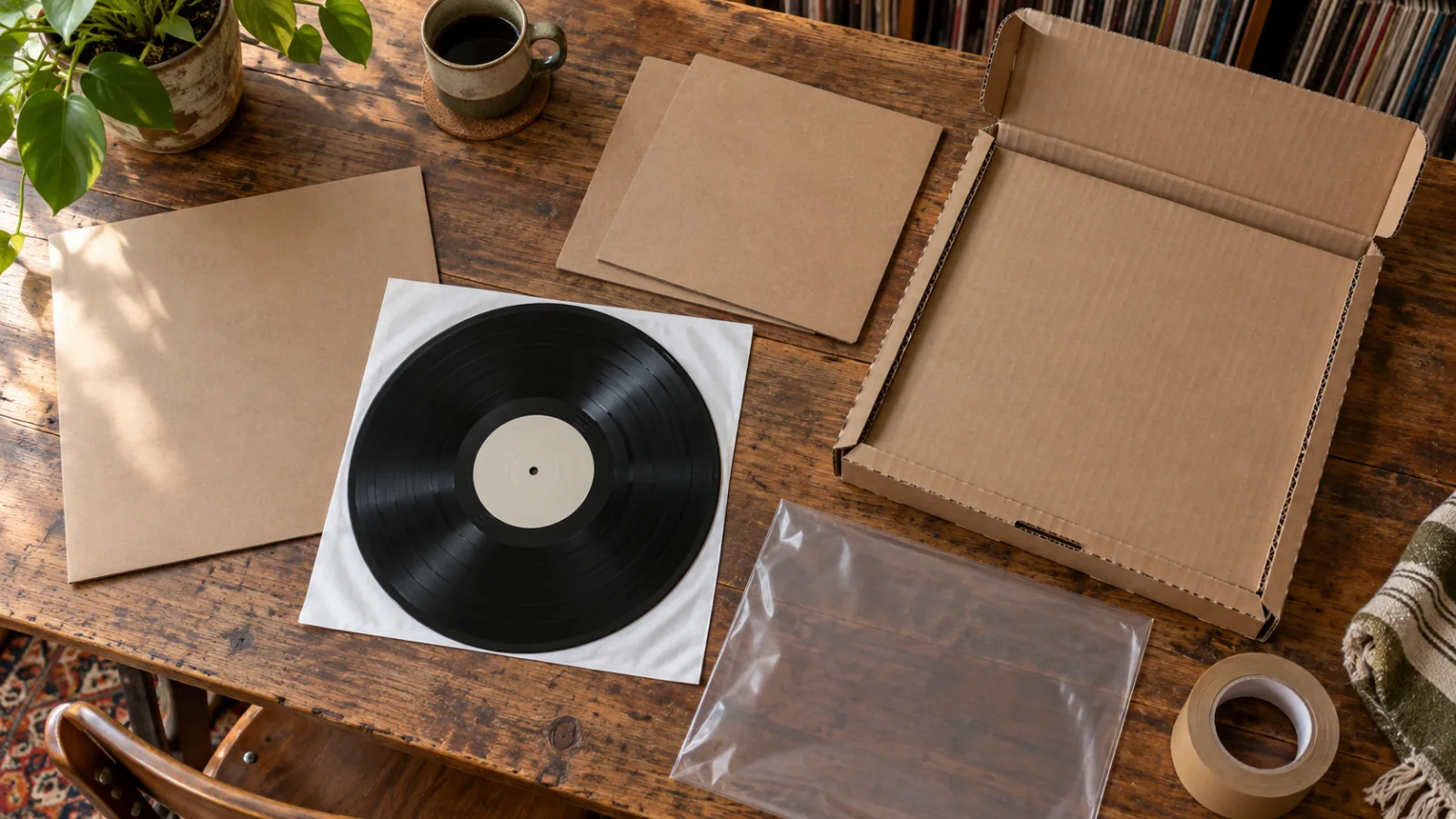
Use a sturdy corrugated mailer made for the format you are sending. A 12-inch LP needs a square mailer with enough room for the jacket, protective sleeve, and stiffeners. A 7-inch single needs a smaller mailer or firm padding that stops it wandering inside a larger one.
Check reused mailers closely. Soft corners, torn folds, creases, and moisture damage have already taken away some of the structure. Reuse is sensible when the mailer is still sound. A rare or expensive record is the wrong place to test tired cardboard.
Royal Mail advises using a robust box that is neither so tight that there is no room for protection nor so roomy that the contents slide around. That rule fits records perfectly.
Take the disc out of the jacket
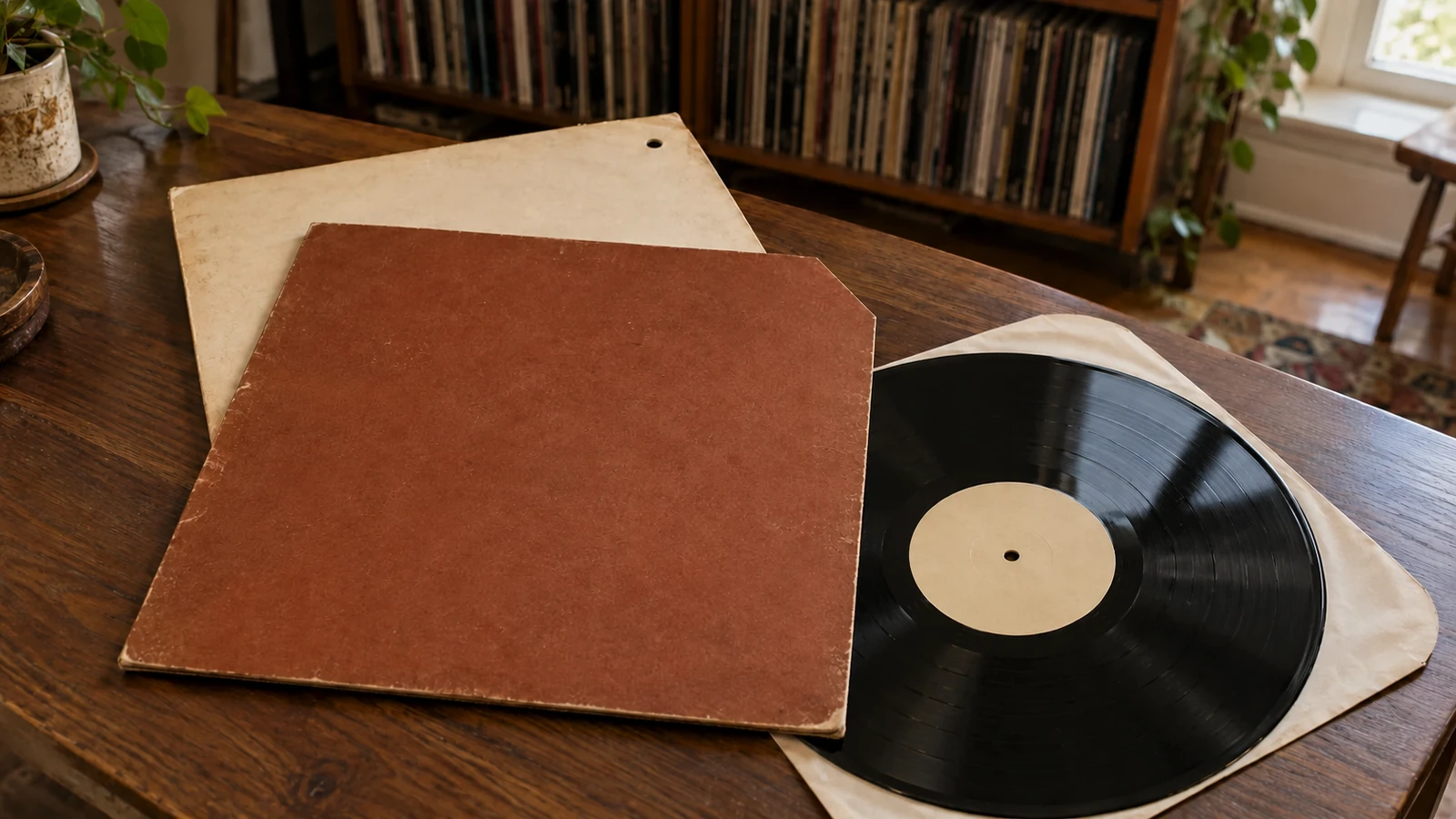
For an unsealed record, remove the disc in its inner sleeve from the outer jacket before packing.
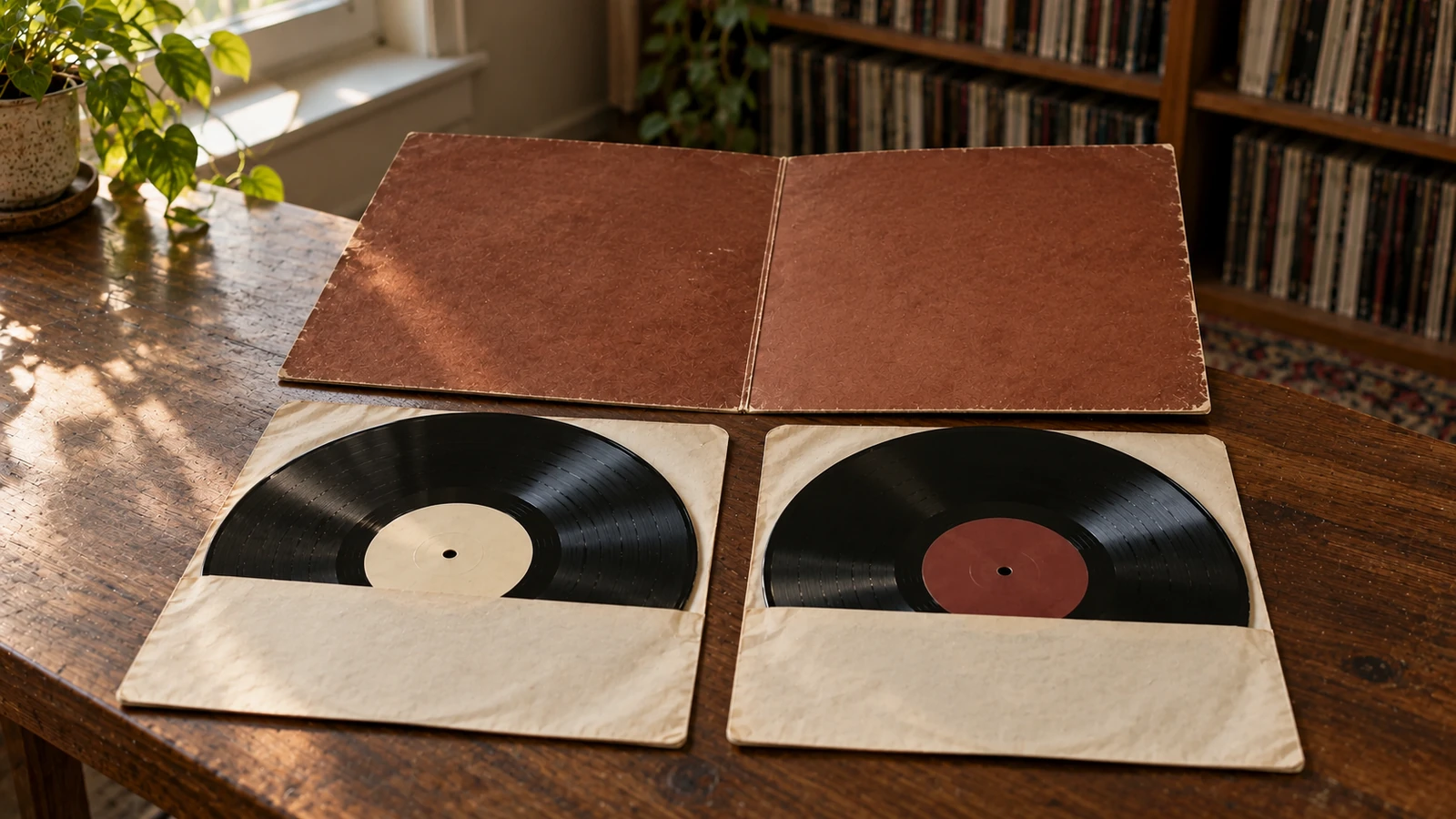
Place the sleeved disc behind the jacket, with the inner sleeve opening facing upward. Put both inside a clean outer protective sleeve. The disc and jacket now travel as one bundle, but the edge of the disc cannot strike the jacket seam from inside.
This is the simplest way to reduce seam splits in transit. Shopify’s vinyl shipping guide recommends the same separation for unsealed records.
Keep these details in mind:
- Never put bare vinyl against cardboard or bubble wrap.
- Do not tape the inner sleeve or outer sleeve directly.
- Keep loose inserts flat with the jacket.
- For a gatefold, do not force the disc into a pocket that makes the package bulge.
- If the buyer asks you to leave the record inside the jacket, explain the seam-split risk first.
Leave a factory-sealed record sealed unless the buyer has agreed otherwise. You cannot remove the disc without changing what you sold. Give a sealed copy extra external support instead.
Build a rigid sandwich
Place one flat cardboard stiffener on each side of the protected record bundle. The stiffeners should cover the whole jacket, including its corners.
You are trying to make a flat sandwich:
- cardboard stiffener
- sleeved record and jacket
- cardboard stiffener
Add another stiffener for a valuable record, a thin mailer, or a long journey. Corrugation is strongest when the flutes in neighbouring sheets run in different directions, so rotate one stiffener by 90 degrees when the cut allows it.
Bubble wrap can cushion a record, but it does not replace flat cardboard. Large bubbles can also press unevenly against a jacket if the mailer closes too tightly. Use a thin, even layer only when there is room for it.
The finished bundle should feel flat and supported. It should not bow in the middle.
Stop movement without crushing the sleeve
Put the sandwich into the mailer and gently move it from side to side.
If you can hear or feel the bundle shifting, fill the gap with another flat insert or suitable padding. Pay attention to the corners. Empty space gives the jacket room to build speed before it hits the side of the mailer.
Do not solve movement by forcing an overfilled package shut. Pressure can dish the record, crease a gatefold, or mark the jacket. Royal Mail warns against both excess space and overpacking.
For several LPs, separate jackets where rubbing is possible and use a multi-record mailer rated for the thickness. Do not stretch a single-LP mailer around three records because the flap happens to reach.
Before sealing, run three quick checks:
- Nothing moves when the package is tilted.
- The mailer closes without pressure on the centre.
- Every jacket corner sits inside the protected footprint.
Seal the mailer, not the record
Use proper packing tape on the mailer’s external seams and openings. Keep tape away from the protective sleeve and jacket. A buyer should not need a knife near the record to unpack it.
Cover old labels and barcodes if you reused the mailer. Add a clear return address. Put a duplicate address or order reference inside the parcel in case the external label is damaged.
“Fragile” and “Do not bend” labels may help a human handler understand the contents, but they are not structural protection. Pack the record as though nobody will read them.
Take one final photo of the open package and another after sealing it. For an expensive order, photograph the shipping label without sharing the image publicly.
Choose tracking based on the risk
The cheapest service is not always the cheapest outcome.
Compare:
- tracking and delivery confirmation
- compensation or insurance limits
- delivery speed
- customs handling for international orders
- the carrier’s size and weight rules
- the cost of replacing the exact pressing, not an average copy
Use tracked shipping when the record’s value, scarcity, or destination would make a lost parcel painful. Check the carrier’s current terms before posting because service names, eligibility, compensation, and prices change.
In the United States, USPS lists sound recordings as eligible Media Mail contents. That describes eligibility, not packaging quality. The record still needs the same rigid mailer and movement control.
For international sales, complete the customs description and value accurately. Discogs tells sellers to use the commercial receipt it supplies and enter the order details on the customs declaration. Check the current rules for the destination instead of copying an old form or guessing.
Handle sealed records and box sets differently
Some records need a variation on the standard method.
For a sealed LP, keep the shrink intact and place extra rigid support around the whole jacket. If the record has enough room to move inside the sealed sleeve, the seam-split risk cannot be removed completely. State that clearly to a buyer of an expensive sealed copy.
For a box set, use a strong outer box with cushioning on every side. Stop the set moving inside that box, then protect the box from direct contact with the outer container. A square LP mailer is not a substitute.
For a picture disc in a clear PVC sleeve, keep the disc in a safe inner sleeve during shipping if the item is already open. Include the original packaging separately and flat. Do not let adhesive tape touch PVC, paper, or vinyl.
Use this packing checklist
Before handing the parcel over, confirm:
- the record and jacket condition are photographed
- the correct pressing and buyer order match
- an unsealed disc is outside the jacket and inside its inner sleeve
- the jacket and disc are together in an outer protective sleeve
- full-size stiffeners protect both sides
- the bundle cannot move inside the mailer
- the mailer closes flat without crushing the contents
- all openings are sealed with packing tape
- old labels are covered
- the return address is visible
- the service provides suitable tracking or compensation
- the tracking number is saved and shared through the marketplace
One more habit is worth keeping. Do not mark the copy as gone the moment you print the label. Keep its pressing, grade, sale photos, and tracking note accessible until the transaction is finished. If a buyer asks a question, you can answer from evidence rather than memory.
The bottom line
Most shipping damage comes from movement, weak packaging, or the disc striking the jacket from inside.
Remove an unsealed disc from the jacket. Protect both in sleeves. Place them between full-size stiffeners. Use a sound record mailer. Fill movement without overpacking, seal every opening, and choose tracking that matches the risk.
It takes a few extra minutes. That is cheaper than a refund, and much nicer than telling another collector that the corner was sharp when it left your house.
Sources: Shopify: How to Ship Vinyl Records Safely, Royal Mail: How to Package and Send Fragile Items, Discogs: How To Ship An Order Internationally, USPS: What is Media Mail?.