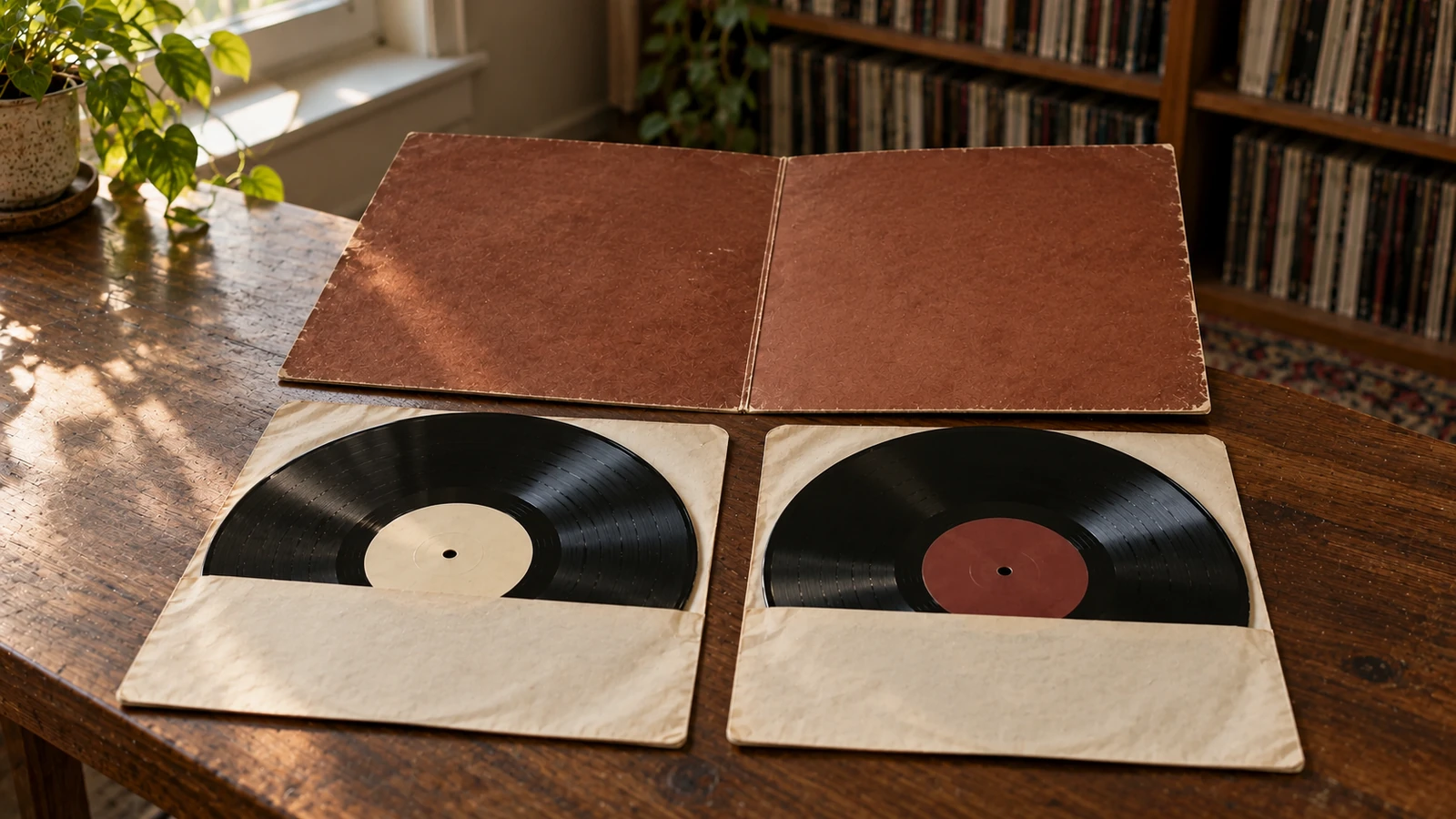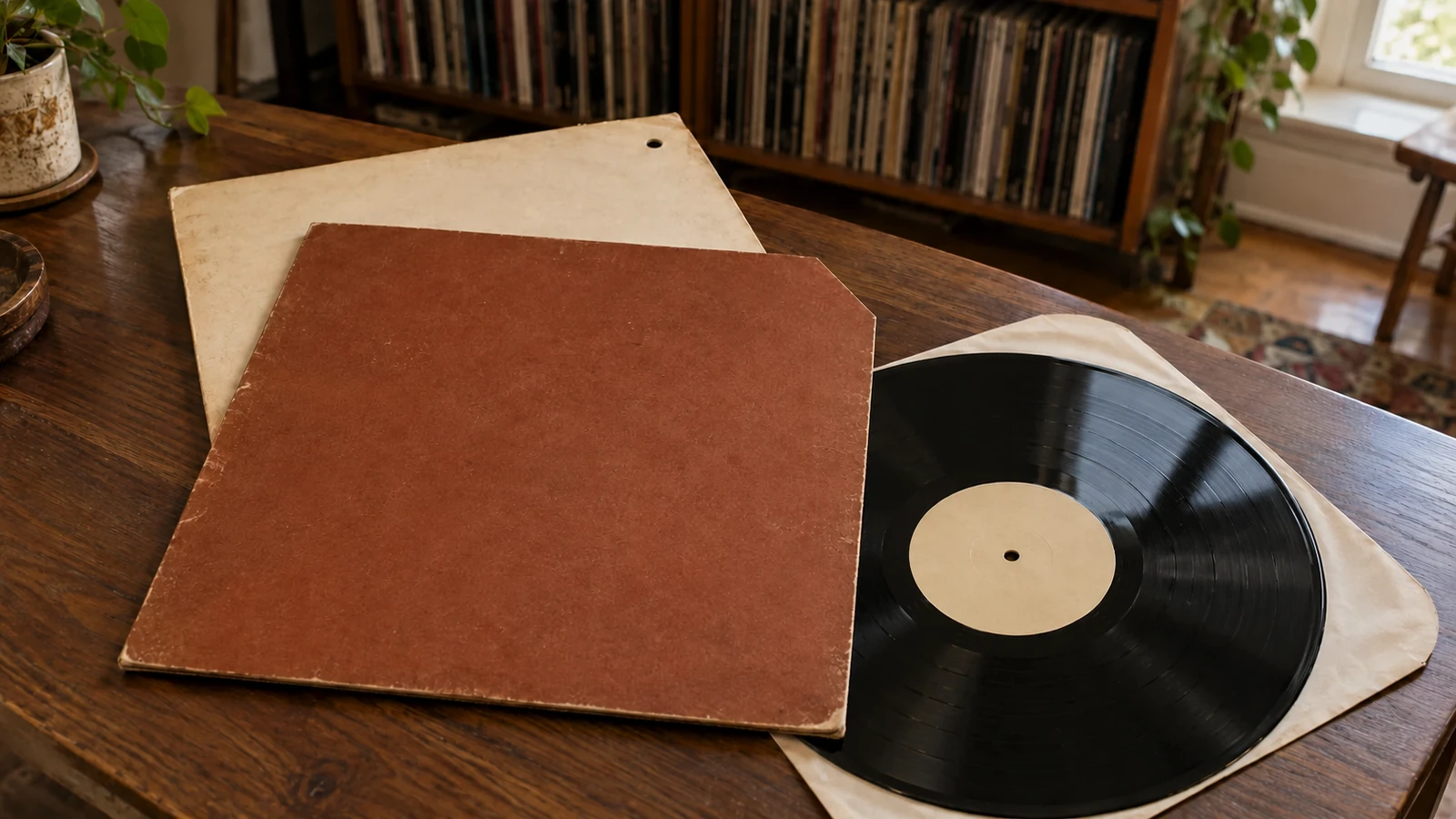
You open an inherited record case and find heavy black discs in brown paper sleeves. They look like vinyl records, but they do not feel like them. One careless bend could snap a disc that has survived for a century.
Most collectors know the rules for LPs. Old 78 rpm records need a different set of rules. The material may be shellac, the grooves are wider, the correct stylus is larger, and a familiar vinyl cleaning fluid may contain alcohol that can attack the disc.
The first job is not to play them. It is to work out what you have.
Do not assume every old 78 is shellac
“78” describes a playback speed, not one guaranteed material. Commercial shellac discs dominated the first half of the twentieth century, but old collections can also contain lacquer recording discs, bare aluminium discs, and later coarse-groove discs pressed in vinyl. The Canadian Conservation Institute dates mass-produced shellac discs from about 1898 to the mid-1950s and notes that instantaneous lacquer discs used several core materials, including aluminium, glass, steel, and cardboard.[3]
A typical shellac record is rigid, heavy for its size, and often 10 inches across. It does not flex like an LP. University of Illinois preservation guidance says commercially pressed shellac labels are usually pressed into the disc, while vinyl and lacquer labels are more often glued on.[7]
Use clues together:
- a rigid, thick, brittle disc is more likely to be shellac than modern vinyl
- a 10-inch disc with one short recording on each side fits the common shellac pattern
- an exposed metal, glass, or cardboard layer at the centre hole suggests a coated recording disc, not solid shellac
- several centre holes, a handwritten label, or a surface that is cracking or peeling can point to a lacquer recording
- a flexible disc marked “microgroove” or “LP” needs LP playback equipment, even if it is old
Do not run a bend test. If the material is uncertain, photograph the label, edge, centre hole, and both playing surfaces. Ask a sound archive, conservator, or specialist dealer before cleaning or playing it. A unique home or broadcast recording deserves more caution than a replaceable commercial release.
Handle shellac like glass, not vinyl
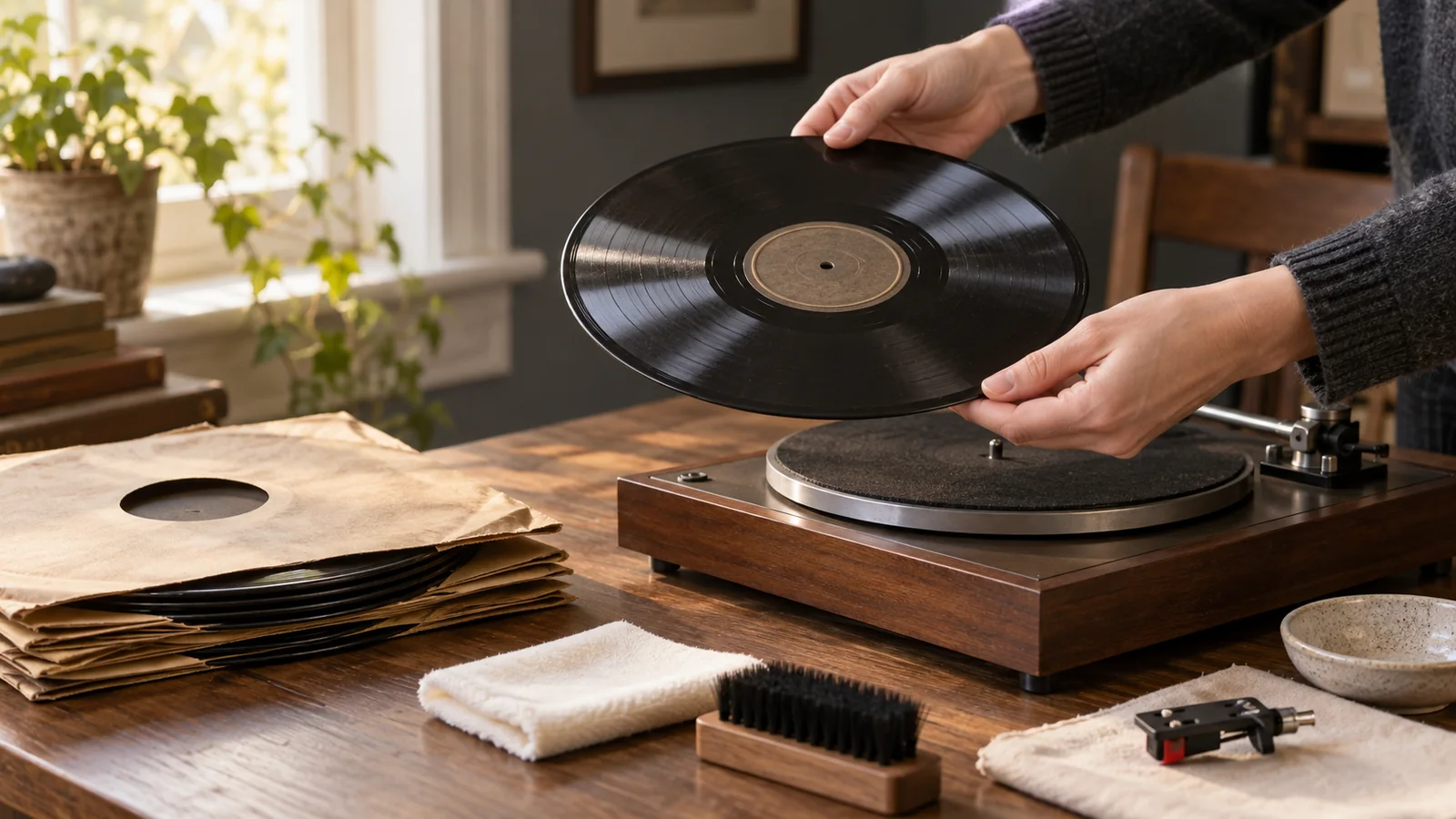
Shellac records are rigid and brittle. The University of Illinois guide recommends supporting a disc at roughly the 3 and 9 o’clock positions so that its own weight does not stress one edge.[7] The Library of Congress also advises handling grooved discs only by the edge and label areas.[1]
Clear a flat work surface before lifting the first record. Put down a clean, smooth mat or cloth with no grit trapped underneath. Move one disc at a time and keep drinks away.
Avoid these common mistakes:
- pinching a 78 by one edge and carrying it across the room
- flexing it to pull it from a tight sleeve
- stacking loose discs on a hard table
- leaving a disc on a chair, bed, or turntable
- trying to glue a cracked record before asking a conservator
If a disc is already broken, do not rub the pieces together to check the fit. IASA warns that broken edges can lose fine detail through contact and recommends storing fragments so they do not touch.[4]
Inspect before you clean
Work under bright, indirect light. Check both sides and the centre hole.
Stop if you find:
- a crack running from the edge or spindle hole
- lifting, flaking, or peeling surface material
- a white or grey deposit with a greasy or crystalline look
- fuzzy or thread-like mould
- a cardboard or paper core visible beneath the playing surface
- a warped disc that will not sit safely on the platter
A white deposit is not automatically mould. IASA notes that degrading lacquer discs can push plasticiser products to the surface, while mould more often has a feathery or thread-like appearance.[4] Guessing wrong matters because the correct treatment depends on the material.
Do not smell a suspect disc closely and do not brush mould through the room. Isolate it in a ventilated container away from the rest of the collection and seek conservation advice. Mould is a health issue as well as a record-care problem.
Never use alcohol on shellac
Many fluids sold for modern vinyl contain isopropyl alcohol. That does not make them safe for a 78.
IASA’s preservation guidance is blunt: shellac and lacquer discs should never be exposed to alcohol because it may have an immediate corrosive effect.[4] Shellac compounds can also contain absorbent fillers, so prolonged contact with water can make those fillers expand.[4]
For a dusty but otherwise stable disc, start dry:
- Support the record on a clean, flat surface.
- Use clean air and a soft record brush to remove loose surface dust.
- Follow the groove direction rather than scrubbing across it.
- Keep the label dry.
- Stop if the surface flakes, softens, or transfers colour.
Wet cleaning needs more judgement. The Library of Congress used a mild Tergitol and distilled-water solution, a soft brush, a distilled-water rinse, and vacuum drying while preparing shellac discs for the National Jukebox.[2] That was an archival workflow with trained staff and controlled equipment, not permission to soak an unknown disc in the kitchen sink.
If you know the disc is a stable, mass-produced shellac pressing and decide to wet-clean it, use a shellac-safe method with fully disclosed ingredients. Minimise contact time, keep liquid off the paper label, rinse as the product or conservation method specifies, and dry the disc immediately. IASA recommends a record-cleaning machine with vacuum removal when wet cleaning is appropriate.[4]
Skip wet cleaning and consult a professional when the disc may be lacquer, has a paper or card core, is cracked or peeling, contains unique audio, or shows mould. No cleaning is better than the wrong cleaning.
Use a 78 stylus, not an LP stylus
A turntable that spins at 78 rpm is only half the setup. Shellac records normally have coarse grooves that are much wider than LP microgrooves. IASA describes typical shellac pressings at roughly 100 grooves per inch, compared with 300 to 400 for LP microgroove records.[5]
An LP stylus is too small for the job. It can ride low in the groove where dirt and wear are worst. Audio-Technica designs its AT-MONO3/SP cartridge specifically for shellac and 78 rpm records with a 2.5 mil conical stylus.[8] By comparison, the company describes a typical LP stylus as about 0.6 mil.[6]
Use:
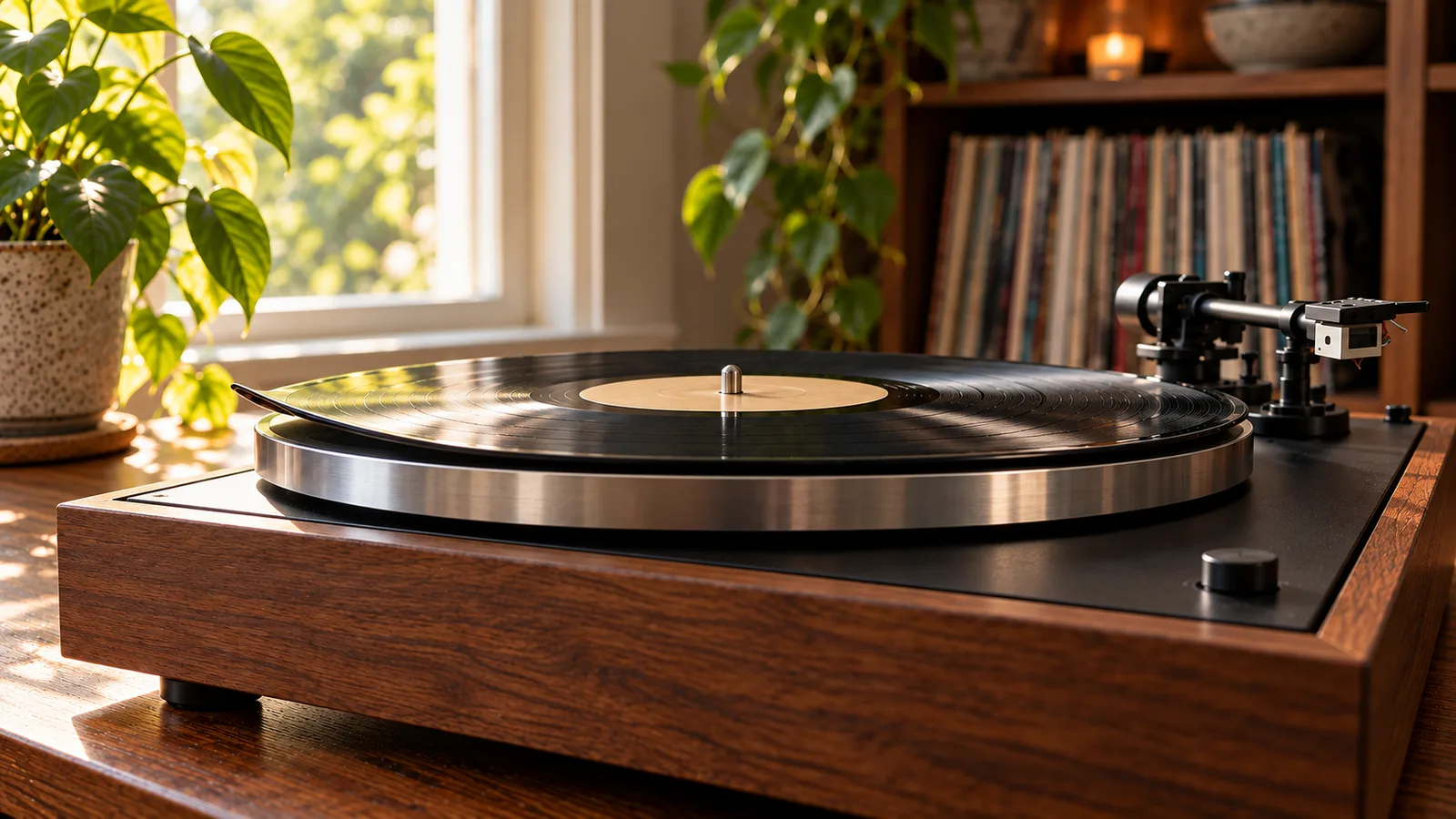
- a turntable with a documented 78 rpm setting
- a cartridge or interchangeable stylus made for coarse-groove 78s
- the tracking force specified for that exact cartridge and stylus
- a phono stage or software chain that lets you listen in mono when appropriate
Do not copy a tracking-force number from another cartridge. A 78 stylus may require more force than an LP stylus, but the cartridge maker’s specification is the limit that matters.[6]
Some early discs were not cut at precisely 78 rpm, and groove dimensions varied between periods and manufacturers.[7] For casual listening, the correct dedicated stylus is a sensible start. For a rare disc or the best possible transfer, an archive may test several stylus sizes and adjust playback speed by ear and measurement. The Library of Congress uses different stylus sizes and shapes to find the least worn part of a groove during preservation transfers.[2]
Do not use an acoustic gramophone casually
An original wind-up gramophone may look like the historically correct player. It can also put far more force on a record than a modern cartridge.
Audio-Technica puts the traditional acoustic gramophone’s tracking force above 50 grams and a modern dedicated SP cartridge around 5 grams.[6] That difference is enough reason to keep valuable, clean, or irreplaceable discs away from an unserviced acoustic machine and a used steel needle.
If the gramophone itself is the collection, have it serviced by someone who understands acoustic reproducers, needle choice, and historic discs. For repeat listening or digitisation, use a suitable modern turntable and coarse-groove stylus.
Store 78s upright with support
Put each disc in its own clean sleeve. Keep any original printed sleeve because it may carry useful catalogue or provenance information, but do not let a crumbling acidic sleeve shed debris onto the playing surface.
Store records:
- vertically, never in a tall horizontal pile
- with other discs of the same size
- close enough to remain upright, but not squeezed tightly
- with sturdy full-height dividers at short intervals
- away from radiators, loft heat, direct sun, damp walls, and rapid climate changes
The University of Illinois recommends vertical storage with full-height, full-depth dividers every 4 to 6 inches because a leaning run of heavy discs can create enough pressure to warp or break them.[7] The Canadian Conservation Institute also warns that heat can shrink shellac and that high relative humidity can make it brittle and encourage mould.[3]
Write identifiers on the new outer sleeve, not on the record. Save the label name, catalogue number, matrix markings, condition, and any family history attached to the recording. A note saying “Grandad’s dance-band records” is vague. Names, places, and dates can turn an ordinary disc into a documented family object.
Make a careful first-play plan
Before lowering the stylus, run this checklist:
- Confirm that the disc is a stable commercial shellac pressing, not an uncertain lacquer or one-off recording.
- Inspect it for cracks, lifting layers, mould, and embedded debris.
- Clean only with a method safe for the identified material.
- Fit the correct coarse-groove stylus.
- Set tracking force and anti-skate from the cartridge and turntable manuals.
- Select 78 rpm and lower the volume before cueing.
- Listen to a short section first.
- Stop if the stylus jumps, the surface sheds material, or the crack opens.
- Record the disc digitally if the content is unique or personally important.
One good transfer reduces the need to play a fragile original repeatedly. Keep an unedited high-resolution copy and a separate listening copy. Photograph both labels and include the catalogue and matrix numbers in the file notes.
The bottom line
Treat an inherited 78 as an unknown object before treating it as a record. Identify the material, support it with two hands, and keep alcohol away from shellac. Do not wet-clean a peeling, mouldy, laminated, or unique disc without specialist advice.
For playback, 78 rpm is not enough. Use a coarse-groove stylus and the tracking force specified for it. Then store the disc upright, supported, and in its own sleeve.
The goal is not to make every old record look new. It is to hear what survived without becoming the person who damaged it.
Sources
[1] https://www.loc.gov/preservation/care/record.html — Library of Congress: Care, Handling, and Storage of Audio Visual Materials [2] https://loc.gov/collections/national-jukebox/articles-and-essays/making-the-jukebox — Library of Congress: Making the National Jukebox [3] https://www.canada.ca/en/conservation-institute/services/preventive-conservation/guidelines-collections/caring-audio-video-data-recording-media.html — Canadian Conservation Institute: Caring for audio, video and data recording media [4] https://iasa-web.org/tc04/mechanical-carriers-cleaning-and-carrier-restoration — IASA: Cleaning and carrier restoration [5] https://www.iasa-web.org/tc04/microgroove-introduction — IASA: Microgroove introduction [6] https://www.audio-technica.com/en-gb/support/playing-78rpm-records — Audio-Technica: Playing 78rpm records [7] https://psap.library.illinois.edu/collection-id-guide/phonodisc — University of Illinois PSAP: Phonograph record identification guide [8] https://docs.audio-technica.com/eu/ATmono3_SP_datasheet.pdf — Audio-Technica AT-MONO3/SP cartridge datasheet