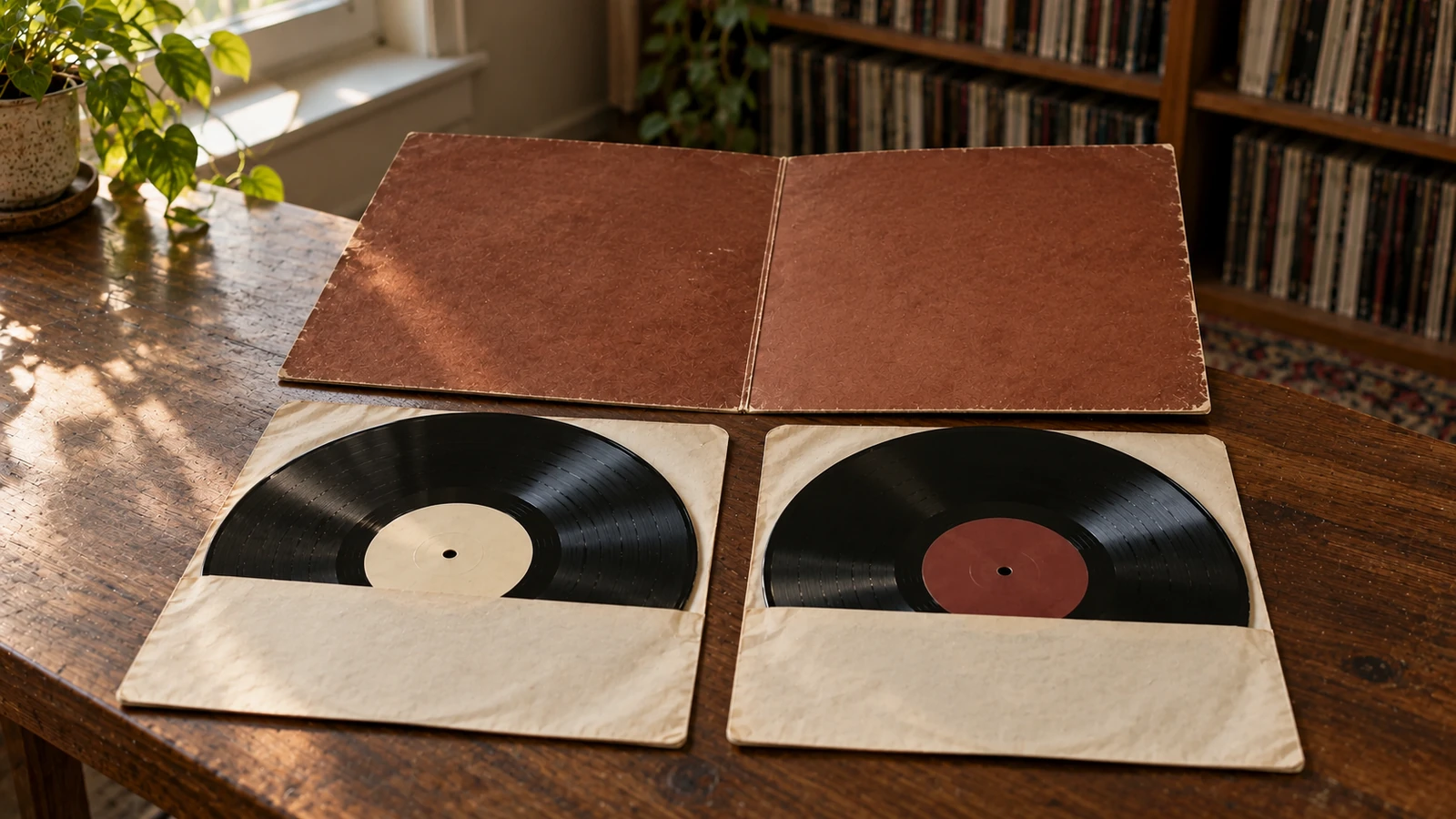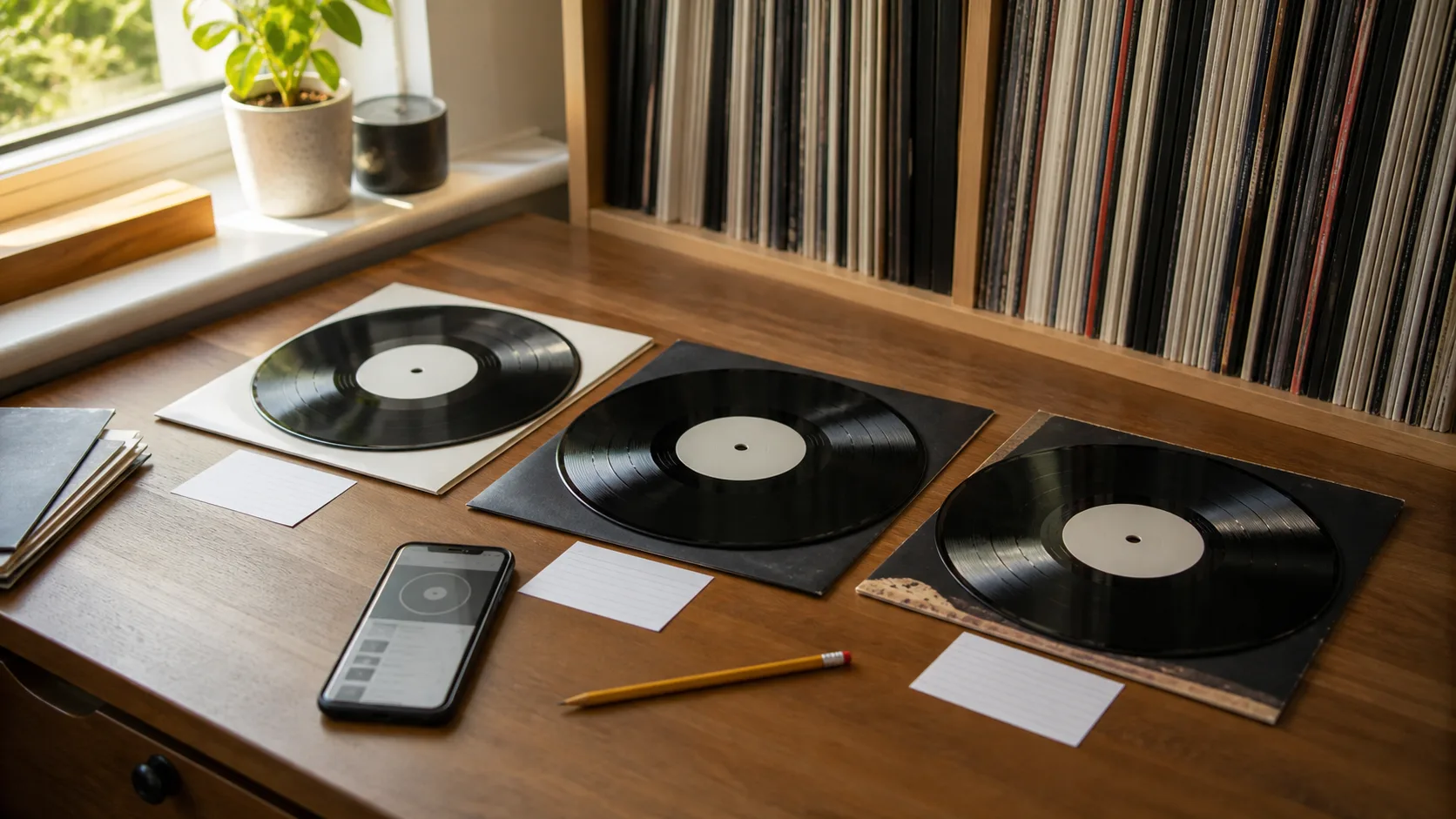
Owning a duplicate record is not automatically a mistake.
Sometimes it is the clean upgrade you were hunting for. Sometimes it is the mono copy, the later reissue, the signed sleeve, the sentimental copy, or the cheap player you bought before you understood pressings. Sometimes it is just the same album twice because you forgot what was already on the shelf.
The problem is not the duplicate. The problem is leaving the duplicate undecided.
If you own two or more copies of the same album, each copy should have a job. Keep it because it sounds better, completes a version story, preserves a collectible copy, or gives you a copy you can play without worry. Sell or trade it because it does not add anything. The middle ground is where collections get heavy.
Here is a practical way to sort duplicate vinyl records without turning the hobby into admin for its own sake.
Start With the Exact Copy
Do not decide from the album title alone.
Pull every copy and identify what each one actually is:
- pressing country
- release year or approximate era
- label and catalog number
- barcode, if present
- matrix or runout notes, if needed
- vinyl condition
- sleeve condition
- inserts, obi, posters, booklets, or hype stickers
- purchase price, if you know it
- why you bought it
Discogs is useful here because the same album can sit under many different release pages. A US original, a UK pressing, a Japanese issue with obi, a modern half-speed master, and a coloured retailer exclusive are not the same collector object. They may share the music, but they do not carry the same value, sound, packaging, or reason to stay.
If two copies are genuinely the same release, note that too. That is a different decision from comparing an original with a reissue.
Give Each Copy a Role
A duplicate becomes easier to judge when you stop asking “should I own this twice?” and start asking “what is this copy for?”
Useful roles include:
- Best player: the copy you actually want to hear.
- Collectible copy: the copy you keep for rarity, completeness, or condition.
- Reference copy: the pressing you compare against other versions.
- Sentimental copy: the copy with personal history.
- Upgrade candidate: the copy you will replace when a better one appears.
- Sell or trade copy: the copy with no clear job.
- Gift copy: the copy that would make more sense in someone else’s hands.
Be honest. “Limited colour variant” is not a role by itself. It might be collectible if you care about that variant, if the packaging is special, or if it has real scarcity and demand. If it sounds worse than your black copy, has no personal meaning, and sits untouched, its role may simply be “sell while someone else wants it.”
This is where My Vinyl+ earns its keep. Add a short note to each duplicate: “player copy,” “sealed variant,” “upgrade target,” “sell if VG+ price holds.” When you are browsing later, those notes stop you from re-litigating the same decision in a shop aisle.
Compare Sound Before Value
Collectors talk about value because it is easy to look up. Sound is slower.
If both copies are playable, listen before you decide. You do not need a laboratory test. Pick two or three tracks you know well and compare:
- surface noise between songs
- sibilance on vocals
- bass weight
- inner-groove distortion
- channel balance
- loud passages
- quiet passages
- whether one copy simply makes you want to keep listening
Clean both records before judging them if they need it. A dusty strong pressing can sound worse than a clean ordinary one.
Then write the result in plain language. “UK copy quieter, US copy more lively.” “Reissue is cleaner but original has better drums.” “Picture disc looks good, sounds noisy.” These notes matter more than vague audiophile adjectives because they explain your future decision.
If you cannot hear a meaningful difference and neither copy has a strong collector reason, you probably do not need both.
Check Condition Separately
A duplicate decision often turns on condition, but condition has two parts.
Grade the vinyl and sleeve separately. Discogs uses the Goldmine Standard for marketplace grading, and that split matters in real collections too. A record can have a strong sleeve and a noisy disc. Another copy can have a clean disc in a tired jacket. Together, they may even make one complete keeper if the editions match closely enough.
Look for:
- scratches, scuffs, warps, non-fill, or off-center playback
- groove wear that only appears when played
- seam splits, ring wear, corner damage, writing, sticker residue, or water marks
- missing printed inners, inserts, posters, download cards, obi strips, or hype stickers
- mismatched discs and sleeves
Do not automatically keep the visually cleaner copy. The better record is sometimes the worse-looking one that plays quietly. The worse record is sometimes the sealed copy with a damaged sleeve that you never open, never play, and never quite know what to do with.
Decide Whether Completeness Matters
Completeness changes duplicate logic.
For some records, the disc is the point. For others, the package matters: booklet, numbered print, poster, obi, lyric inner, alternative cover, signed insert, bonus 7-inch, or original hype sticker. A duplicate with a missing insert may be a perfectly good player but a weak collectible copy.
Ask:
- Is one copy complete and the other incomplete?
- Is the missing piece expensive or hard to replace?
- Does the package define the edition?
- Would I care if I sold the complete one and kept only the player?
- Am I keeping packaging I do not actually value?
This helps avoid two opposite mistakes. One is selling a complete copy because the other disc sounds better. The other is keeping a complete copy forever when the extras mean nothing to you.
Use Market Value Carefully
Price is part of the decision, but it should come after identity, condition, sound, and role.
Check recent sold history or price guidance for the exact release, not just the album. Be especially careful with:
- sealed copies
- signed copies
- numbered editions
- imports
- out-of-print reissues
- copies with missing inserts
- copies in unusually strong or weak condition
- versions with similar artwork but different mastering or country
The asking price is not the value. A high listing can sit unsold for months. A fair sold-price range is more useful, but even that needs context. Shipping costs, seller reputation, regional demand, and condition notes all change the real number.
Once you have the range, choose a practical action:
- keep both because they serve different roles
- keep the best player and sell the collectible copy
- keep the collectible copy and sell the weaker player
- sell the higher-value copy and buy something you will actually play
- trade the spare toward a wantlist record
- gift the duplicate because the money is not worth the effort
There is no universal correct answer. There is only the answer that makes your collection easier to use.
Make a Duplicate Decision Matrix
Use this quick matrix when you are stuck:
- Different pressing, different listening experience: keep both if you play both or care about the comparison.
- Different pressing, same listening value: keep the one with better condition, completeness, or meaning.
- Same pressing, one better condition: keep the better copy unless the weaker one has sentimental value.
- Same pressing, both similar: sell, trade, or gift one.
- One sealed, one open: keep both only if you genuinely value sealed ownership.
- One valuable, one playable: decide whether the expensive copy is part of your collection or just trapped money.
- One copy has memories: keep it if the memory is real, not just guilt.
That last point matters. Sentimental value is legitimate. So is admitting that a copy no longer means much.
Track Duplicates So They Stop Multiplying
Once you decide, update your catalog.
For each duplicate, save:
- exact release
- role
- condition
- value range or last checked date
- storage location
- sell/trade status
- notes on sound or defects
- whether it replaces another copy
If one copy is leaving, mark it clearly before it disappears into a “sell later” pile. If one copy is the player, make that visible. If one copy is sealed, note why it stays sealed.
This is more useful than a perfect spreadsheet. The goal is quick recall. When you find another copy in the wild, your catalog should tell you whether you need it, already upgraded it, or promised yourself not to buy it again.
Do a Shelf Pass Twice a Year
Duplicates often hide because they are separated.
One copy is filed under the artist. One is in a recent arrivals crate. One is in a “to clean” pile. One is still in the mailer. One is in a box because you meant to sell it.
Twice a year, search your collection for duplicate album titles and pull the obvious pairs. You do not need to solve the entire shelf in one afternoon. Start with:
- favourite artists where you know you bought upgrades
- expensive records
- recent variants
- records you bought at fairs
- sealed copies
- titles you keep seeing in shops
Make one decision per title. Keep both with roles, or move one toward the exit. A collection feels lighter when the duplicates that remain are intentional.
The Bottom Line
Duplicate records are only a problem when they are vague.
Identify the exact copies. Compare condition and sound. Decide whether completeness, rarity, or personal history matters. Check the value of the specific release, not the album in general. Then give every duplicate a role: player, collectible, reference, upgrade, sell, trade, gift, or sentimental keeper.
The point is not to make your collection smaller for the sake of it. It is to make it clearer.
Owning three copies of an album can be perfectly reasonable. Owning three copies and not knowing why is the part worth fixing.
Sources: Discogs: How Does The Collection Feature Work?, Discogs: Customizing Your Collection Notes, Discogs: How To Grade Items, Discogs: Vinyl Record Price Guide, What Hi-Fi?: There’s more to collecting vinyl records than audio quality.