A crackly record is not one problem. It is at least four, and they end differently. Dust sitting on the surface comes off. Contamination bonded into the groove usually comes off with a wet clean. Groove wear does not come off at all. A pressing fault was there before the shrink wrap was opened.
Most advice starts with cleaning, and that is not wrong. The Library of Congress’s guidance for grooved discs puts clean playback equipment and careful handling near the top of the list, and the ARSC Guide to Audio Preservation is blunt that no recording should go on a playback machine before it has been properly cleaned.[1][2] But cleaning without a plan also blurs the diagnosis, because a record that goes quiet after a wet clean and a record that sounds exactly the same afterwards were never the same problem.
This is the order I would use, whether I am standing at a shop counter or at my own turntable.
Rule out your own system first
Before judging a record, play one you trust. A clean copy that sounded quiet last month should still sound quiet. If it does not, the fault may be in the stylus, the tracking force, the alignment, or a cable, and every record will seem worn until that is fixed.
A worn or dirty stylus is the most common false positive. It adds its own noise and distortion, and it can damage the record while you are busy diagnosing it. The preservation guidance is consistent on this point: keep the stylus clean, have it inspected for wear, and set tracking force to the figure specified for your cartridge rather than a number from a forum.[1][2]
Static is the other false positive. In a dry room a record can crackle before the stylus has found anything in the groove at all. If the noise is worst on the first play out of the sleeve and a carbon-fibre brush changes it, suspect static before wear. The static guide covers that test in more detail.
Separate the four causes
Loose contamination. Dust, paper fibres from an acidic inner sleeve, and mould-release residue on a new pressing all sit on or near the surface. A dry brush moves some of it. It is also abrasive: guidance written for the National Library of Canada warns that dust, combined with the pressure of the stylus, can permanently etch the groove wall and become embedded in the plastic.[5] Playing a gritty record to find out how it sounds is how a cleanable record becomes a worn one.
Bonded contamination. Fingerprints, smoke, mould, and hardened fluid residue will not shift with a dry brush. Wet cleaning can remove them, within limits. The ARSC guide’s test for any method is that it must not be abrasive, must not react with the playing surface, and must leave no residue.[2]
Groove wear. Here the groove wall has been deformed or scraped away. It is permanent. Preservation guidance describes heavy wear as a dull playing surface with pits and scratches, and notes that too heavy a tracking force or the wrong stylus size can gouge grooves beyond recovery.[3] An archive may try a larger or smaller stylus on a worn groove because the sound can improve with a different tip, but that is a transfer decision, not a repair you can repeat at home.[2]
A pressing fault. Non-fill, an off-centre hole, a warp, or noisy compound. It is present on the first play, usually on every copy from that pressing, and often visible. The new vinyl check is the right place to start if the record is new.
Mistracking can imitate a record fault, which is why the system check comes first. If the distortion appears only on loud passages, and disappears when you change the tracking force or try another record, the setup is the suspect, not the vinyl.
Clean once, then listen at the end of a side
A diagnostic clean should be one controlled pass, not five. Brush dry first. Wet clean only if the dry pass leaves the noise, clean the whole side, let it dry, and then play it without changing anything else.
Play the last track on each side, not the first. The end of a side is the hardest place for a stylus to track, because the groove passes under it at less than half the linear speed it had at the outer edge. Wear and setup problems are both easier to hear there. The inner-groove distortion guide explains the geometry if you want the long version.
Then listen for the pattern rather than the volume:
- A tick that repeats at the same point once per revolution is a mark crossing the groove.
- Constant hiss across a whole side that survives cleaning points to wear or a noisy pressing.
- Distortion that appears only on peaks points to tracking, alignment, or wear.
- Noise on one channel only suggests one groove wall is damaged, or that the cartridge is misaligned.
- Crackle that disappears after the wet clean was contamination, and the record is probably fine.
None of these is a verdict on its own. Together they narrow the list enough to decide what to do.
What cleaning cannot do
A cleaning machine removes matter. It does not put vinyl back. The ARSC guide defines the goal of cleaning as removing contamination that would impede playback, without introducing anything harmful. It does not describe restoring a groove.[2]
That matters when a seller lists a record as “professionally cleaned” as if it were a condition upgrade. A clean record is easier to judge, and a proper clean is a good sign. It is not evidence that the grooves are unworn. The same scepticism applies to treatments that promise to restore worn vinyl. Anything that changes the surface of the record is a risk, not a repair.
Repeated wet cleaning has its own cost. Every pass is a handling event, and the ARSC guide lists several widely used cleaning methods that were adopted without evidence behind them.[2] Use a method established for vinyl, keep liquids off the label, and do not scrub.
Each play is not free
The British Library Sound Archive’s published preservation policy logs every playback of a vinyl disc and limits discs to three plays, with later listening done from copies. Its reasoning is that the micro-groove is easily deformed by the stylus even with a correctly weighted and aligned arm.[4] The ARSC guide makes the same point through IASA’s guidance: mechanical media should have limited playback because each transfer causes some deterioration of the playing surface.[2]
That policy is written for unique archive copies, not for your evening listening. I am not suggesting a three-play limit at home. The practical lesson is about experiments. If you are trying to work out whether a rare record is worn, do not run a twenty-play comparison across three cartridges. Make one clean pass, listen at the end of a side, and if you need repeated access, record one good transfer and listen to that. Keep a cheap duplicate for the tests.
In the shop, look first, then ask
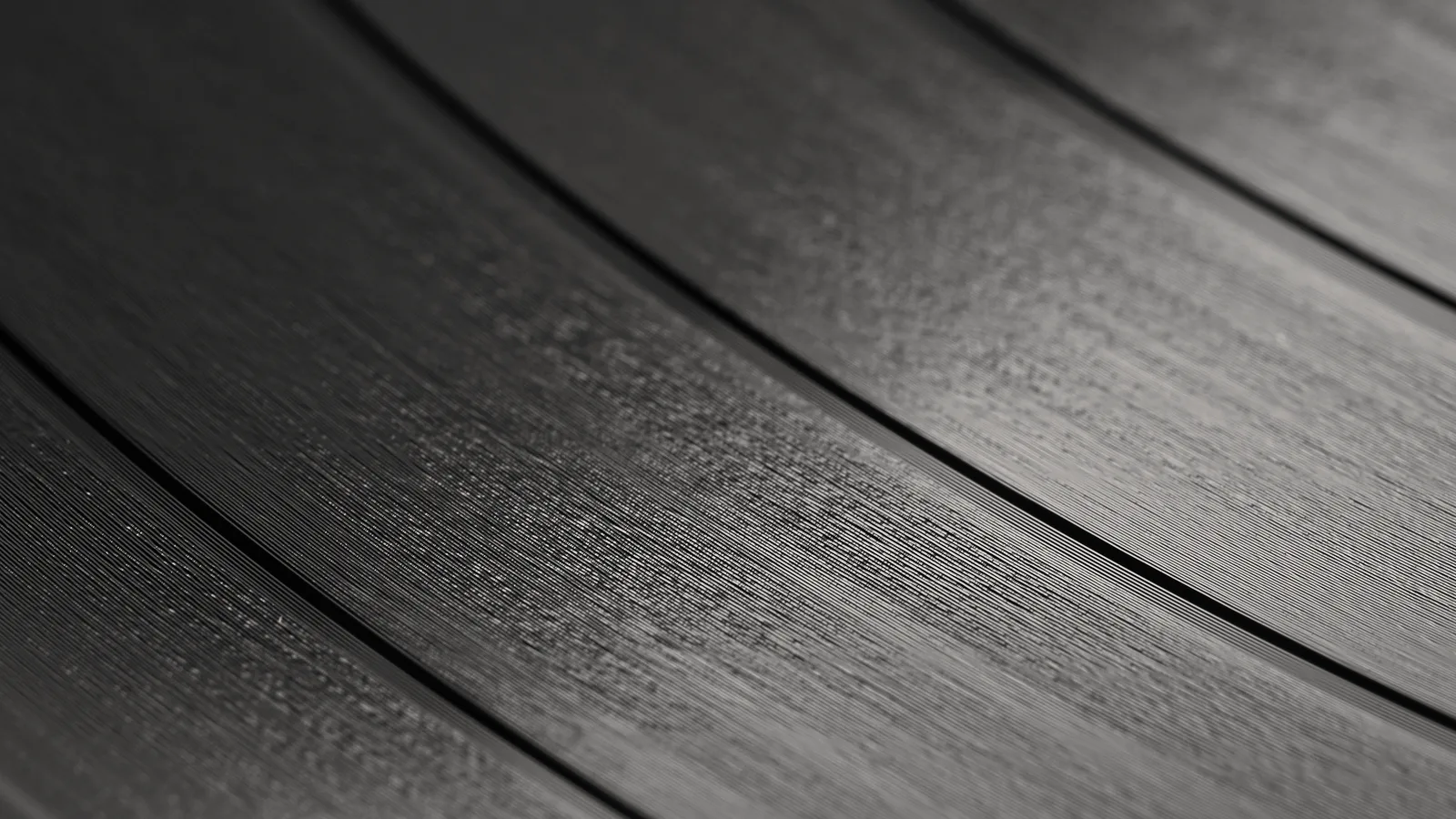
Shop lighting flatters records. Take the disc to the window or use your phone torch at a low angle so the beam skims the surface, and turn it slowly. Look at both sides, including the runout and the loud bands. A dull, greyish cast over the grooves is a reason to look closer, not a diagnosis: bonded contamination can look hazy, and some badly worn records still shine.[3]
Brush a fingernail lightly across any line that crosses the grooves. A mark you can feel will usually be audible, while a scuff that runs along the groove, the kind a paper inner sleeve leaves, often plays silently. Check the edge for a warp you can see from arm’s length, and read the sleeve as evidence of how the record has been kept, not as a grade of the disc.
Then ask to play it. Many shops will, especially on an expensive record. Ask for the last track on each side, and listen for hiss, harshness on vocals and cymbals, and distortion rather than only for skips. If there is no turntable, ask what the return terms are before you pay. A shop that will not play a record and will not take it back is asking you to buy a guess.
Do not clean a shop’s stock with your own fluid, even to see what is underneath. It is their property until you have paid for it.
Online, ask for a play grade
Photographs show scratches and sleeve wear. They do not show groove wear, and a shiny surface is not proof of a quiet record. Ask the seller for a play grade of the final track on each side, and for angled-light photographs of the grooves rather than a flat scan of the cover. Ask whether the record has been cleaned, and with what.
Treat a grade as a description of what the seller saw and heard, not a guarantee. VG+ can mean a record that plays quietly with light surface noise, or one that looks better than it sounds. The VG+ grading guide covers how to read the words beside the grade.
Know the return window before you pay. A record that arrives with non-fill, a warp, or a repeating click is a return, not a cleaning project.
Decide, then stop
A worn record is not automatically a record to get rid of. If it is a rare pressing you may not see again, a copy that plays through with some roughness can still be the right copy to own, provided you did not pay near-mint money for it. If it is a common title, a worn copy is a placeholder for a better one.
The decisions I would keep separate:
- Contamination: clean it properly, then judge the record.
- Wear: keep it as a player if the music survives, price it as a worn copy if you sell it, and do not spend money on treatments.
- Pressing fault: return it inside the window.
- Setup fault: fix the setup before another record goes on the deck.
The mistake I would avoid is cleaning a noisy record again and again, hoping for a different result. Clean it once, listen at the end of a side, and let the pattern tell you which of the four problems you actually have.
Sources
[1] Library of Congress, Care, Handling, and Storage of Audio Visual Materials
[3] Preservation Self-Assessment Program, University of Illinois Library, Phonograph Record